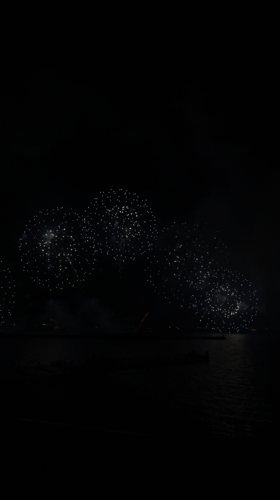
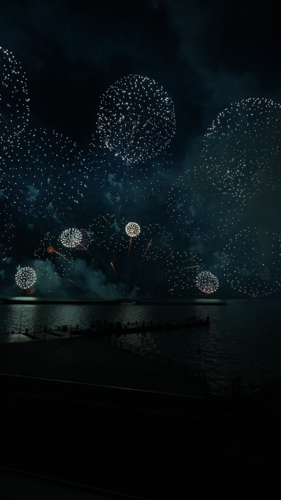
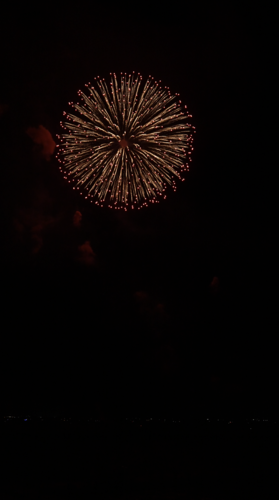
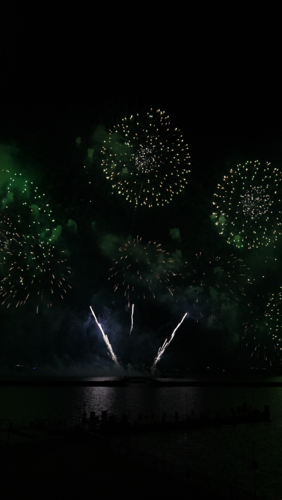
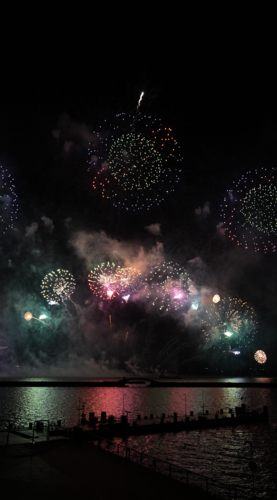
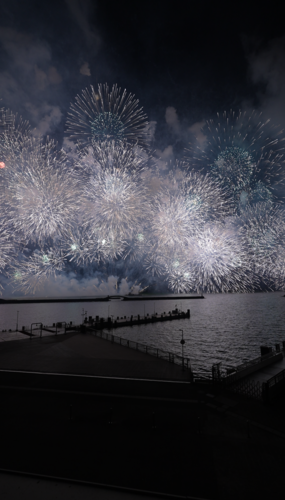
Biwako Fireworks Festival
The Night the Great Lake Catches Fire: Biwako Great Fireworks Festival 🎆🌊✨
Just 10 minutes from Kyoto — When 10,000 bursts of living starlight transform Japan’s oldest lake into a cathedral of fire, sound, and water.
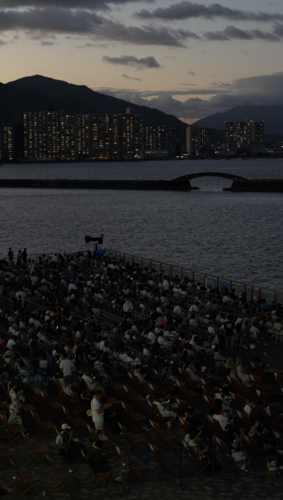
As the midsummer sun sinks behind the dark silhouette of Mount Hiei, an electric hush settles over the shoreline of Otsu. The humid summer air cools with a sudden, soft breeze rolling off the water. Along the promenades, tens of thousands of people gather, their colorful cotton yukata rustling in the twilight and paper fans fluttering in the fading glow. Out on the vast expanse of Lake Biwa—Japan’s ancient, four-million-year-old inland sea—several dark barges sit anchored in absolute stillness.
Then, the countdown ends. The night air shatters.
A single trail of silver sparks screams miles into the pitch-black sky, pauses at the apex of its ascent, and bursts into a colossal sphere of pure crimson and gold. The deep, chest-rattling boom hits seconds later, rolling across the water like thunder and echoing off the surrounding mountain peaks. The show has begun.
The Theater of Water and Sky 🌌
Unlike city fireworks that explode high above cramped skyscrapers, the Biwako Great Fireworks Festival utilizes the infinite natural canvas of Japan’s largest lake.
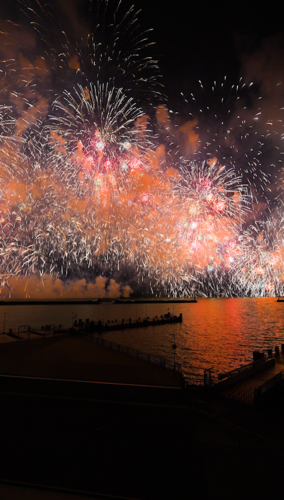
Here, the pyrotechnicians do not simply launch rockets upward; they wage an artful dialogue between the heavens and the deep water below. The hallmark of the festival is its legendary aquatic starmines. Custom-weighted shells are launched horizontally across the surface, skipping like stones before detonating right at the waterline. Semicircles of brilliant emerald, violet, and electric blue fan out across the lake, meeting the towering celestial bursts above to create colossal, perfect spheres of light.
Because the water of Lake Biwa acts as a giant obsidian mirror, every single explosion is doubled. The dark waves shimmer in liquid copper, gold, and ruby, dissolving the physical horizon. For an entire hour, spectators lose their sense of up and down, suspended in a boundless sphere of illumination.
The Millisecond Art of the Master Pyrotechnicians 🏮
In Japan, fireworks are known as hanabi—literally translated as “fire flowers.” They are not viewed merely as loud party novelties, but as an ancient, fiercely disciplined branch of seasonal fine art.
The master artisans behind the Biwako display spend an entire year formulating unique chemical compounds to create colors that shift mid-flight—from deep lavender to blossom-pink, and from icy silver to warm, molten gold. Every shell is synchronized down to the millisecond with a sweeping orchestral and contemporary musical score that broadcasts along the entire bay.
As the music swells, the lake witnesses the unveiling of giant Kamuro shells—massive Japanese weeping willows of light that hang suspended in the cool night air for what feels like an eternity, trailing delicate golden tendrils that slowly rain down toward the water before vanishing into the dark.
An Unbroken Summer Memory 👘
Around you, the collective breath of hundreds of thousands of people rises and falls with each volley. Gasps of pure wonder (“Sugoi!”) ripple through the crowd as rapid-fire sequences paint constellations across the sky, accompanied by the sweet aroma of yakisoba, grilled sweet corn, and cold draft beer drifting from the bustling festival stalls nearby.
When the finale arrives, all restraint disappears. Hundreds of high-caliber shells launch in rapid, relentless succession, completely filling the night sky from edge to edge with a blinding curtain of pure white-gold fire. The continuous roar of the explosions vibrates through the ground beneath your feet, shaking the very air in your lungs. For a few breathtaking minutes, the midnight lake is as bright as noon.
When the final spark dissolves and the deep silence returns to the dark waters of Biwa, the lingering smoke catches the moonlight, leaving an indelible memory etched into your mind: the night Japan’s ancient lake caught fire and turned into a dream.
📍 Travel Guide & Essential Tips
-
Spot: Biwako Great Fireworks Festival
-
Location: Lake Biwa Shoreline (Hamaotsu Area, Otsu City, Shiga Prefecture)
-
Access:
-
From Kyoto: Take the JR Biwako Line from JR Kyoto Station straight to JR Otsu Station (approx. 10 mins), followed by a 15-minute walk down to the lake. Alternatively, take the Keihan Line to Biwako-Hamaotsu Station.
-
-
Essential Viewing Tips:
-
Ticketing: The best unobstructed views along the waterfront require advance-purchase reserved seats (Yuryo Kansen-seki). Book months ahead.
-
Crowd Strategy: The return trains back into Kyoto Station after the finale become bottlenecked. Savor the post-show atmosphere, explore the food stalls, or plan an overnight stay in Otsu to let the crowds clear out naturally.
-
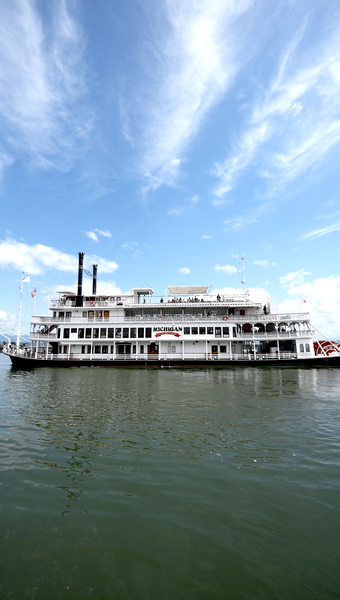
Click here for Biwa Lake cruise details and reservations.


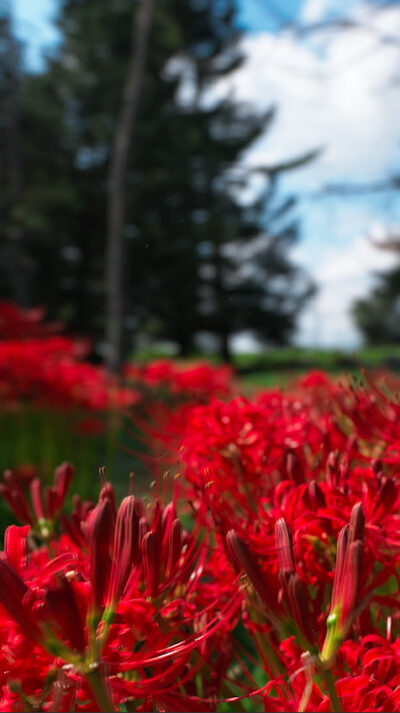
Genji-hama: Lake Biwa’s Quiet Field of Red Spider Lilies


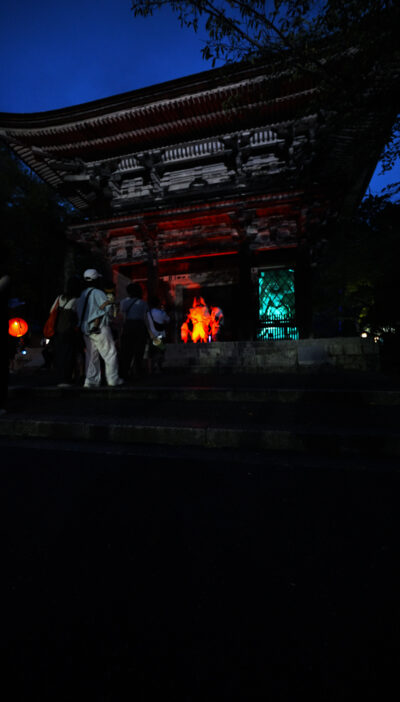
Saikyoji Summer Evening Illumination|Otsu, Shiga

Michigan Cruise|Lake Biwa, Shiga
Omi Jingu Summer Illumination|Otsu, Shiga