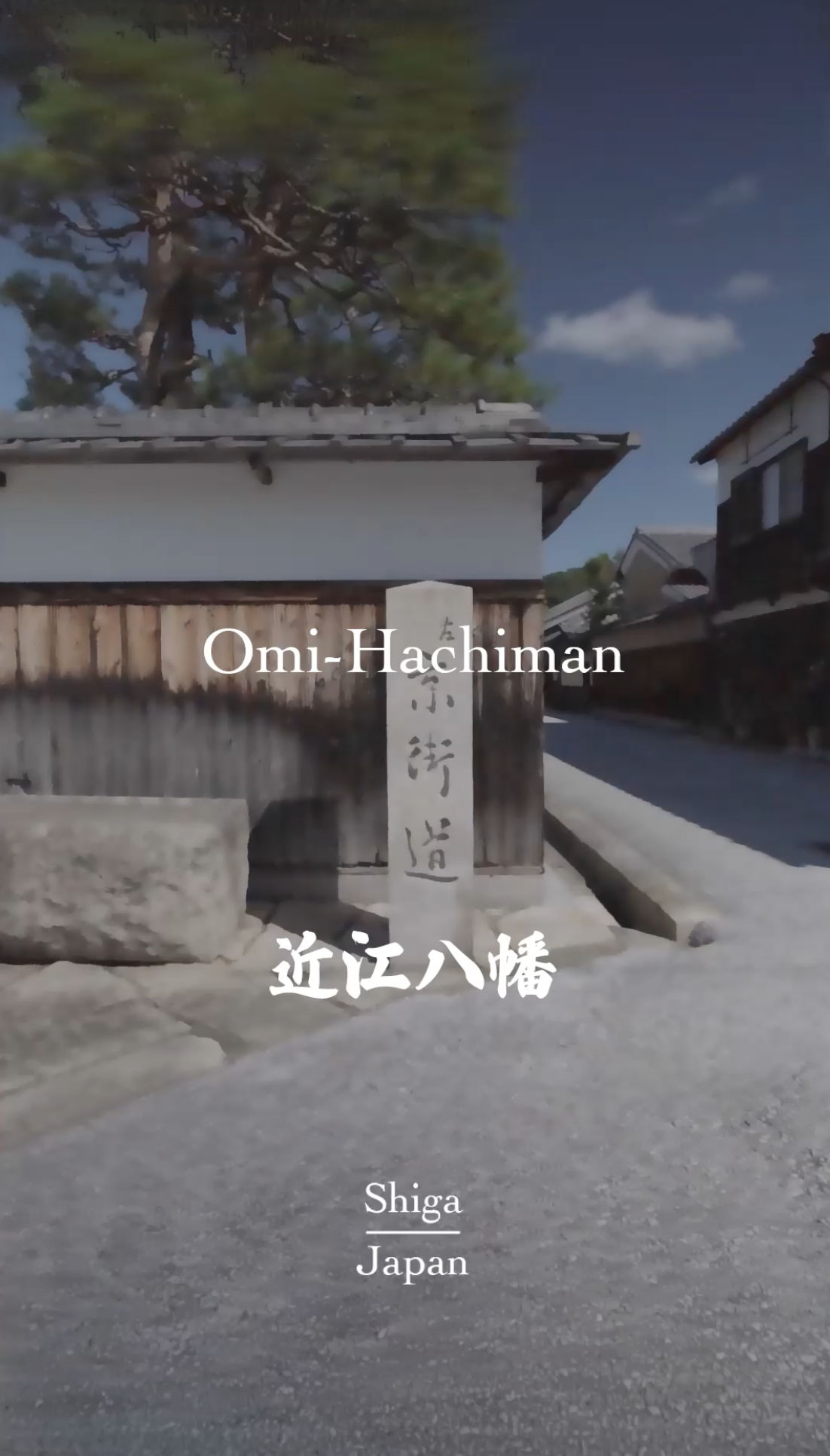
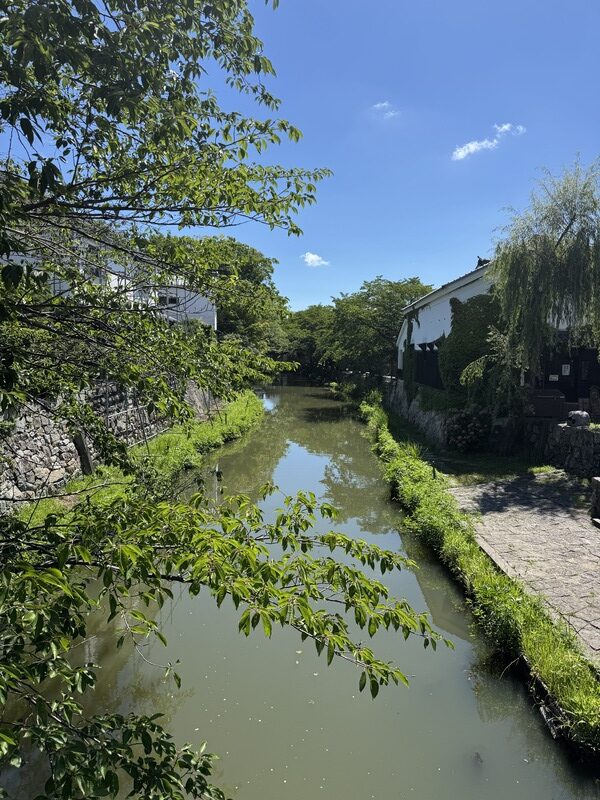
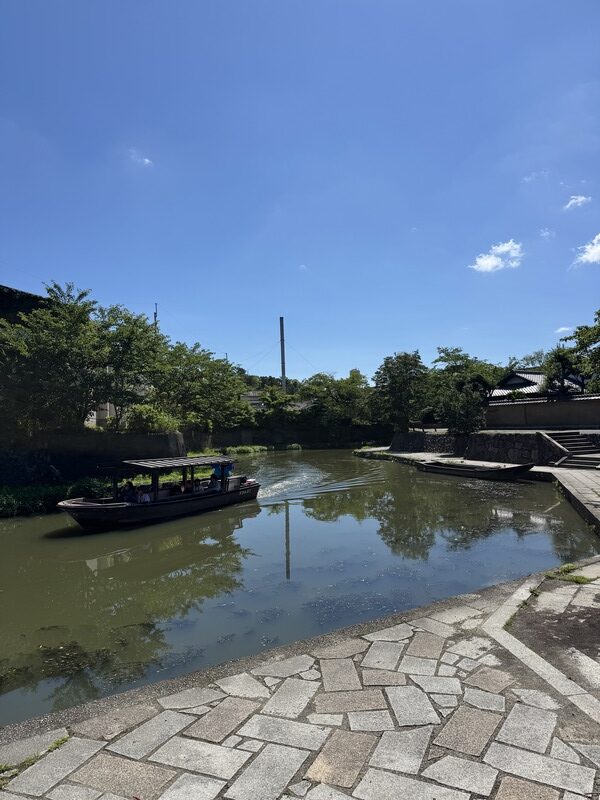
Omihachiman: The Merchant Capital Crafted by Canal, Castle, and Honor 🚣♂️🏯✨
Just 30 minutes from Kyoto — Step into an exceptionally preserved Edo-period townscape, where the architectural genius of a young samurai prince created the economic beating heart of historic Japan.
Along the eastern shores of Lake Biwa, where gentle mountains slope down toward vast wetland reeds, lies the historic city of Omihachiman. While the vast majority of international travelers to Japan cluster along the well-trodden golden route between Kyoto and Tokyo, those who venture just half an hour east of Kyoto Station will discover something far more intimate and profound: an authentic, living townscape preserved from the golden age of Japanese trade. Designated as Japan’s very first Important Preservation District for Groups of Traditional Buildings, as well as a recognized Japan Heritage site, Omihachiman is a place where black-plastered storehouses, elegant wooden lattice facades, stone quays, and weeping willow-lined canals converge to tell a grand story of visionary urban planning, fierce merchant honor, and community-driven preservation.
The Visionary Genius of Toyotomi Hidetsugu 🏯
The extraordinary story of Omihachiman began in the turbulent late-16th century, during the twilight of the Warring States (Sengoku) period. In 1585, the brilliant young samurai lord Toyotomi Hidetsugu—the nephew and adopted heir of the master unifier Toyotomi Hideyoshi—was granted governance over the Omi region. Tasked with building a new stronghold, Hidetsugu chose the strategic summit of Mount Hachiman.
However, Hidetsugu was far more than a military strategist; he was an urban planner of legendary foresight. Recognizing that true, enduring power lay in commercial vitality rather than formidable stone walls alone, he executed a masterstroke of civil engineering that would alter Japanese history. He diverted the waters of Lake Biwa to carve a artificial canal—the Hachiman-bori—running along the base of the mountain directly into the heart of his residential and commercial grid.
Rather than isolating his castle behind defensive moats, Hidetsugu integrated the canal directly into Lake Biwa’s vast maritime trade network. He instituted a revolutionary law: every commercial cargo vessel navigating the lake was legally required to detour through the Hachiman-bori canal before proceeding to other ports. To entice merchants from across the nation, Hidetsugu declared Omihachiman a Rakuichi-Rakuza (a free-market zone), completely abolishing medieval tax monopolies and trade guilds. Almost overnight, a quiet agrarian valley transformed into an international inland port where dozens of timber, rice, silk, and sake barges docked daily along stone quays.
The Dynasty of the Omi Merchants (Omi Shonin) 🎒
Though Lord Hidetsugu was tragically forced to commit ritual suicide just ten years later due to political strife in the imperial capital, and his castle was subsequently dismantled, the thriving economic engine he created refused to die. The castle town evolved into the birthplace and headquarters of the famous Omi Merchants (Omi Shonin).
These traders were legendary for their boundless endurance and business acumen. Carrying their trade goods in woven baskets balanced on shoulder poles (tenbin-bo), these itinerant merchants traveled entirely on foot to the furthest reaches of the Japanese archipelago—from the bustling, neon-lit markets of Edo (modern-day Tokyo) to the freezing fishing outposts of Hokkaido. They introduced innovate business concepts like peddling networks, branch-store systems, and joint-capital ventures centuries before modern Western commerce popularized them.
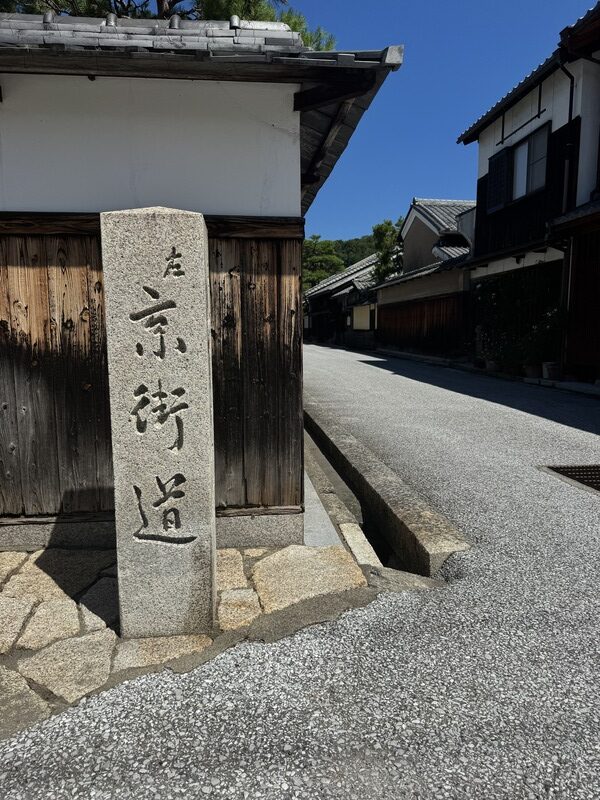
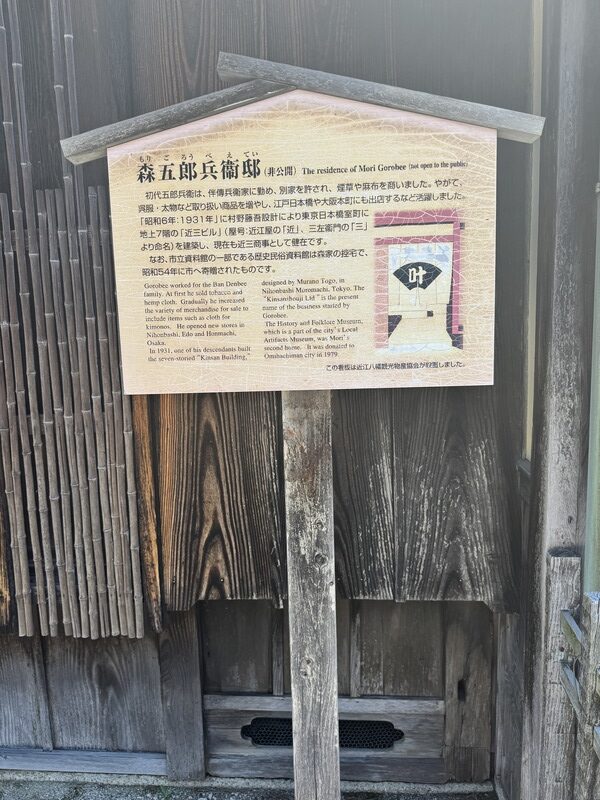
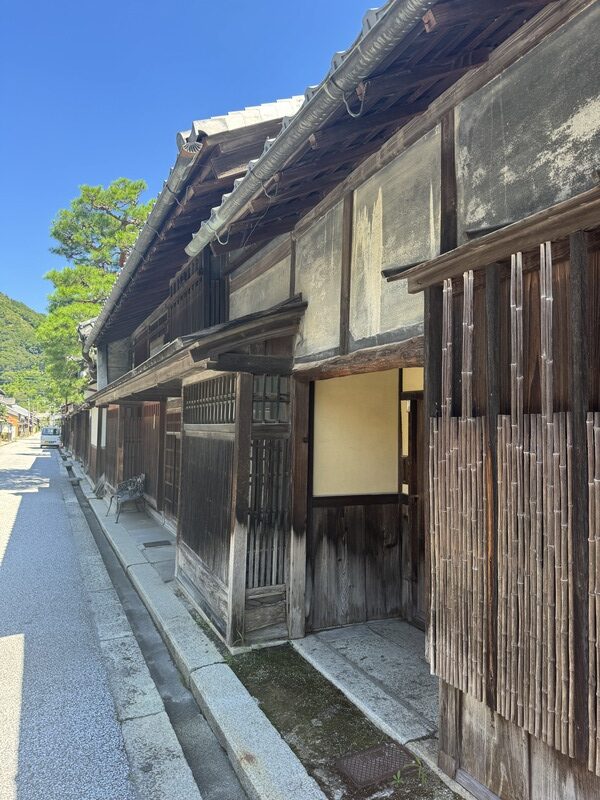
Yet, no matter how vast their fortunes grew in the capital cities, the Omi Merchants built their primary family estates right here in Omihachiman. Walking along the stone-paved Shinmachi and Nagahara streets today offers a window into their understated, sophisticated wealth. The architecture is characterized by:
-
Benigara-koshi: Delicate wooden lattice windows stained in deep, earth-toned red ochre.
-
Shiro-kabe & Dozo: Fireproof, thick mud-brick storehouses coated in brilliant white lime plaster, designed to protect family heirlooms and ledgers.
-
In-house Gardens: Serene, moss-covered courtyard gardens hidden away behind unassuming wooden entryways, visible only to invited guests.
The Omi Merchants operated under a timeless ethical code that remains one of Japan’s greatest contributions to global commerce: Sanpo-Yoshi (Three-Way Satisfaction):
-
Yoshi for the Buyer (The product must bring true value to the customer)
-
Yoshi for the Seller (The transaction must be fairly profitable for the trader)
-
Yoshi for Society (The wealth generated must actively benefit the local community)
They believed that private wealth was a public trust, consistently donating vast sums to build public bridges, schools, roads, and disaster-relief funds. Today, modern global corporations still study Sanpo-Yoshi as the foundational precursor to ethical capitalism and social responsibility.
The Miracle of the Hachiman-bori Canal 🚣♂️
The heart and soul of Omihachiman remains the Hachiman-bori Canal, though its survival is nothing short of a miracle. Following World War II and the rapid industrialization of the mid-20th century, the canal fell into severe neglect. Silt accumulated, the water became polluted, and by the 1960s, local government officials prepared a plan to pave over the historic canal completely and convert it into a concrete parking lot and road.
It was then that the citizens of Omihachiman rallied. In the 1970s, a passionate grass-roots movement led by local youth and residents arose under the banner: “The town that forgets its canal is a town that forgets its soul.” Citizens spent years physically dredging the sludge by hand, restoring stone walls, planting native flora, and lobbying to preserve their heritage.
Their victory transformed the city. Today, the pristine stone banks of the canal are shaded by a canopy of weeping willows, cherry blossoms in spring, vibrant irises in summer, and fiery maple leaves in autumn. Visitors can step aboard low-profile, wooden flat-bottomed boats propelled by traditional oarsmen, gliding quietly beneath stone footbridges past the whitewashed storehouses that have stood guard for four centuries.
Where Nature and Architecture Merge 🌾
Beyond the urban canal lies the Suigo—the pristine, marshy water reed beds on the outer edges of the city. Recognizing the irreplaceable harmony between human agriculture and natural wetlands, the Japanese government designated Omihachiman’s reed beds as the nation’s Very First Important Cultural Landscape.
Here, visitors can experience Suigo Meguri, a tranquil boat ride through a labyrinth of tall water reeds (yoshi) where motorboats are strictly banned. As the traditional wooden boat weaves through the quiet waterways, accompanied only by the rustle of the wind through the reeds and the calls of native waterbirds, the frantic pace of the 21st century completely vanishes.
From the vision of samurai rulers to the ethical honor of itinerant merchants and the fierce devotion of modern citizens, Omihachiman is far more than a scenic photo spot. It is a living, breathing testament to how history, trade, nature, and community can flow together in timeless harmony.
📍 Visitor Information
-
Spot: Omihachiman Historic Preservation District & Hachiman-bori Canal
-
Location: Omihachiman City, Shiga Prefecture
-
Access:
-
Train: Take the JR Biwako Line (Special Rapid Service) from JR Kyoto Station directly to JR Omihachiman Station (approx. 30 minutes).
-
Local Transit: From the station’s North Exit, take a local Choko Bus for 7 minutes to the “Shinmachi-dori” or “Hachiman-bori” stop, or enjoy a pleasant 20-minute walk straight down the historic avenue into the preservation zone.
-
-
Admission:
-
Walking through the historic streets and canal banks is Free and open 24/7.
-
Canal Boat Rides (Hachiman-bori Meguri): Approx. 1,500 JPY.
-
Reed Bed Boat Rides (Suigo Meguri): Approx. 2,000–2,500 JPY.
-
Historic Merchant House Museum Access: 300–500 JPY.
-
Click here for Biwa Lake cruise details and reservations.

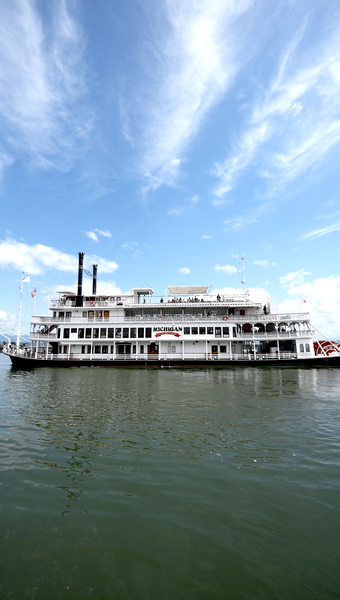
Michigan Cruise|Lake Biwa, Shiga
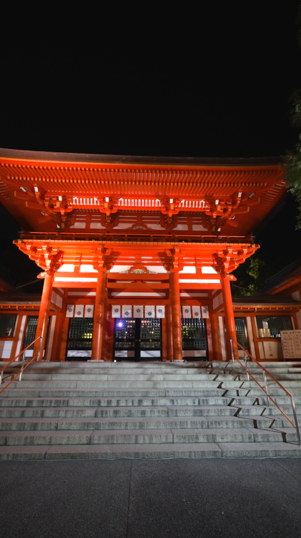
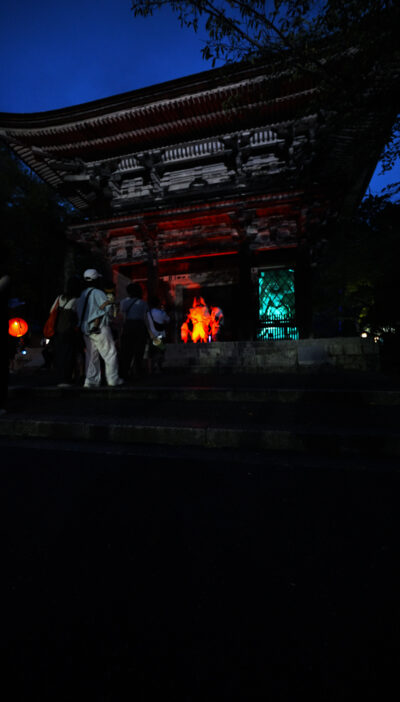
Omi Jingu Summer Illumination|Otsu, Shiga
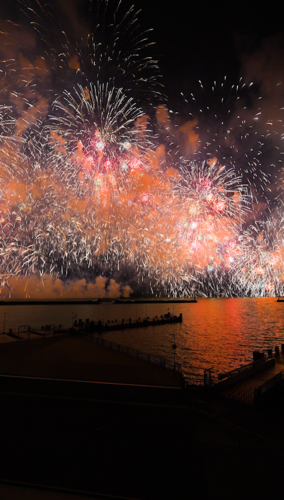
Biwako Fireworks Festival