Nobunaga’s Hiding Rock
The Secret Cavity of Destiny: Standing inside “Nobunaga’s Hiding Rock” Deep in the Samurai Mountains
If you have stood inside the massive wooden hall of Kyoto’s Honno-ji Temple and contemplated the tragic, fiery end of Japan’s most famous warlord, you have touched the final chapter of an epic life. But long before that fateful night in Kyoto, there was another moment where the entire destiny of Japan hung by a single, desperate thread. It happened in a dark, mossy crevice hidden high up in the dense forests of the Kutsuki Valley.
This is the story of Nobunaga’s Hiding Rock (Nobunaga no Kakure-iwa). Located just an hour north of Kyoto along the ancient Mackerel Highway (Saba Kaido), this massive stone cavern is the exact spot where a terrified, fleeing dictator hid for his life—and where the entire future of Japan was decided in total silence.
The Nightmare of the Golden Trap
To understand the intense gravity of this hidden rock, we must travel back to April of the year 1570. The ruthless unifier Oda Nobunaga was campaigning far to the north, deep in the territory of his enemy, Asakura Yoshikage. Victory seemed within his grasp.
Then, a shocking piece of intelligence arrived that froze Nobunaga’s heart. His close ally and brother-in-law, Azai Nagamasa—who was married to Nobunaga’s beloved sister, Oichi—had suddenly broken his oath and betrayed him.
Nobunaga was caught in a lethal trap. Before him stood the armies of Asakura; behind him, the treacherous forces of Azai were marching to cut off his escape. Facing absolute annihilation, Nobunaga ordered a desperate, lightning-fast retreat back to Kyoto. He left his brilliant commander Kinoshita Tokichiro (who would later change his name to Toyotomi Hideyoshi) behind to fight a suicidal rearguard action, while Nobunaga himself fled south through the narrow, twisting mountain pass of the Kutsuki Valley with only a handful of bodyguards. This terrifying escape is immortalized in history as the Kanegasaki Retreat (Kanegasaki no Nokiguchi)—the single greatest crisis of Nobunaga’s life.
The Tense Nights of Whispered Truces
As Nobunaga scrambled through the dense mountain forests, he faced a massive geopolitical gamble. The Kutsuki Valley was completely controlled by a powerful local warlord named Kutsuki Mototsuna. If Mototsuna chose to side with the rebels, Nobunaga would be captured and executed instantly.
As Nobunaga approached, word came that Mototsuna was preparing to meet him clad in full battle armor. Terrified of a trap, Nobunaga refused to enter the village. Instead, he sent two of his most trusted advisors—the cunning Matsunaga Hisahide and Mori Yoshinari—down into the valley to discover Mototsuna’s true intentions.
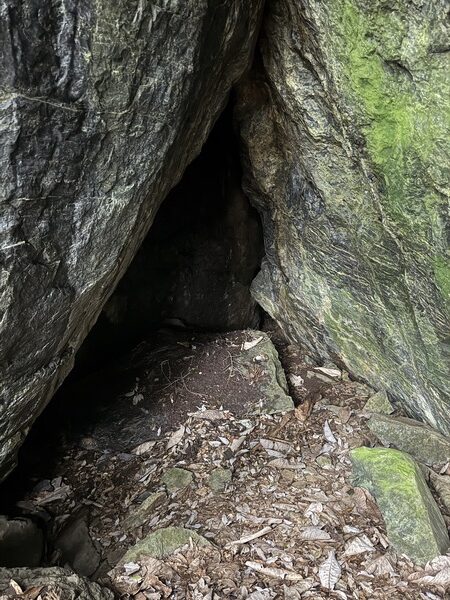
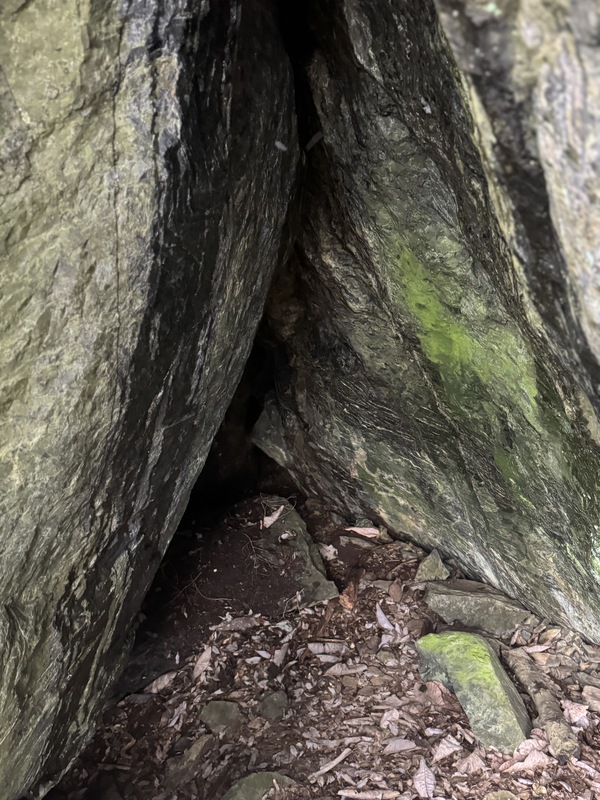
While he waited for his men to return, Nobunaga scrambled up the steep mountain slope and threw himself into a giant, naturally formed rock cave.
This dark, cold stone cavity is where Nobunaga hid, his hand tightly clutching the hilt of his sword, listening to the wind through the pines and waiting to find out if he would live or die.
Fortunately for Nobunaga, his negotiators succeeded. Upon realizing Nobunaga’s fear, Kutsuki Mototsuna immediately stripped off his armor, changed into peaceful, formal robes (Heifuku), and warmly welcomed the fleeing warlord into the valley. He treated Nobunaga to a feast at the Enman-do hall in Shimo-ichiba, sheltered him safely inside Kutsuki Castle for the night, and personally guarded him all the way back to the gates of Kyoto the following day.
If Mototsuna had chosen to betray him, the Oda dynasty would have died right here in the mud. There would be no Shogun Hideyoshi, no Tokugawa peace, and the Japan we know today would not exist.
A Primal Encounter with Raw History
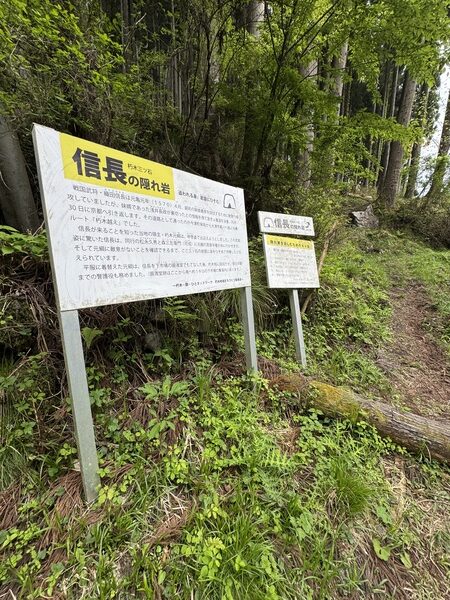
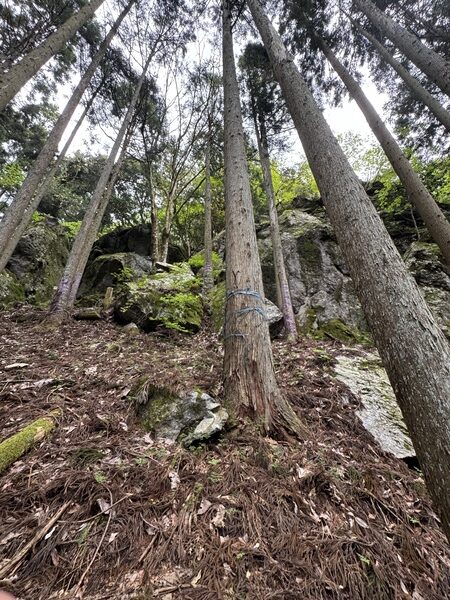
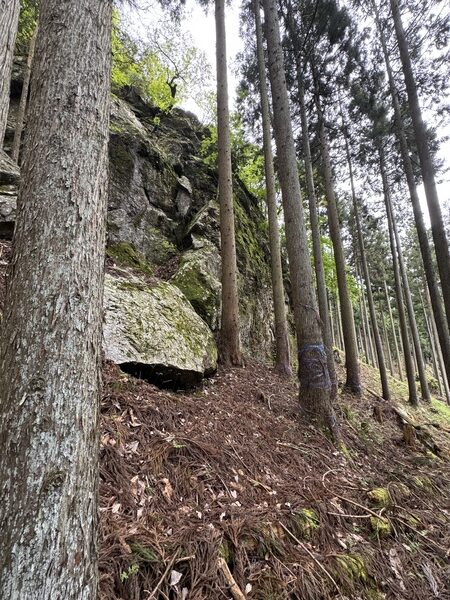
Today, reaching Nobunaga’s Hiding Rock is a thrilling journey into the untamed geography of survival. A rustic, winding trail leads you away from the modern road and directly up into the quiet mountainside of Kutsuki Arakawa.
When you reach the site, the massive stone formation looms out of the forest like a primal monument. The yawning mouth of the cavern is completely surrounded by curtains of deep green moss and ancient tree roots that grip the stone like twisted fingers.
Unlike the polished tourist sites of Kyoto, there are no gift shops, no velvet ropes, and no concrete barriers. You can walk right up to the cavern, step into the cool shadows where Nobunaga huddled, and place your hands flat against the cold granite. The absolute silence of the mountain forest makes the ancient tension feel completely alive—as if you can still hear the distant echo of samurai boots marching through the valley below.
Why Visit Nobunaga’s Hiding Rock Now?
For an international traveler staying in Kyoto, Nobunaga’s Hiding Rock offers the ultimate “What-If” historical adventure. It is a destination that proves that history isn’t made in palaces alone; it is carved out of the hidden corners of the wilderness.
It is an essential trek for the passionate history buff, the adventurous photographer looking for raw, moody landscapes, and anyone who wants to experience the true, hair-raising reality of the samurai era. If you want to stand on the exact geographic hinge where the entire fate of Japan turned, this ancient mountain cave is waiting.
Quick Access & Info
-
Location: Nobunaga’s Hiding Rock (Takashima City, Kutsuki Arakawa)
-
Route: Best accessed by car. Located approximately a 1-hour drive north of central Kyoto City via National Route 367 (the historic Saba Kaido).
-
Travel Tip: The trail up to the rock is a natural mountain path. We highly recommend wearing good walking shoes or sneakers with solid grip, as the terrain can be earthy and mossy.
Click here for Biwa Lake cruise details and reservations.