The Scared Tree That Refused to Die: Sanami-ji Temple and the 450-Year-Old Echo of Samurai Fire
If you have walked through the perfectly preserved wooden halls of Kyoto’s ancient temples, you have seen the peak of Japanese cultural survival. But just 50 minutes north, tucked into the deep, misty mountains of the western coast of Lake Biwa, lies a sanctuary that carries the actual scars of samurai warfare on its very skin.
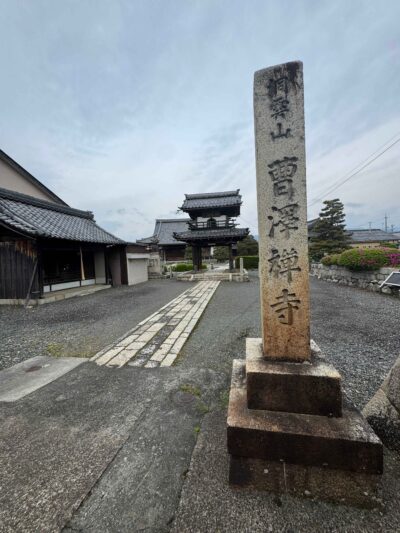
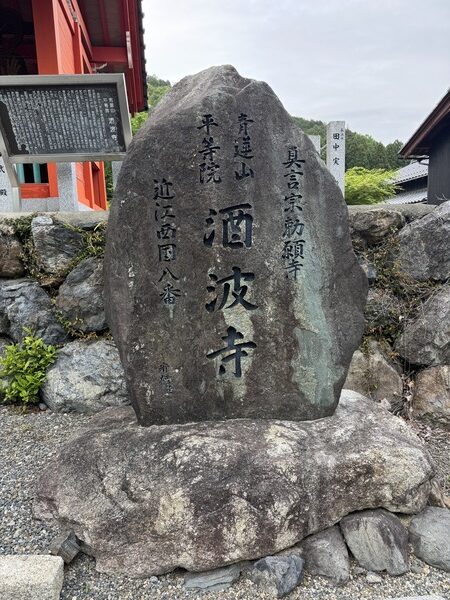
This is Sanami-ji Temple (Shorenzan Sanami-ji), a historic temple of the Shingon Chisan sect. Sitting right next to Hioki Shrine in the quiet valley of Sanami, this is a place not defined by golden pavilions, but by an incredible story of absolute resilience, destruction, and a legendary cherry tree that survived a dictator’s fire.
The Sovereign Majesty and the Shogun’s Wrath
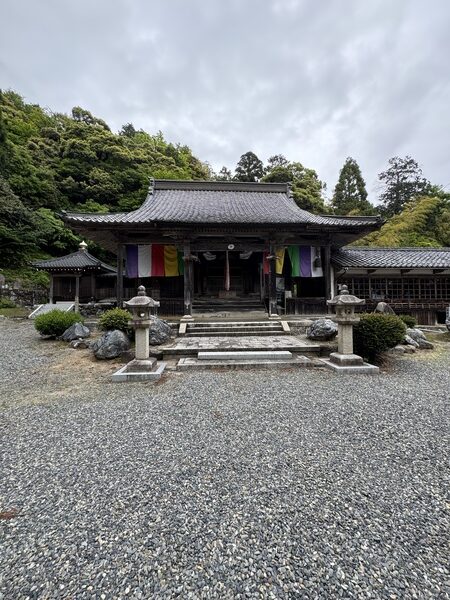
The origins of Sanami-ji stretch back to the golden age of Japanese Buddhism. It was founded in the year 741 by the legendary monk Gyoki, under the direct imperial command of Emperor Shomu—the same visionary ruler who built the Great Buddha of Nara. Dedicated to the Thousand-Armed Kannon, the temple originally flourished as a massive spiritual complex, housing dozens of buildings and hundreds of warrior-monks within the mountain creases.
However, the temple’s grand prosperity came to a violent halt in 1572. During the chaotic Warring States period, the brutal unifier Oda Nobunaga ordered his forces to crush the independent temples of the region. Nobunaga’s kinsman, Tsuda Nobuzumi, marched into the Sanami valley, burning the entire temple complex to the ground. The towers were reduced to ash, and the temple’s sacred lands were completely confiscated.
For nearly 90 years, the valley remained in silent ruins. It wasn’t until 1662 that a determined master monk named Kakunin Shonin was invited from Sugatani-dera Temple to begin the grueling, decades-long process of bringing Sanami-ji back from the dead.
The Gyoki-zakura: A Living Miracle in Ash and Petals
The ultimate symbol of Sanami-ji’s unbreakable spirit is not made of wood or stone, but of living flesh. Standing proudly beside the stone steps of the temple approach is the Gyoki-zakura, a colossal Edohigan cherry tree.
This giant of nature stands over 21 meters tall with a trunk circumference of 4 meters. When you walk up to its massive base, you will notice a haunting feature: the trunk is completely hollowed out from the ground up to a height of about 2 meters. Local records and modern arborists have revealed a startling truth—the deep interior of the trunk contains trace remnants of actual charcoal.
This hollow, blackened heart is the direct physical scar of the 1572 samurai burning. The tree was caught in the inferno that leveled the temple 450 years ago. Yet, despite being burned inside out and hollowed by time, this ancient tree continues to pull life from the mountain soil. Every single spring, without fail, its ancient branches erupt into a magnificent, cloud-like explosion of delicate pink blossoms. The tree is the temple itself—scarred, hollowed, but beautifully unyielding.
The Gate of Rebirth
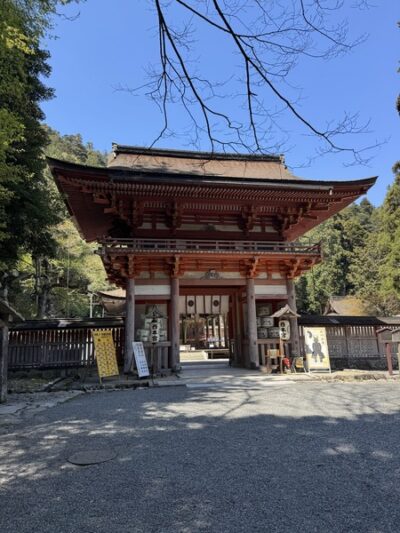
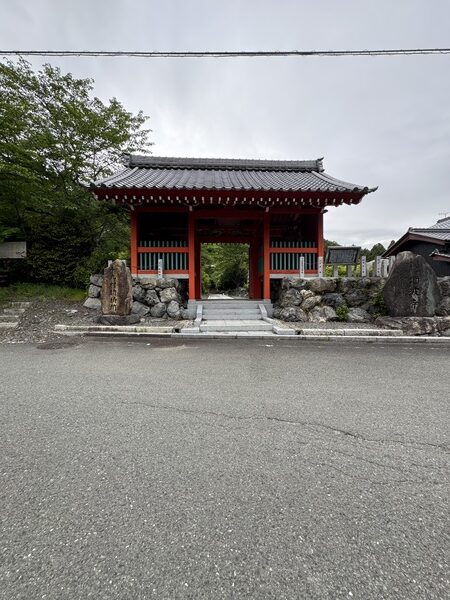
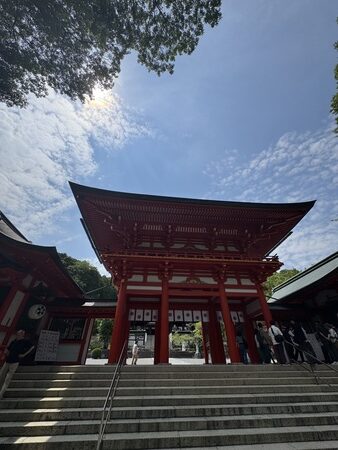
Sanami-ji is a temple that refuses to stop its march through time. In 2015, after a silence of 442 years, the temple celebrated a monumental milestone: the complete reconstruction of its grand Shu-daimon (Great Vermilion Gate).
As you approach the temple today, you are greeted by this brilliant red gateway, guarded by two fiercely sculpted, muscular Kongorikishi (Nio Guardian Statues) standing in their traditional A-un poses (the open and closed mouth expressions representing the beginning and end of all things). Passing under this gate feels like a triumph over history—a physical proof that creation will always outlast destruction.
Why Visit Sanami-ji Now?
For a traveler based in Kyoto, Sanami-ji offers a raw, emotional depth that manicured tourist sites cannot match. It is a destination for the conscious explorer—the photographer who wants to capture the contrast of pale pink cherry blossoms against a blackened, hollow trunk, the historian looking for the tangible scars of the samurai era, and the seeker who wants to witness the ultimate symbol of resilience.
Standing beneath the Gyoki-zakura, listening to the mountain wind rustle through branches that survived the flames of the samurai, you will experience a profound piece of Japan’s living history.
Quick Access & Info
-
Location: Shorenzan Sanami-ji Temple (Takashima City, Shiga)
-
Route: JR Kyoto Station → JR Omi-Imazu Station (Approx. 50 min via Special Rapid Service) → Followed by a 20-minute local bus ride to the “Sanami” bus stop.
-
Admission: Free entry to the temple grounds.
Click here for Biwa Lake cruise details and reservations.

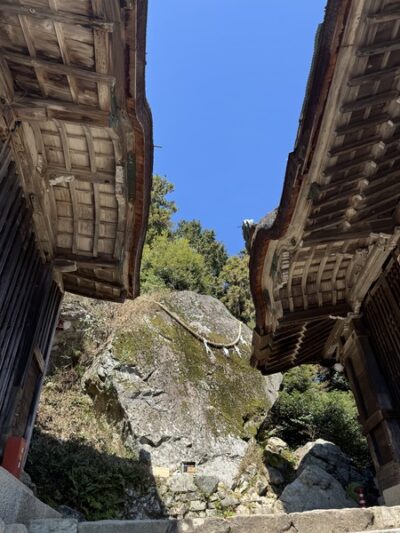
Nobunaga’s Hiding Rock