The Golden Boulder: Touching the Ancient Origins of Faith at Hiyoshi Taisha’s Kogane-no-Oiwa
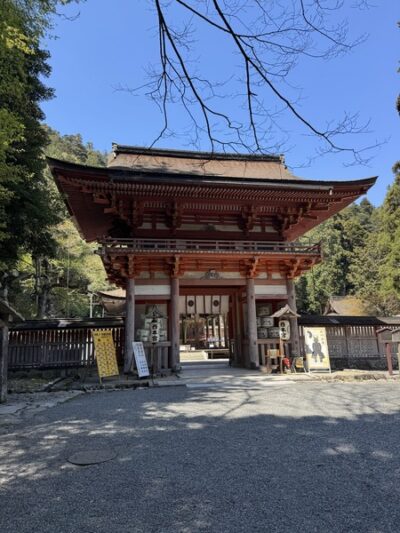
If you have stood beneath the vermilion pillars of Kyoto’s grandest shrines, you have seen the elegant, structured side of Japanese spirituality. But for those who crave something deeper—a connection to the raw, ancient, and primitive roots of faith before temples and shrines were ever built—there is a hidden sacred peak waiting just across the mountain ridge.
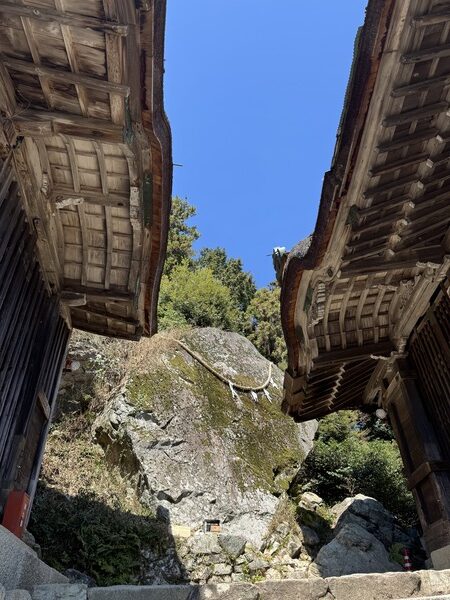
This is the story of Kogane-no-Oiwa (The Great Golden Boulder), the sacred Iwakura (rock dwelling of the gods) perched high upon Mt. Hachioji within the deepest realm of Hiyoshi Taisha. Rising 381 meters above the historic town of Sakamoto, this massive 10-meter-tall monolith represents the absolute birthplace of a 2,000-year-old sanctuary. For the traveler willing to make the climb, it offers an encounter with the “True Japan” that exists far beyond the pages of standard guidebooks.
The Citadel of the Mountain Gods
Long before the samurai rose to power, and centuries before Kyoto was established as the Imperial capital, ancient people looked up at Mt. Hachioji with a sense of profound awe. They believed that the divine spirits did not live inside wooden buildings, but descended directly from the heavens into majestic natural elements—especially massive, striking boulders.
According to ancient legends, Kogane-no-Oiwa is the exact location where the guardian deities of Hiyoshi Taisha first made contact with the earth. It was considered so sacred that for generations, the entire mountain was treated as a forbidden tabernacle.
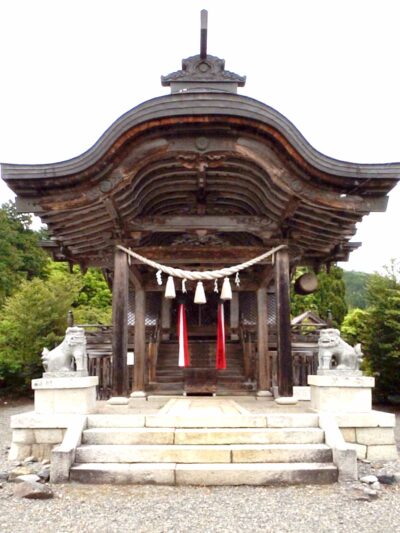
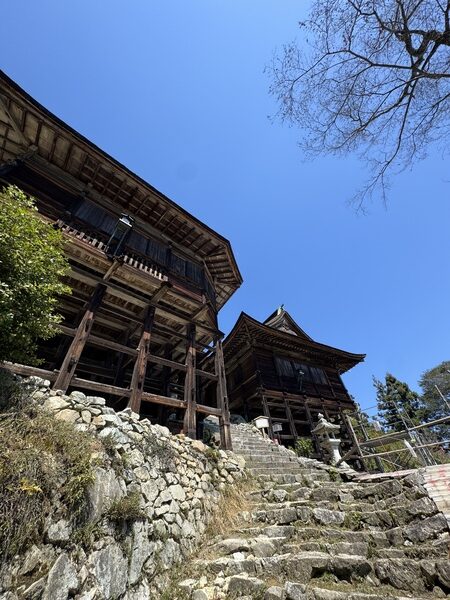
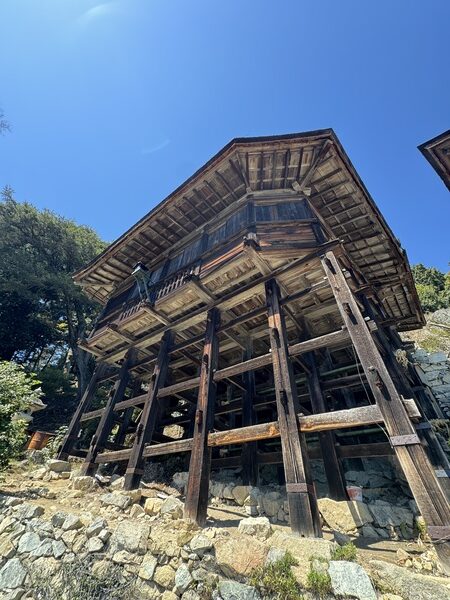
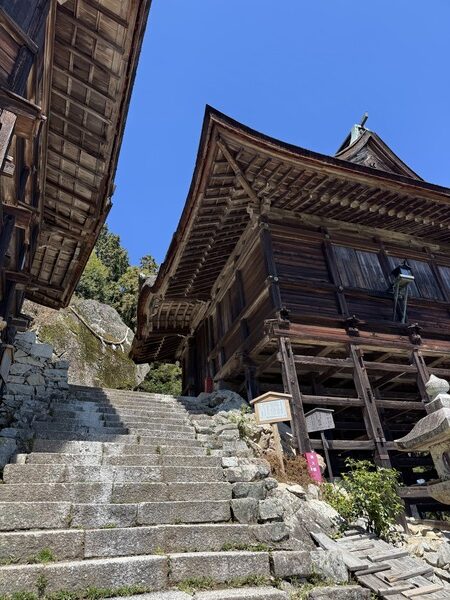
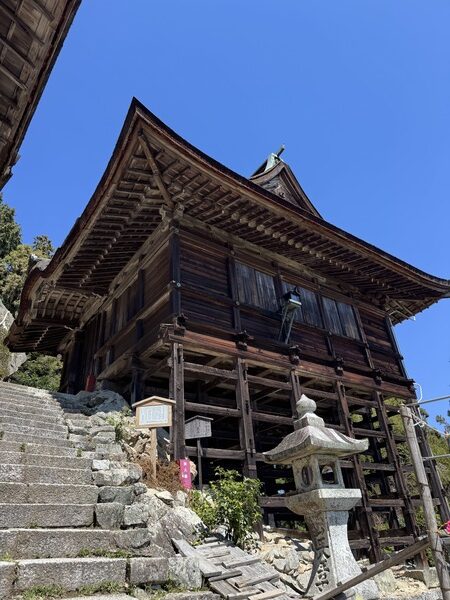
As you ascend the steep, rocky trail through the forest, you are following in the footsteps of prehistoric pilgrims, imperial messengers, and medieval warrior-monks. Standing directly beside the giant rock are the twin Okumiya (Inner Shrines)—Sanno-miya and Ushio-no-miya—which cling precariously to the cliffside like wooden sentinels guarding an ancient secret.
A Monument of Stone with a Two-Lake Horizon
The physical presence of Kogane-no-Oiwa is nothing short of awe-inspiring. Standing roughly 10 meters tall, the colossal granite boulder juts out from the mountain ridge like a massive, natural altar. Over the millennia, weather and mountain winds have covered its rough surface with patches of golden lichen and velvet-green moss, giving the stone an ethereal texture that seems to change color depending on how the sunlight filters through the trees.
But the true reward of reaching this high sanctuary is the panoramic view that unfolds directly at the base of the rock. Turning around from the face of the monolith, the forest suddenly opens up to reveal a stunning, bird’s-eye view of Lake Biwa stretching out to the horizon, with the historic rooftops of Sakamoto nestled far below. It is a moment of grand visual clarity where the immense scale of nature and the deep weight of ancient history converge into a single, breathtaking vista.
The Rewarding Climb into Primitive Silence
Reaching Kogane-no-Oiwa requires a dedicated effort. From the main shrine grounds, you must embark on a 30-minute hike up a steep, winding trail made of rugged stone steps and exposed tree roots. The path challenges your body, but it slowly clears your mind. With every step upward, the sounds of modern life fade away, replaced by the crunch of leaves, the rustle of the wind through the pines, and the crisp, cool air of the mountain.
When you finally step onto the summit courtyard, you are greeted by an absolute, heavy silence. There are no crowds, no tour buses, and no fences. There is only the massive golden stone, the ancient wooden shrines, and the vast sky. It is a space of pure, primal serenity—a rare opportunity to experience the foundational spirit of Shinto, where nature itself is worshipped as the divine.
Why Visit Kogane-no-Oiwa Now?
For a traveler based in Kyoto, a journey to Kogane-no-Oiwa is the ultimate adventure for the soul. It takes you completely off the beaten path, offering a physical and spiritual breakthrough that city landmarks simply cannot replicate.
It is a place for the explorer, the historian, and the seeker of quiet wonders. Standing on the edge of the cliff, touching the ancient granite that has heard the prayers of a hundred generations, you will discover a profound, hidden side of Japan. If you want to experience the true origin of faith where the gods first touched the earth, pack your sturdiest walking shoes—the sacred mountain is waiting.
Quick Access & Info
-
Location: Kogane-no-Oiwa & Okumiya, Hiyoshi Taisha Shrine
-
Route: JR Kyoto Station → JR Hieizan-Sakamoto Station (Approx. 20 min) → Followed by an approx. 50-minute journey combining a scenic walk to the shrine and a 30-minute mountain hike to the summit.
-
Admission Fee: Adults 500 yen
-
Travel Tip: The mountain trail is steep and made of natural stone and dirt. We highly recommend wearing sturdy sneakers or hiking shoes and bringing a bottle of water for the climb.
Click here for Biwa Lake cruise details and reservations.

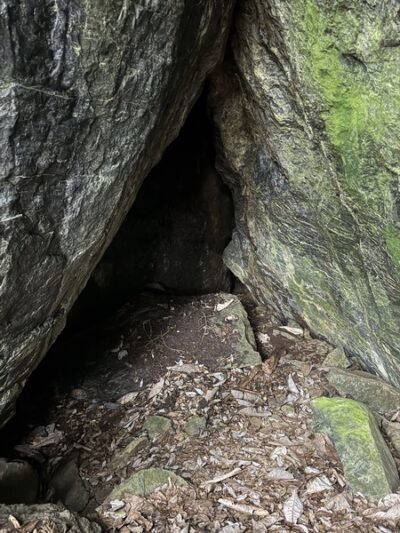
Nobunaga’s Hiding Rock