The Silent Sovereign: Discovering the Hidden National Treasure of Hiyoshi Taisha’s Higashi-hongu
If you have spent your days in Kyoto admiring the golden architecture of Kinkaku-ji or the manicured pavilions of the Imperial Palace, you have seen the elegant face of Japan’s royal history. But just 20 minutes away by train, nestled in the deep, mist-shrouded forests at the foot of Mt. Hiei, lies a sanctuary that feels completely untouched by the modern world.
This is Higashi-hongu (The East Main Shrine) of Hiyoshi Taisha. It is a place housing a registered National Treasure that most international tourists completely miss. Here, the glamorous energy of the ancient capital is replaced by a profound, moss-covered silence—a landscape that preserves the very birthplace of Japanese spiritual devotion.
Guardian of the Land Since Before Kyoto Began
To understand the weight of Higashi-hongu, one must look back into the dawn of Japanese history. While Kyoto became the capital of Japan in the year 794, the sacred ground of Higashi-hongu was established nearly 2,100 years ago—long before the palaces of Kyoto were even a dream.
The deity enshrined here is Oyamakui-no-kami, the ancient master of the mountains and the earth, whose name is recorded in the Kojiki (Japan’s oldest surviving chronicle of myths). When the capital was finally moved to Kyoto, emperors and samurai warlords recognized this mountain god as the ultimate spiritual protector of the realm. For centuries, shoguns and monks climbed these paths to pray for the safety of the nation. When you step onto this ground, you are stepping into a lineage of prayer that has remained unbroken since the mythological age.
The Crown of Hie-zukuri Architecture
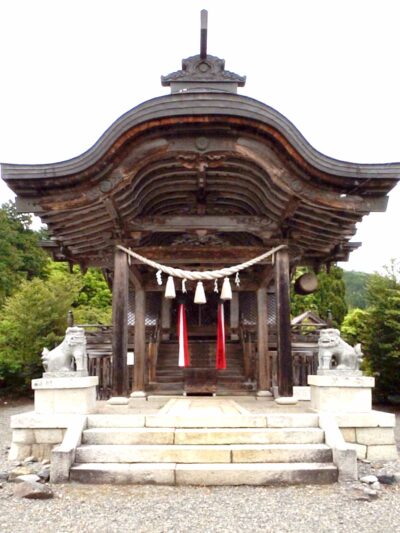
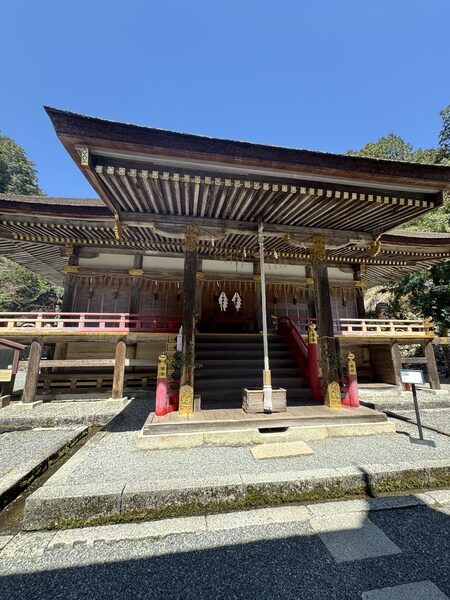
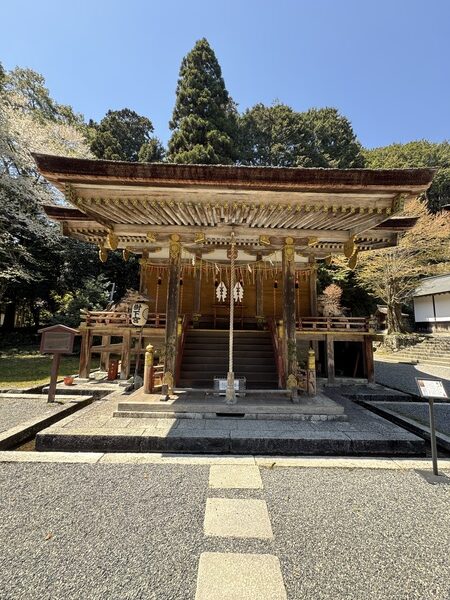
The true architectural marvel of Higashi-hongu is its Honden (Main Hall), a structure so rare and historically significant that it has been designated as a National Treasure of Japan.
The hall is built in a highly specialized style known as Hie-zukuri (or Hiyoshi-zukuri)—an architectural form that exists only here at Hiyoshi Taisha. The most captivating feature is its massive roof, meticulously crafted from layers of Hiwada(cypress bark). From the front, the roof cuts a dramatic, sweeping gable, but from the back, it is cut away in a unique, flat edge. This distinctive, flowing curve is a visual echo of a bygone era when Shinto deities and Buddhist spirits were worshiped together as one harmonized force.
A Sanctuary of Moss, Trees, and Silence
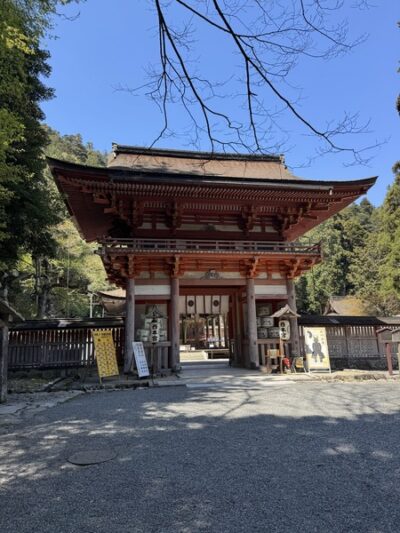
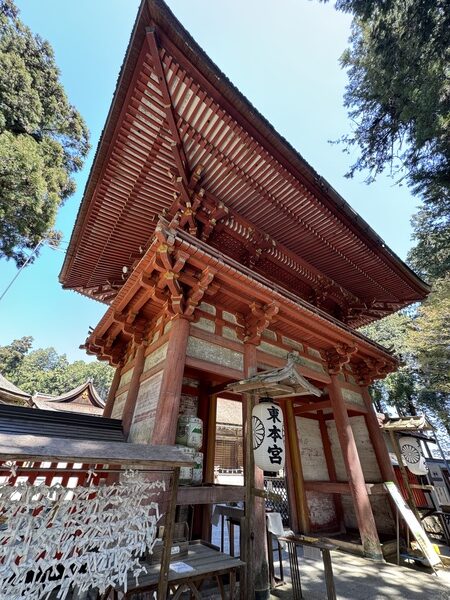
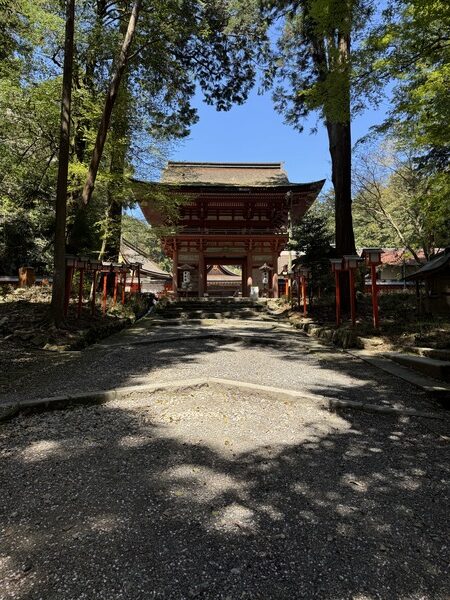
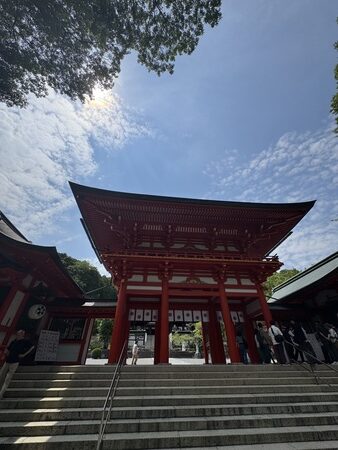
The journey to Higashi-hongu is a sensory awakening. Passing through the grand vermilion Romon (Two-Story Gate), the sounds of the modern world completely evaporate.
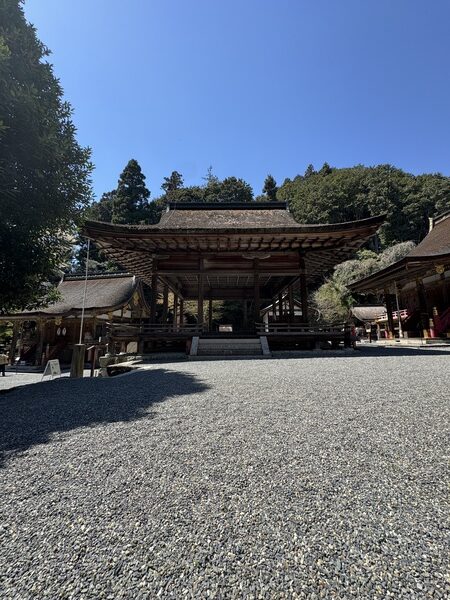
Before you opens a vast, sacred courtyard where the earth is blanketed in a thick, vibrant carpet of emerald moss. Giant, centuries-old cedar and maple trees stretch toward the sky, filtering the sunlight into soft, dappled beams of gold. There are no crowds, no camera shutters, and no souvenir shops. It is a space of absolute immersion in nature. The gentle rustle of leaves and the crisp, mountain air create an atmosphere of pure serenity—capturing the true Genfukei (primitive landscape) of Japanese spiritual life.
Why Visit Higashi-hongu Now?
For a traveler based in Kyoto, Higashi-hongu offers the ultimate “Authentic Discovery.” It is a destination for those who want to experience the grandeur of a National Treasure without having to share it with thousands of other visitors.
It is a place where you can sit on a stone step, breathe in the scent of damp cedar, and feel the raw, ancient power of the mountain. If you seek a deeper connection to Japan’s mystical past—a place where history, architecture, and nature are beautifully frozen in time—leave the city behind and discover the guardian of the mountain.
Travel Tips for the Refined Traveler
-
The Sacred Monkeys: Keep your eyes raised toward the rooftops and structures. You will find carvings of monkeys, known as Masaru (Divine Messengers), which are believed to drive away evil spirits and bring good fortune.
-
The Twin Main Shrines: Hiyoshi Taisha is unique because it features two distinct main zones. After exploring the serene, shaded realm of Higashi-hongu (East Shrine), take the forest path to visit West Shrine (Nishi-hongu) to see how the two National Treasures complement each other.
-
Seasonal Shifts: The cypress bark roofs look particularly ethereal in the early morning mist of spring, or when framed by the blazing crimson maple leaves of late November.
Quick Access & Info
-
Location: Higashi-hongu, Hiyoshi Taisha Shrine (National Treasure)
-
Route: JR Kyoto Station → JR Hieizan-Sakamoto Station (Approx. 20 min) → Followed by a scenic 20-minute walk up the historic, stone-walled approach.
-
Admission Fee: Adults 500 yen
Click here for Biwa Lake cruise details and reservations.

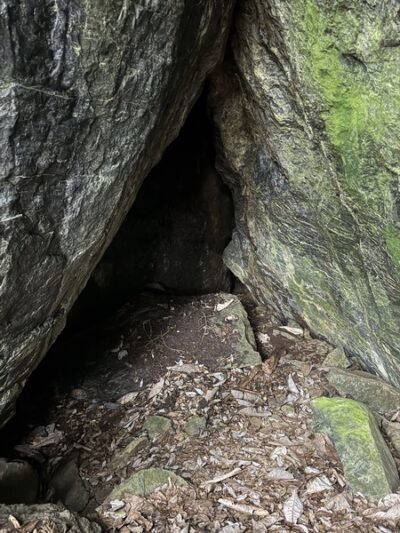
Nobunaga’s Hiding Rock