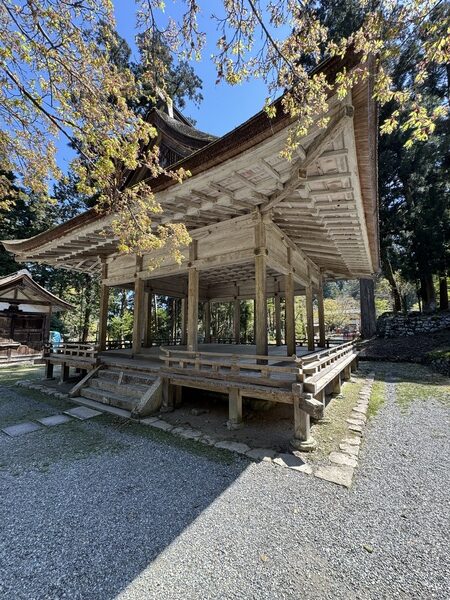
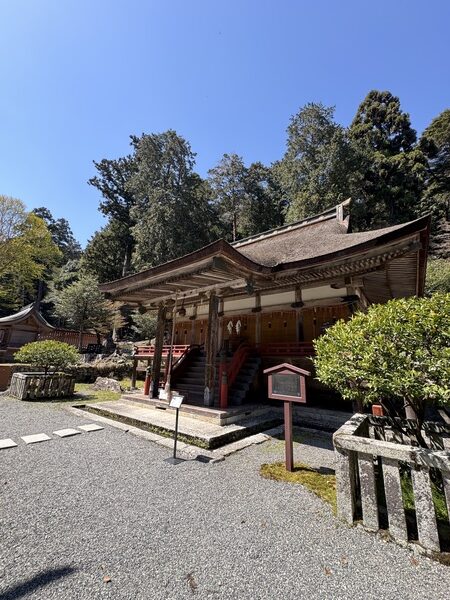
The Snows of June: Unlocking the Ancient Myth of Love and Reconciliation at Hiyoshi Taisha’s Hakusan-gu
If you have walked through the serene grounds of Kyoto’s shrines, you have likely prayed for good fortune or long-lasting relationships. But deep within the ancient forests at the foot of Mt. Hiei—just a short distance from the grand main halls of Hiyoshi Taisha—sits a hidden sanctuary where the very concept of “connection” was born from a myth of life, death, and an impossible summer snow.
This is Hakusan-gu, a designated Important Cultural Property of Japan. Tucked away beneath a canopy of towering maples and cedars, this quiet shrine holds the secrets of one of the most enigmatic deities in Japanese mythology—and offers a spiritual atmosphere that feels entirely separate from the modern world.
The Enigmatic Goddess Who Tied the World Together
To understand the unique energy of Hakusan-gu, one must travel back to the earliest chapters of Japan’s creation myths. The shrine is dedicated to Kukurihime-no-kami, a goddess surrounded by mystery.
According to ancient chronicles, the creator god Izanagi descended into Yomi-no-kuni (the underworld) to retrieve his deceased wife, Izanami. However, upon seeing her altered, monstrous form of death, a fierce argument broke out between them at the boundary of life and death. Just as the cosmic couple was about to tear the world apart, the goddess Kukurihime appeared. She whispered a single, secret phrase into Izanagi’s ear. Upon hearing her words, his heart softened, the conflict was instantly resolved, and the universe was brought back into harmony.
The word Kukuri means “to tie together” or “to bind.” Because she successfully bound the hearts of the creator gods back together, Kukurihime has been revered for over a millennium as the ultimate deity of Enmusubi—the binding of fates, the reconciliation of broken relationships, and the bringing together of soulmates.
The Miracle of the June Snow
The presence of this northern mountain goddess at Hiyoshi Taisha is marked by a miraculous story. In the year 858, a legendary holy monk of Mt. Hiei named Soo Osho traveled to the sacred, snow-capped peak of Mt. Hakusan in the Hokuriku region to invite the spirit of Kukurihime to this forest.
According to shrine records, when the deity’s spirit arrived at this spot in the middle of June—the height of Japan’s humid summer—a miraculous event occurred. The summer heat instantly vanished, and thick, white snow began to fall, blanketing the sacred rock beside the main hall.
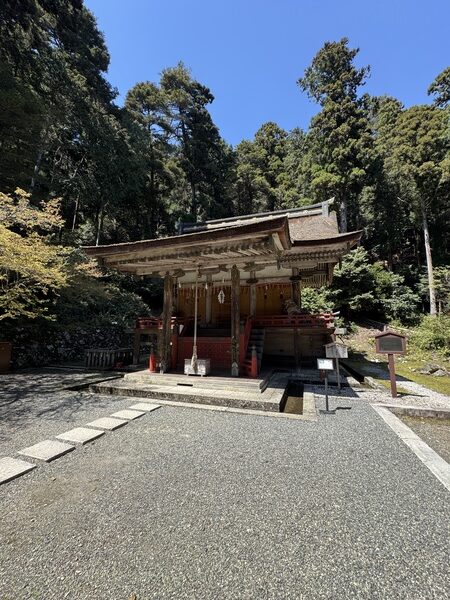
That very stone, known as the Yukitake-iwa (Snow-Measure Rock), still sits quietly beside the wooden sanctuary today. To look upon this moss-covered stone is to touch a physical anchor of an ancient miracle, a visual reminder of the cool, purifying power of the mountain goddess.
A Sanctuary of Water, Moss, and Suspended Time
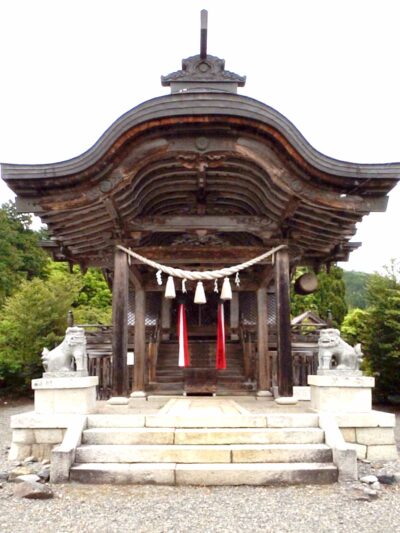
Architecturally, the main hall of Hakusan-gu is a beautiful example of mid-Edo period craftsmanship, featuring an elegant, sweeping roof made of Hiwada (cypress bark) that blends seamlessly into the surrounding forest.
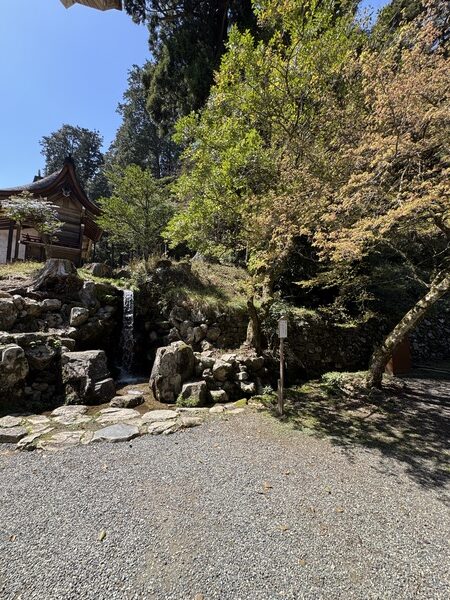
What makes Hakusan-gu truly spellbinding is its atmosphere of pure isolation. The small wooden shrine is completely surrounded by a network of clear, running water channels fed by Mt. Hiei’s natural springs. As you stand in the courtyard, the gentle, musical babble of flowing water echoes through the trees, filtering out the noise of the outside world. Sunlight filters down through the thick leaves, casting dancing gold beams onto a pristine floor of vibrant emerald moss. Here, the air feels noticeably cooler, denser, and filled with a profound stillness.
Why Visit Hakusan-gu Now?
For a traveler staying in Kyoto, Hakusan-gu offers a deeply personal spiritual journey. While the famous matchmaking shrines of Kyoto are often bustling with visitors, Hakusan-gu offers a space of absolute quietude.
It is a place to contemplate your own connections—to repair a fractured relationship, to strengthen the bond with a loved one standing beside you, or to find peace within yourself. Standing before the Snow-Measure Rock, listening to the eternal flow of the mountain water, you will feel the profound weight of a sanctuary that has been mending the invisible threads of human fate for over a thousand years.
Quick Access & Info
-
Location: Hakusan-gu, Hiyoshi Taisha Shrine (Important Cultural Property)
-
Route: JR Kyoto Station → JR Hieizan-Sakamoto Station (Approx. 20 min) → Followed by a scenic 20-minute walk up the historic, stone-walled approach.
-
Admission Fee: Adults 500 yen
Click here for Biwa Lake cruise details and reservations.

Nobunaga’s Hiding Rock