The Bridge of the Gods: Crossing into the Sacred Realm of Hiyoshi Taisha’s Omiya Bridge
If you have walked through the majestic wooden corridors of Kyoto’s Kiyomizu-dera, you have experienced how masterfully Japanese architecture integrates with nature. But to see the very peak of ancient stone engineering—a structure built not just for humans, but as a highway for the gods—you must cross the mountain ridge to the historic town of Sakamoto in Otsu, Shiga.
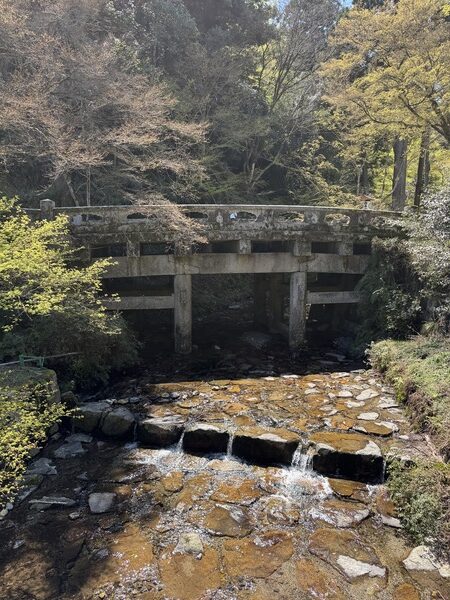
At the entrance to the sprawling, sacred forests of Hiyoshi Taisha Shrine stands a masterpiece of granite: the Omiya Bridge (Omiya-bashi). It is Japan’s oldest surviving stone arch bridge, a National Important Cultural Property that spans the boundary between the mortal world and the realm of the spirits.
The Sovereign Path of the Divine Palanquins
Hiyoshi Taisha is a sanctuary of immense scale, serving for over 1,300 years as the grand head shrine for over 3,800 Hiyoshi, Hie, and Sanno shrines across Japan. It was built at the northeastern foot of Mt. Hiei to act as the ultimate spiritual shield, protecting the ancient capital of Kyoto from malevolent spirits.
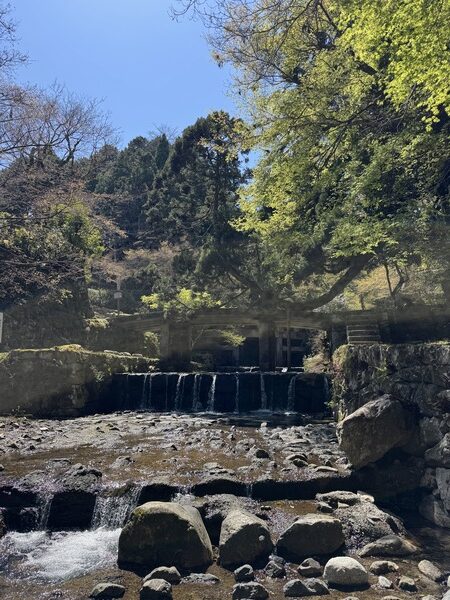
As you approach the shrine along the cedar-lined path, the Omiya Bridge appears, gracefully arching over the crystal-clear waters of the Omiya River. Built in the late Muromachi period (around the 16th century) to replace an older wooden structure, this bridge was designed with a grand purpose.
During the shrine’s spectacular Sanno Festival, heavy, ornate Mikoshi (divine palanquins carrying the spirits of the gods) are carried down the mountain slopes. The Omiya Bridge was engineered with massive stone blocks specifically to withstand the weight of these sacred vessels and the hundreds of shouting, uniform-clad bearers who carry them. To stand on this bridge is to stand on a path built exclusively for the footsteps of the gods.
A Symphony of Granite and Autumn Fire
What makes the Omiya Bridge a masterpiece is its sophisticated design, known as the Kiri-ishi-bashi (cut-stone bridge) style. The bridge uses elongated blocks of local granite, meticulously shaped and fitted together without a single ounce of modern mortar. The three arched openings beneath allow the rushing mountain river to pass safely, while the wooden railings above add a touch of classical elegance to the rugged stone foundation.
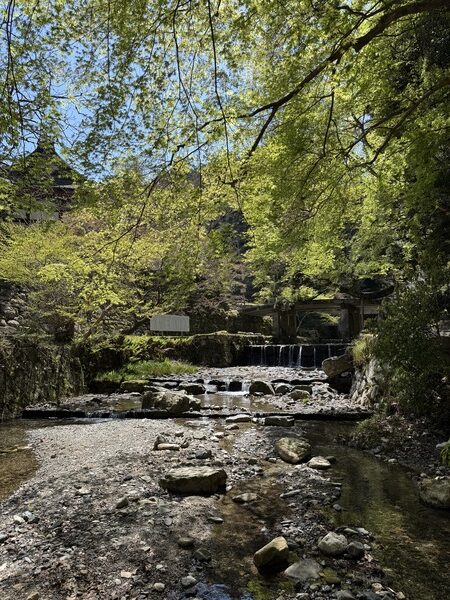
While the engineering is brilliant, the visual setting is pure poetry. The Omiya River valley is a dense canopy of Japanese maples and ancient cedars.
-
In the Spring: The fresh, lime-green leaves (Shinryoku) frame the grey granite, creating a scene of crisp, vibrant vitality.
-
In the Autumn: The entire valley erupts into a sea of fiery crimson and brilliant orange.
As the red maple leaves fall, they blanket the stone surface of the bridge and float gently down the river below. The contrast between the eternal, unyielding granite and the fleeting, colorful leaves embodies the Japanese aesthetic of Mono no aware—a deep appreciation for the transience of beauty.
The Cleansing of the Soul
For the international traveler, crossing the Omiya Bridge is a sensory and spiritual experience. In Shinto tradition, a bridge crossing a river at a shrine entrance is not just a practical crossing; it is a ritual of purification. The sound of the rushing Omiya River acts as a natural acoustic barrier, washing away the mental noise and stress of the modern world.
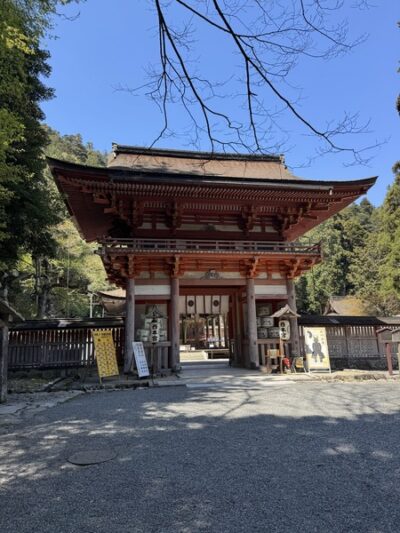
As you step off the granite stones of the bridge and pass under the unique Sanno Torii gate (which features a distinctive triangular roof representing the Buddhist trinity and Shinto deities), the atmosphere changes completely. The air turns cooler, scented with damp earth and ancient moss. You have entered the sacred mountain of the gods, a place where wild monkeys are revered as divine messengers (Masaru) and the trees are treated as living spirits.
Why Visit the Omiya Bridge Now?
For a traveler based in Kyoto, Sakamoto and Hiyoshi Taisha offer a “Refined Wilderness.” It provides the architectural prestige of a capital-class shrine combined with the untamed, misty beauty of Shiga’s mountain forests.
The Omiya Bridge is a destination for those who appreciate the hidden details of history—the tool marks left by medieval stone cutters, the smooth polish of stone worn down by centuries of pilgrims, and the perfect harmony between human craftsmanship and the natural world. If you seek a place where you can step directly into a living landscape painting and experience the true weight of Japan’s spiritual heritage, the bridge is waiting to be crossed.
Travel Tips for the Cultural Explorer
-
Look Beneath the Arch: Take a moment to walk down toward the riverbank (where safe) to admire the underside of the bridge. The precision with which the massive granite blocks are wedged together to form the arch is a testament to the incredible skill of the Ano-shu—the legendary stone masons of Sakamoto.
-
The Sanno Festival: If you visit in mid-April, you might witness the Sanno Festival, one of the oldest in the region, where the bridge fulfills its historical purpose as the gateway for the divine palanquins.
-
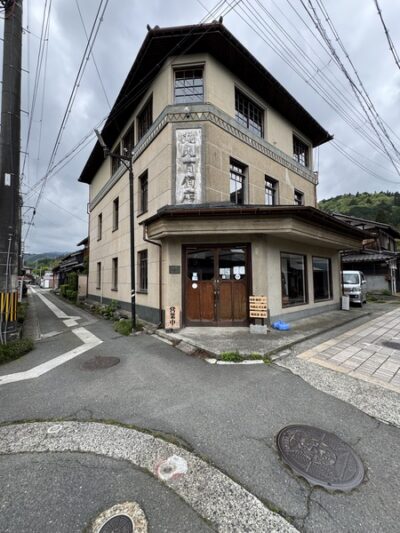
Wander the Stone-Walled Town: Pair your visit to the bridge with a walk through the surrounding town of Sakamoto. The town is famous for its Ano-shu-gaki—beautiful, mortarless stone walls built by the same masons who engineered the shrine’s bridges.
-
Morning Light: Arrive early in the morning when the mountain mist still hangs over the river. The light filtering through the cedars onto the granite bridge creates an ethereal, otherworldly glow perfect for photography.
Access
JR Kyoto Station → Hieizan-Sakamoto Station (Approx. 20 min) → Approx. 20-minute walk Admission Fee: Adults 500 yen
Click here for Biwa Lake cruise details and reservations.

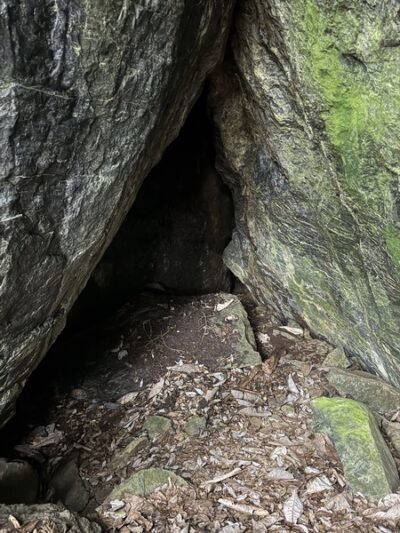
Nobunaga’s Hiding Rock