Ukawa 48 Stone Buddhas
The Silent Assembly: Discovering the 48 Stone Buddhas of Ukawa
If you have walked the stone-paved streets of Kyoto and felt the gaze of a thousand statues at Sanjusangen-do, you have witnessed the grandeur of Japanese spiritual art. But there is a place, hidden on a quiet hillside overlooking the western shores of Lake Biwa, where the divine feels more intimate, weathered, and deeply connected to the earth.
This is the story of the Ukawa Forty-Eight Stone Buddhas (Ukawa Shiju-hachitai Sekibutsu). It is a place of profound stillness, where a silent congregation has stood watch over the waters for nearly five hundred years.
A Lord’s Prayer for a Departed Soul
The story of these statues begins in the mid-16th century, during the height of the Sengoku (Warring States) period. It was a time of great upheaval and loss. Legend tells us that Sasaki Rokkaku Yoshisuke, a powerful daimyo and the lord of southern Omi, commissioned these statues to pray for the soul of his deceased mother.
Choosing the number forty-eight was no accident; it represents the Forty-Eight Great Vows of Amida Buddha, the deity of the Western Pure Land. Originally, these statues stood near the castle of the Sasaki clan, but through the shifting tides of history and the fall of samurai dynasties, they were eventually moved to this peaceful hillside in Ukawa. To stand among them today is to touch the personal grief and enduring hope of a samurai lord from half a millennium ago.
Faces Worn by Time and Mist
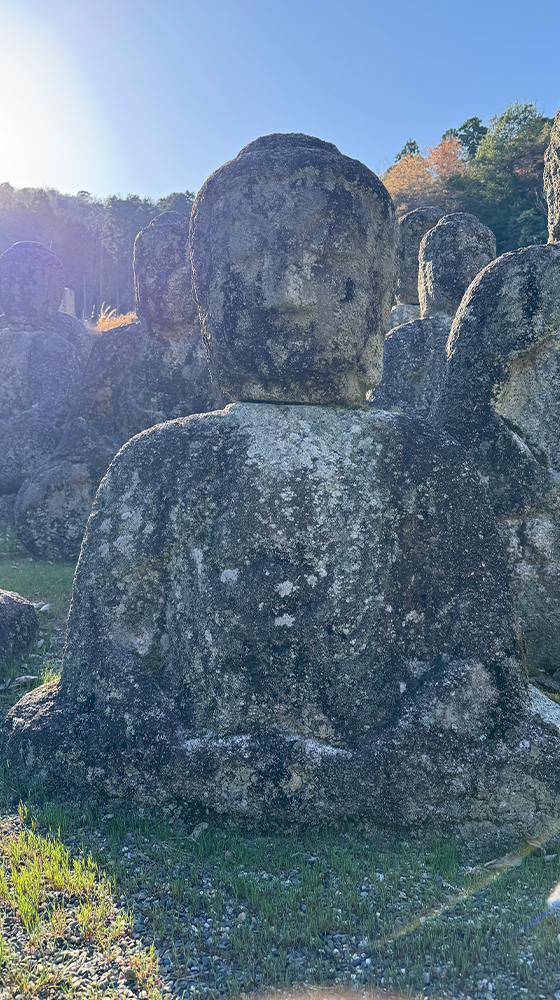
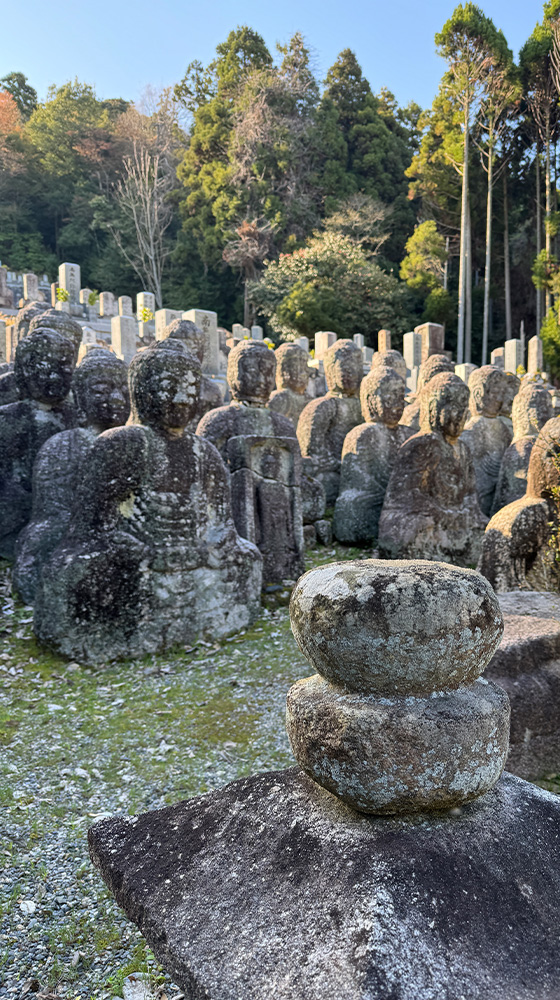
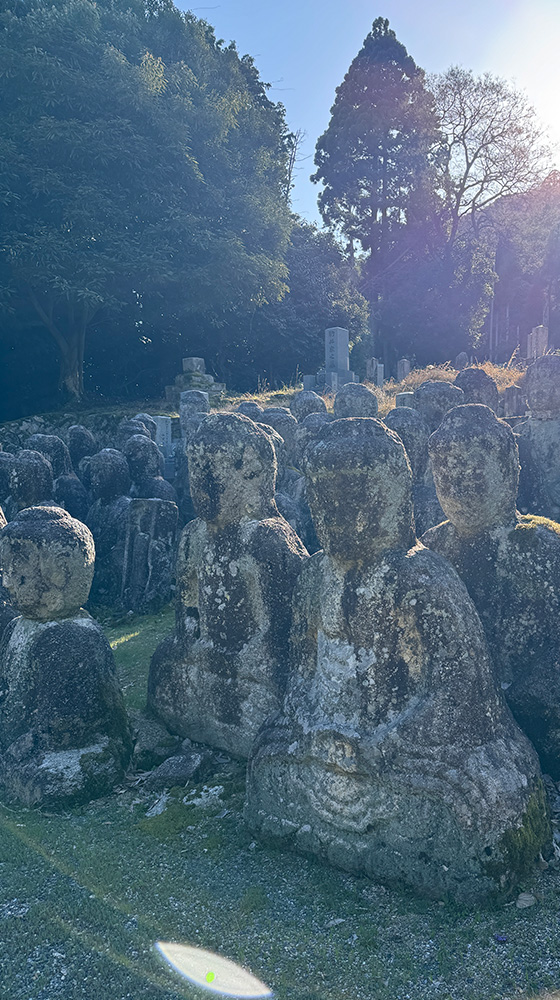
Unlike the polished and gilded statues found in Kyoto’s main halls, the Ukawa Buddhas are carved from local granite. They stand roughly 1.5 to 1.6 meters tall—nearly the height of a human—making them feel like a crowd of living monks frozen in stone.
Over the centuries, the wind from Lake Biwa and the mountain rains have softened their features. Moss clings to their shoulders like emerald robes, and lichens create patterns of grey and gold on their chests. Some appear to be smiling with a gentle, “Zen” serenity, while others seem to be deep in somber meditation. Because they are carved from the same stone as the mountain itself, they don’t look like they were placed here; they look like they emerged from the earth, born from the very landscape they guard.
The Eternal Gaze over Lake Biwa
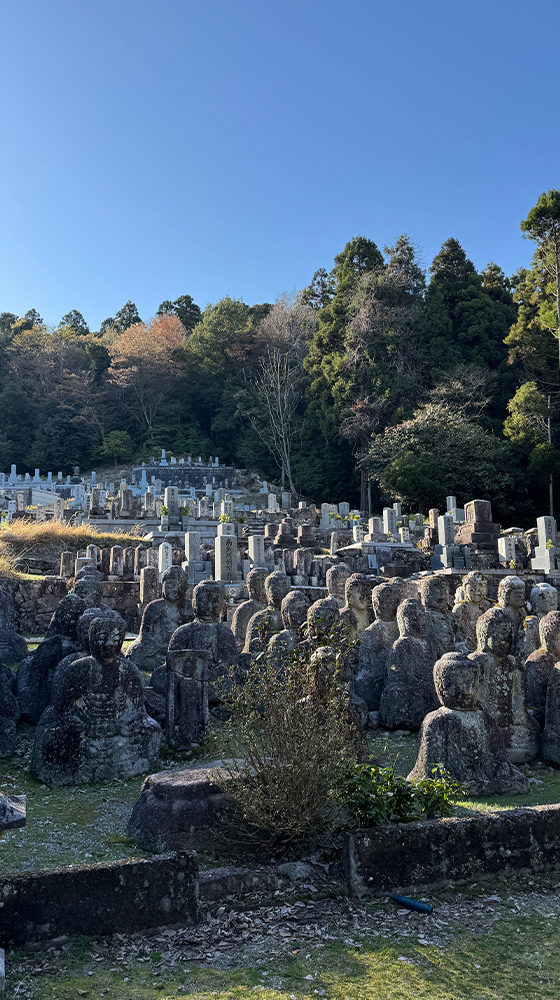
What makes the Ukawa Stone Buddhas truly “breathtaking” is their location. They are arranged in rows on a gentle slope, all facing toward the vast blue expanse of Lake Biwa.
There is a poignant beauty in this arrangement. In Japanese Buddhism, the West is the direction of the Pure Land, and these statues gaze across the water as if looking toward an eternal horizon. When the morning sun rises over the lake, it illuminates their stone faces, casting long shadows across the grass. In the quiet of the morning, with only the sound of rustling leaves and the distant lapping of waves, you realize that this isn’t just a monument; it is a space designed for the soul to find peace.
Why Visit Ukawa Now?
For the traveler based in Kyoto, Ukawa offers the ultimate “Atmospheric Escape.” While Kyoto is a city of “seeing,” Ukawa is a place of “feeling.” There are no fences, no ticket booths, and no crowds.
It is a destination for the contemplative traveler—the photographer who seeks the texture of ancient stone, the historian who loves the untold stories of the samurai, and the seeker who wants to experience Japan’s spiritual heart in its most natural form. It is a reminder that the most powerful prayers are often those written in stone and left to the care of the wind and the seasons.
Travel Tips for the Quiet Soul
-
Respect the Assembly: These statues are still deeply revered by the local community. While photography is allowed, please move quietly among them as you would in a cathedral.
-
The Texture of Stone: Look closely at the carvings. Despite the weathering, you can still see the elegant lines of the lotus pedestals and the mudras (hand gestures) of the Buddhas.
-
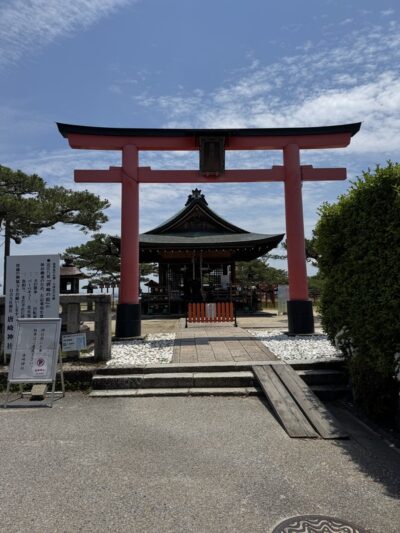
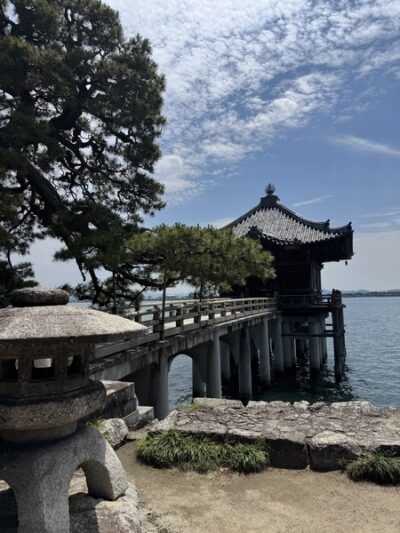
Combine with Shirahige Shrine: The statues are located near the famous “Floating Torii” of Shirahige Shrine. Visiting both allows you to experience the two different faces of Takashima’s spiritual heritage—the grand and the humble—in one afternoon.
-
Best Light: Late afternoon light is particularly magical here, as the setting sun hits the side of the statues, highlighting the deep carvings and the vibrant colors of the moss.
Access
JR Kyoto Sta. → Ōmi-Takashima Sta. (approx. 40 min) → 5 min by car 🅿 Small parking area available / Free admission
Click here for Biwa Lake cruise details and reservations.

Nobunaga’s Hiding Rock