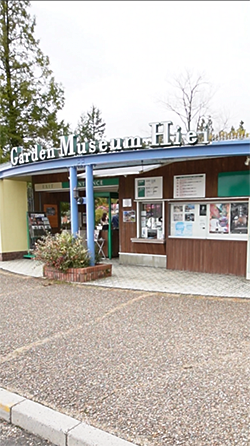
Garden Museum Hiei
Garden Museum Hiei: A Celestial Masterpiece of Light and Flowers
You have wandered through Kyoto’s historic temples, immersing yourself in the silence preserved for centuries. While that experience is unparalleled, do you ever feel the desire to change your perspective—to ascend toward the sky and immerse yourself in a completely different story?
If so, look to the summit of Mt. Hiei. Standing 840 meters above sea level on the eastern edge of the ancient capital, you will find a “paradise of light and color” beloved by the 19th-century French Impressionists, faithfully recreated under the Japanese sky. Its name is Garden Museum Hiei.
This is no ordinary garden. It is a celestial museum where the masterpieces of legends like Monet, Renoir, and Van Gogh blend seamlessly with the very flowers they sought to capture on canvas.
1. An Impressionist Dream Stepping Outside the Frame
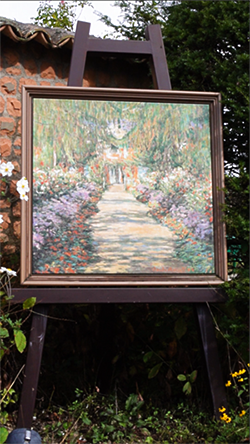
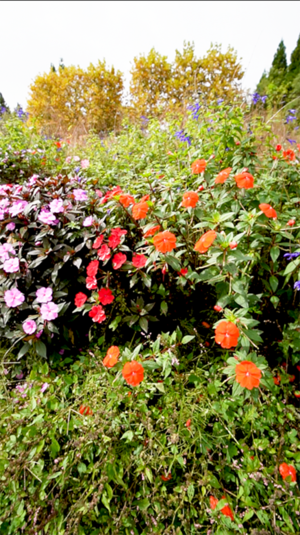
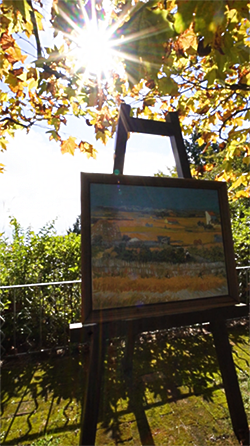
If the temples of Kyoto represent the “aesthetic of subtraction,” this garden is a “symphony of color.” As you enter, you are greeted by landscapes that look as if they were plucked directly from a famous painting. The Impressionists took their easels outdoors to capture the fleeting changes of natural light. Here, their masterpieces are recreated as ceramic panels (ceramic tablets), surrounded by the actual seasonal blooms depicted in the art.
Unlike paper or canvas, these ceramic panels do not fade under the sun, wind, or rain. In the crisp, clear light of the mountain summit, Monet’s poppies and Renoir’s young girls greet you with a vividness that feels as though they were painted only moments ago.
2. Quiet Waters Where Monet’s “Water Lilies” Float
The most iconic areas within the museum are the “Flower Garden” and “Water Garden,” which recreate the masterpieces of Claude Monet. The “Water Garden,” in particular, features a pond modeled after Monet’s own garden in Giverny, complete with its famous green arched bridge. Real water lilies float on the surface as willow branches sway in the breeze. Beside this scene sits the ceramic recreation of Monet’s Water Lilies.
Between the brushstrokes in the art, the rippling water before your eyes, and the blue sky reflected on the surface, the boundary between reality and art begins to blur. For a moment, you may forget whether you have wandered into a 19th-century French garden or are standing atop a 21st-century Japanese mountain.
3. A Celestial Panorama Overlooking Lake Biwa
What makes this museum truly unique in the world is its breathtaking backdrop. When you lift your eyes from the paintings, you are met with a grand panorama of Lake Biwa—Japan’s largest lake—and the rolling peaks of the Kyoto countryside.
The “ever-changing light” that the Impressionists spent their lives chasing can be felt here in a full 360-degree view. The lake glitters like silver as it reflects the sun, while the mountain breeze carries the scent of flowers. At 840 meters, the summit is several degrees cooler than the city below; that refreshing air itself becomes a luxurious essence that heals the traveler’s soul.
4. A Mindful Stroll Enveloped in Fragrance and Light
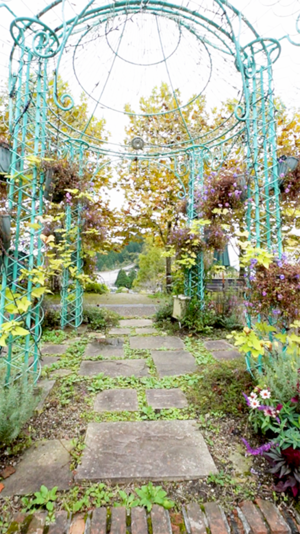
The museum features various themed gardens, including the “Fragrant Garden,” reminiscent of the South of France, and the “Rose Garden,” which boasts about 1,000 roses of 180 varieties in early summer.
Between strolls, you can enjoy tea time at the café while gazing out over Lake Biwa. Completely liberated from the crowds and bustling buses of central Kyoto, you are left with only the flowers, the masterpieces, and the vast, open sky. The hours spent here will surely be remembered as a moment where beauty and tranquility reached a perfect harmony during your journey through Japan.
Conclusion: A Colorful Holiday After the Ancient Capital
A trip to Kyoto is a journey into Japan’s spirit. A trip to Garden Museum Hiei is a journey to liberate your senses.
At the summit of Mt. Hiei—a place with over a thousand years of history—the entirely different culture of French Impressionism coexists beautifully. This unexpected harmony is a hidden charm of Japan, a nation that has long embraced diversity.
Access: It’s about one hour from Kyoto by the Eizan Railway and cable car.
Why not experience a special afternoon walking through masterpieces and catching the breeze from Lake Biwa?
Click here for Biwa Lake cruise details and reservations.

Nobunaga’s Hiding Rock