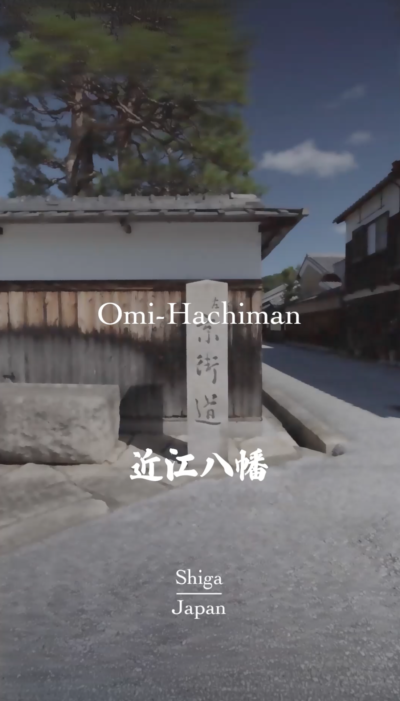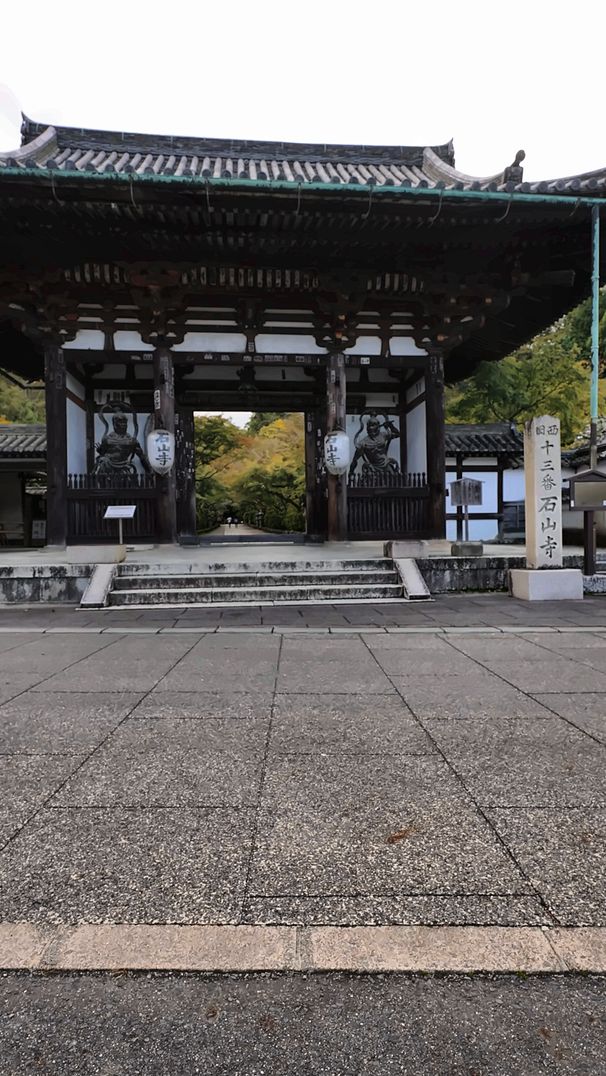
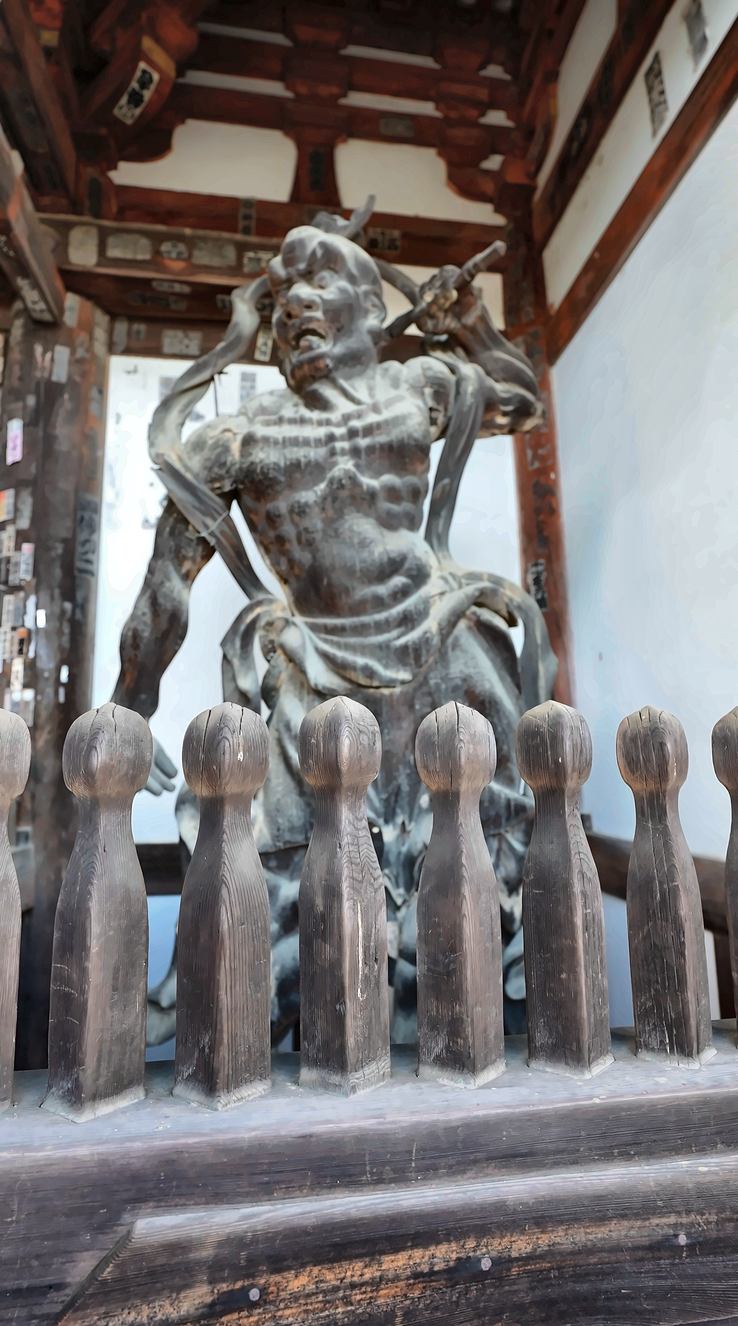
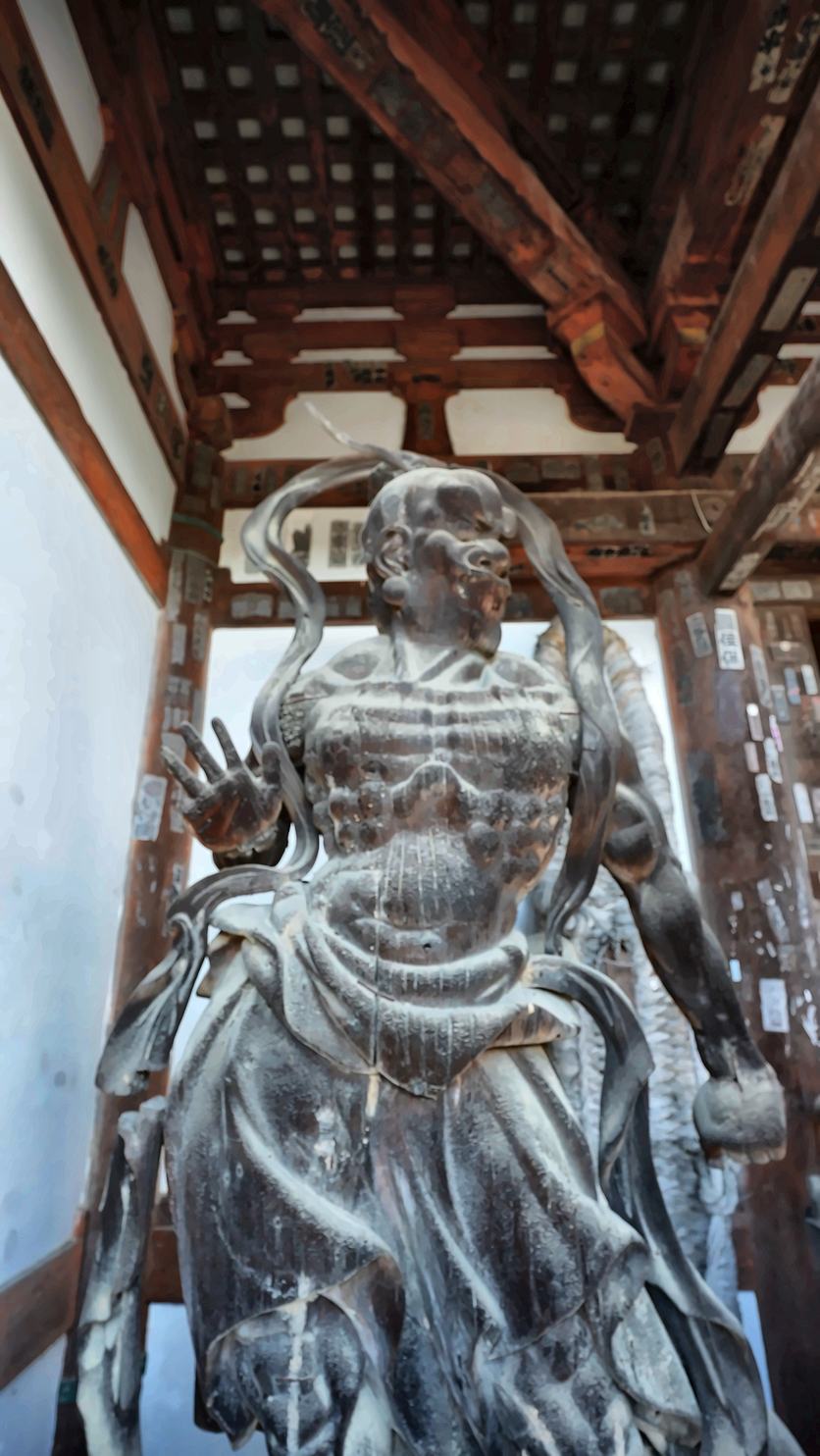
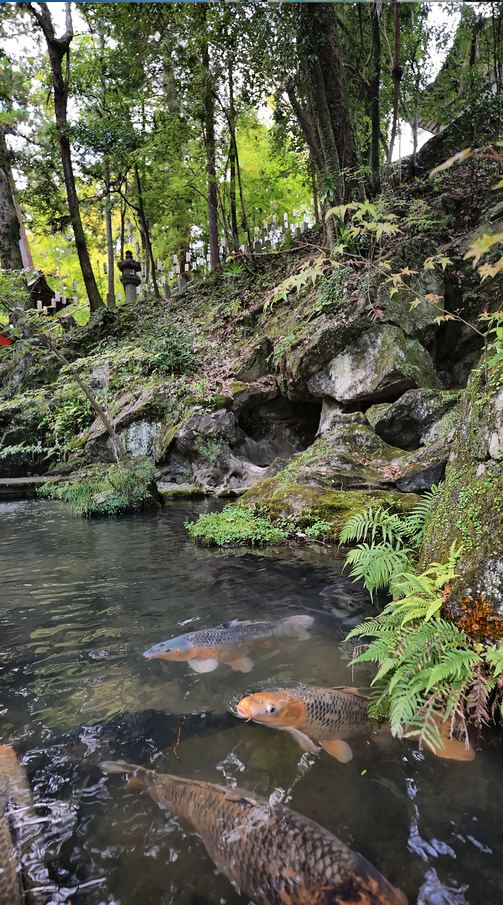
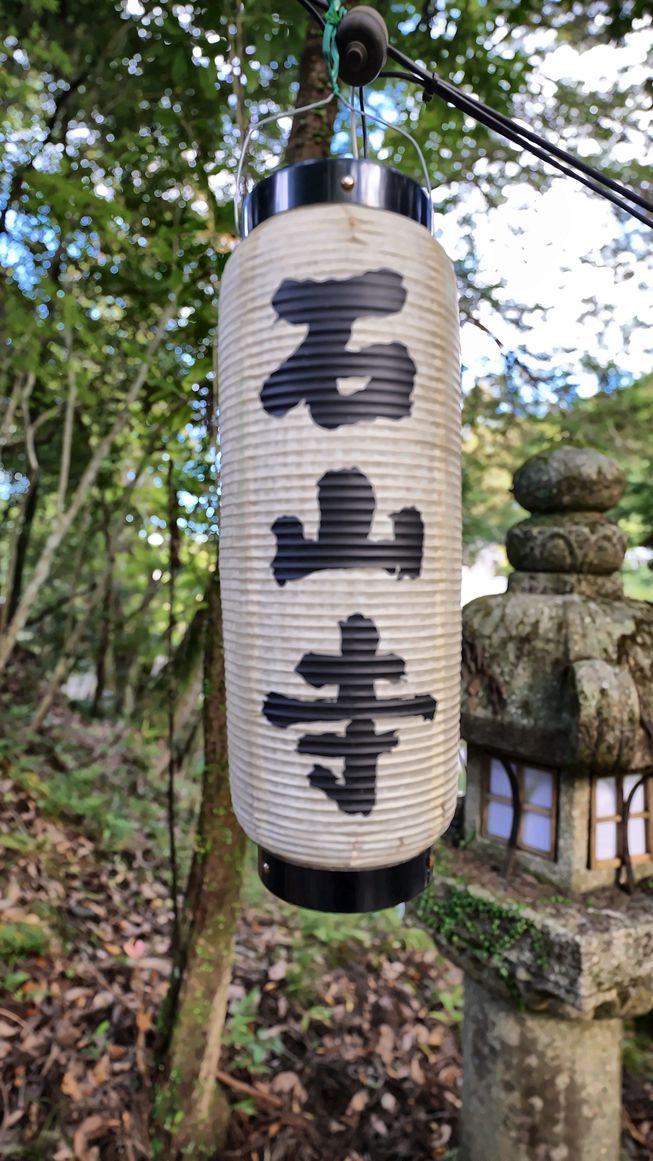
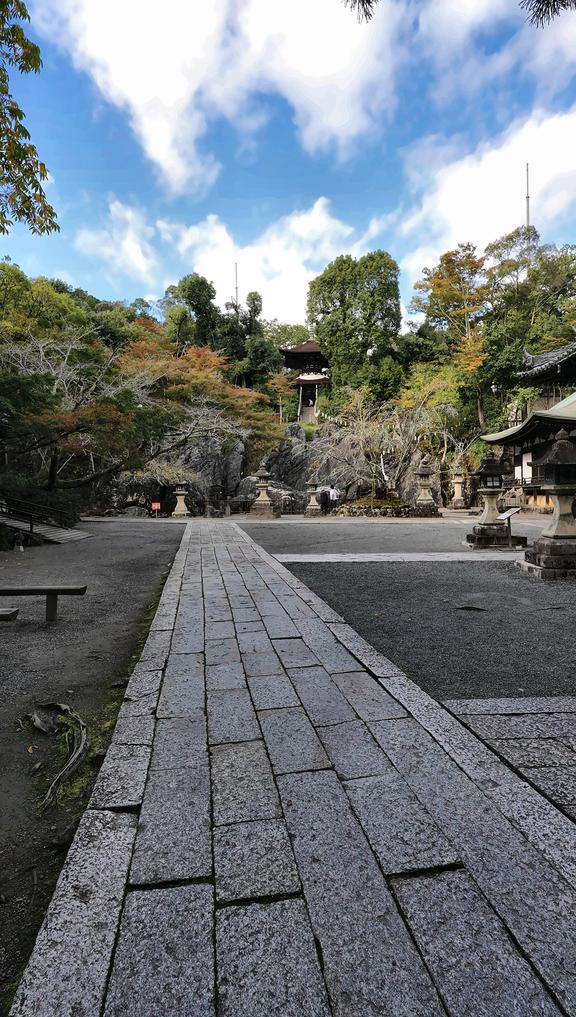
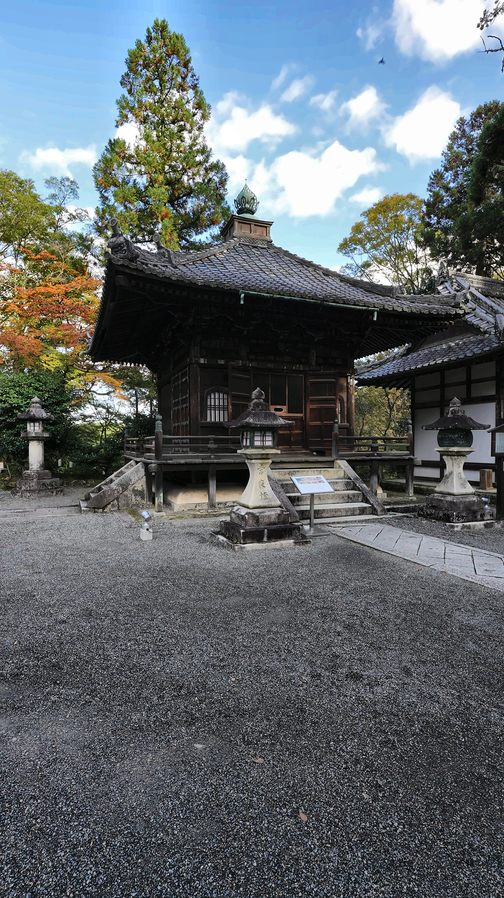
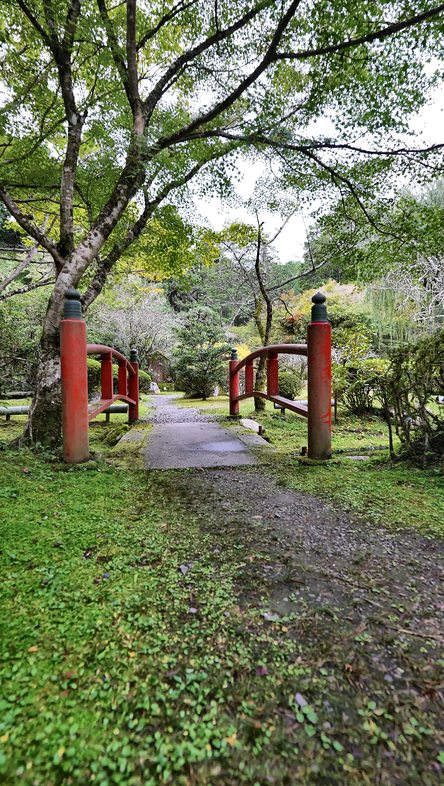
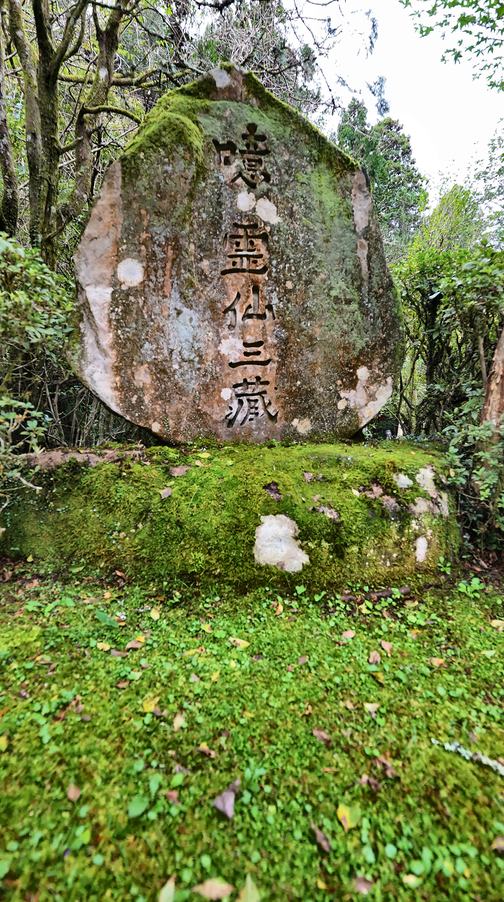
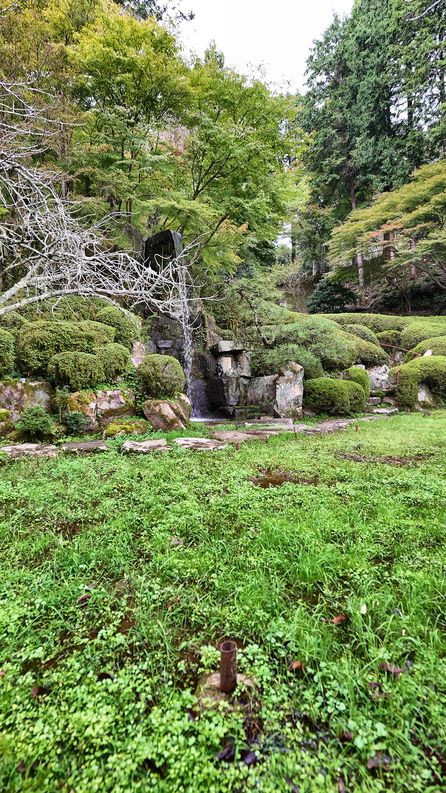
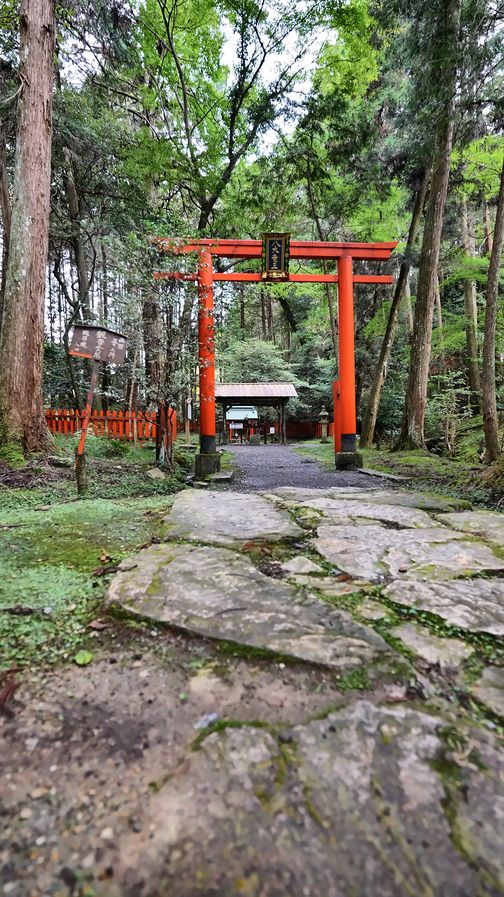
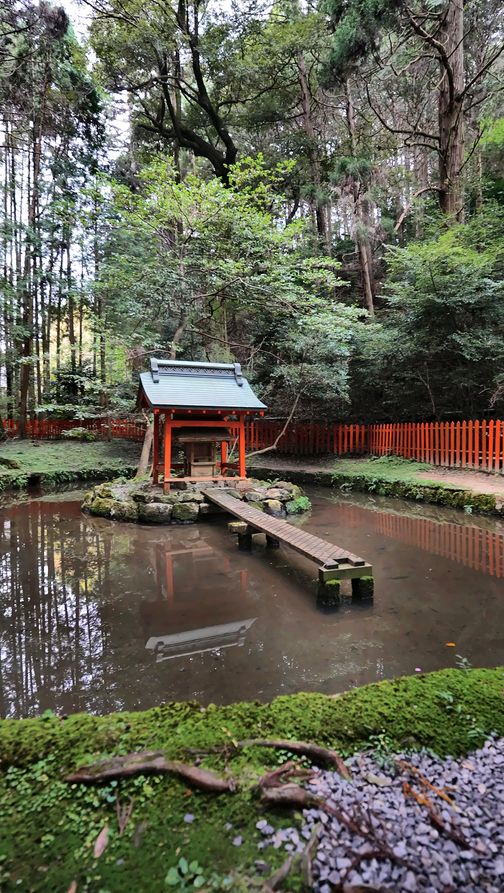
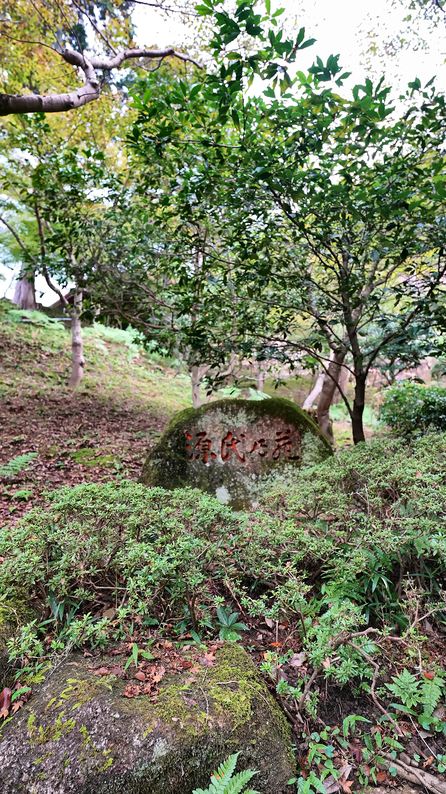
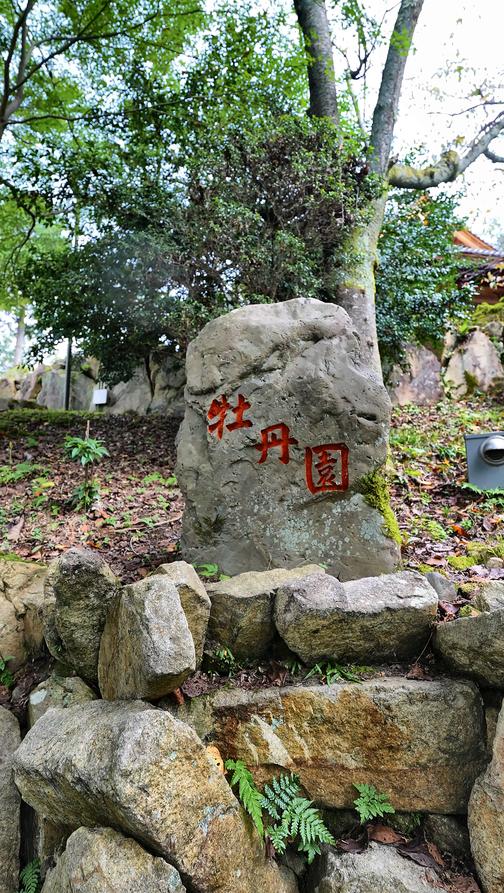
On the banks of the Seta River in Otsu, Shiga stands a thousand-year-old temple built atop a dramatic outcrop of stone — the birthplace of The Tale of Genji, home to two National Treasures, and one of Japan’s most beloved spots for autumn leaves and moonlight. Here’s the story of Ishiyama-dera, and how to reach it from Kyoto.
A temple built on stone
Some temples sit lightly on the land. Ishiyama-dera grows straight out of it.
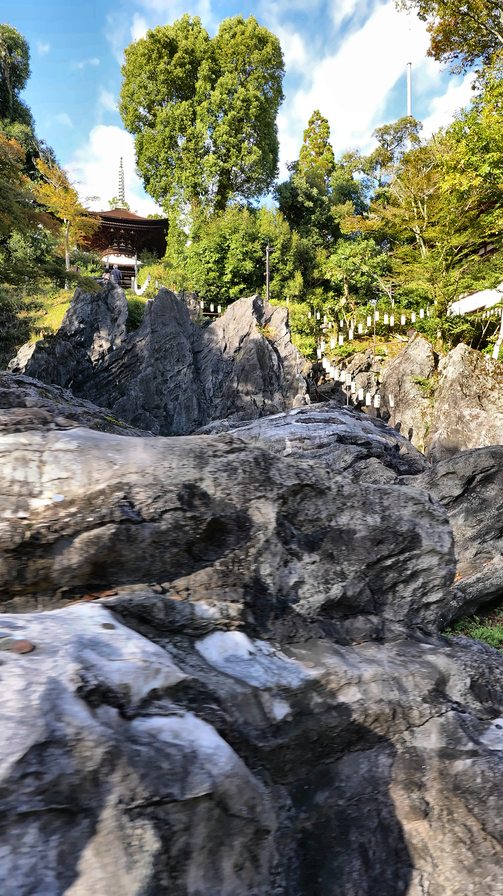
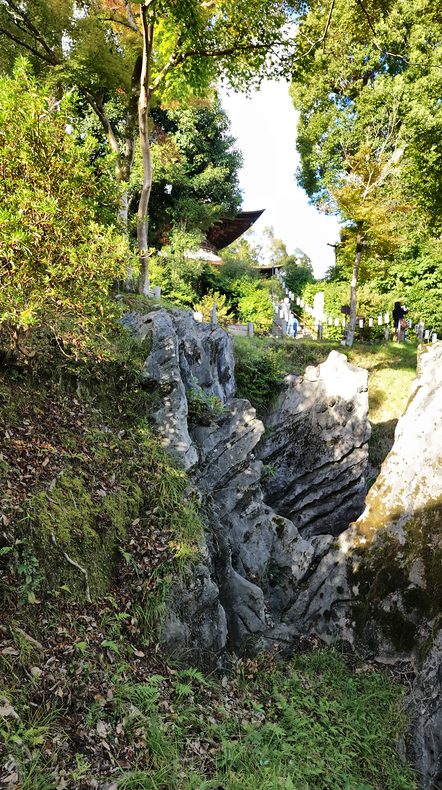
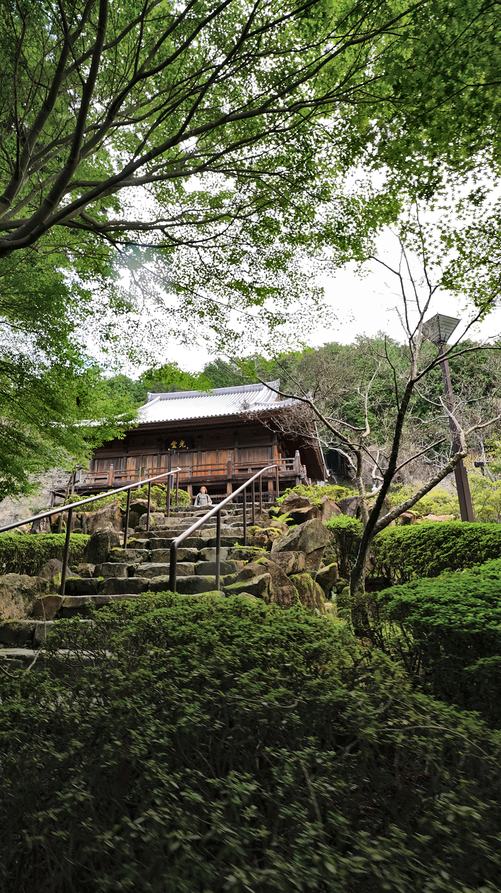
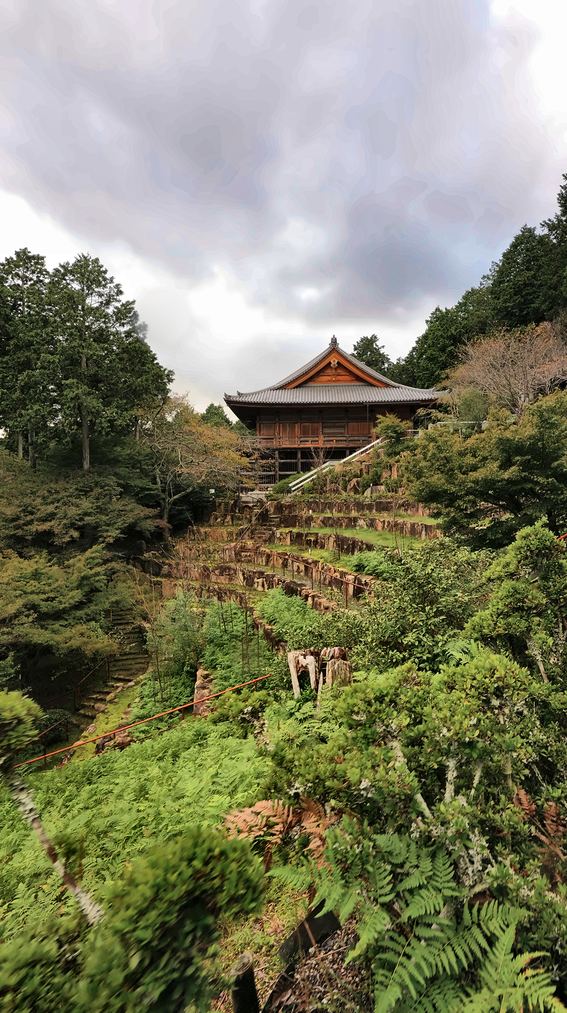
On the banks of the Seta River, where Lake Biwa pours southward toward Kyoto, a great outcrop of pale, jagged rock breaks through the hillside — and perched upon and around it stands an ancient temple. The rock came first, and the temple grew to fit it. Climb up through the grounds and you’re never far from the stone: it rises beside the halls, shoulders up through the paths, and gives the whole place a rugged, elemental feeling you won’t find at a flatland temple.
This is Ishiyama-dera, whose name means, quite literally, “stone mountain temple.” And few places pack so much of Japan — its faith, its literature, its seasons — into one hillside.
More than 1,250 years of history
Ishiyama-dera was founded in the Nara period, in the year 749, by the priest Roben at the behest of Emperor Shomu — the same emperor who commissioned the Great Buddha of Nara. That places its origins more than 1,250 years ago.
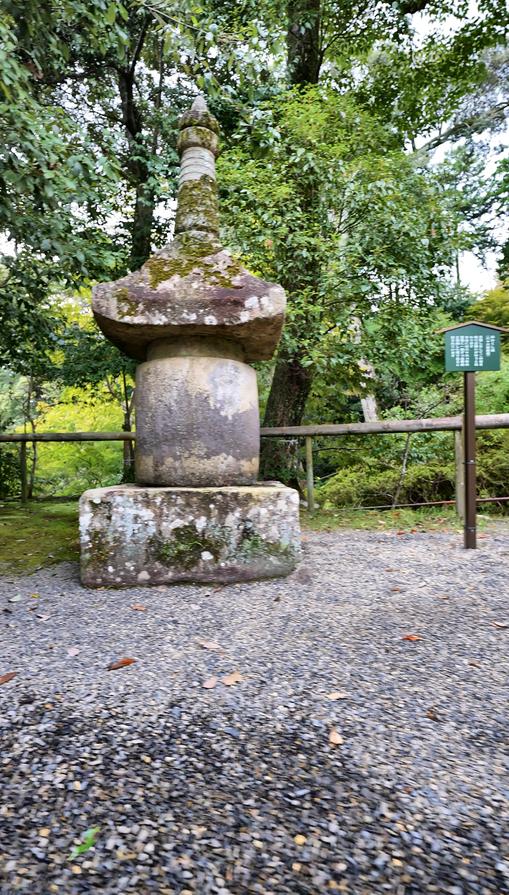
The rock the temple is named for is wollastonite, a stone formed where limestone met the heat of molten rock deep underground. It’s unusual enough on this scale to be designated a national Natural Monument. Set against the weathered wood of the temple halls and the trees that frame them, the rough white stone creates a landscape found nowhere else in Japan.
As a temple of the Shingon school of esoteric Buddhism, Ishiyama-dera has drawn worshippers for over a millennium. In the Heian period it became the object of the fashionable “Ishiyama pilgrimage,” when aristocrats traveled out from the capital to pray to its Kannon — and, as it happened, to make a lasting mark on Japanese literature.
The birthplace of The Tale of Genji
If there is one story that defines Ishiyama-dera, it belongs to a woman and a moon.
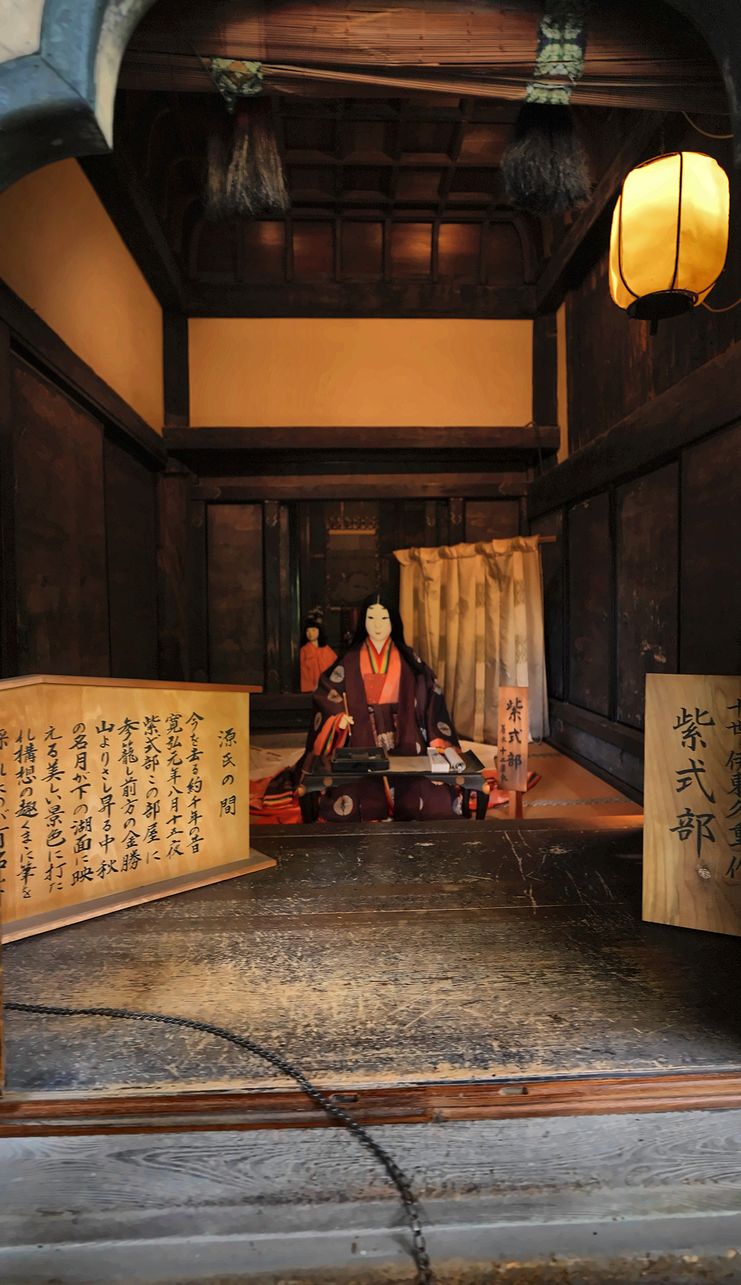
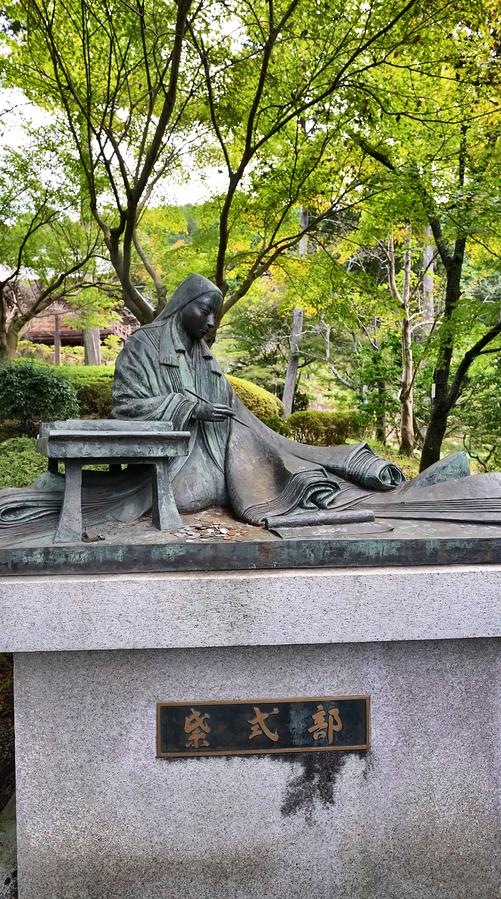
Around a thousand years ago, the court lady Murasaki Shikibu is said to have come here on retreat. One autumn night, gazing at the full moon reflected on the waters of Lake Biwa, she was struck by inspiration — and began to write The Tale of Genji, the sweeping court romance now widely regarded as the world’s first novel. The temple’s main hall preserves a small room known as the “Genji Room,” said to mark the spot, where a seated figure of Murasaki Shikibu in twelve-layered court robes gazes out as she did.
Whether taken as history or beloved legend, the connection is real to Ishiyama-dera, and it has made the temple a place of pilgrimage for lovers of literature ever since. Murasaki Shikibu was not alone, either: the temple appears in other classics of Heian writing, and names like Sei Shonagon are woven into its literary story too.
Two National Treasures, built into the hillside
Ishiyama-dera holds two of Japan’s National Treasures, and both reward a slow look.
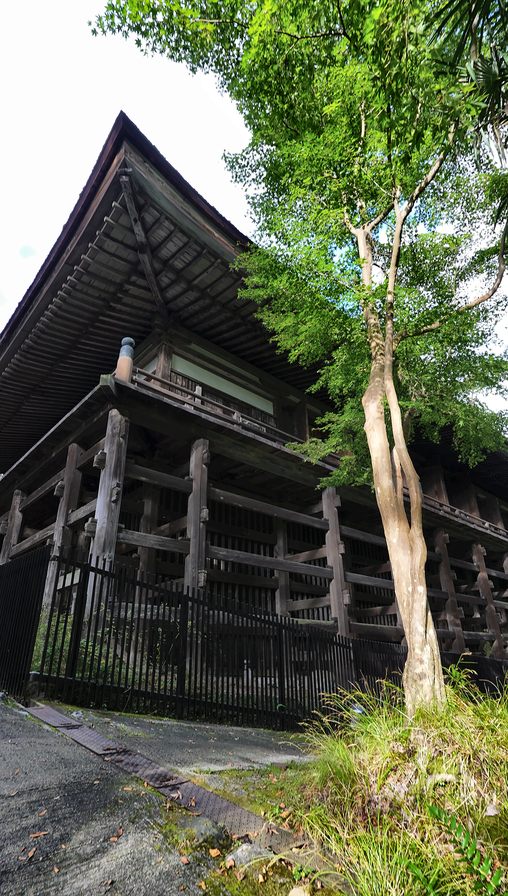
The main hall is the oldest wooden building in all of Shiga Prefecture. Built in the dramatic kake-zukuri style — a stage-like structure raised on tall wooden pillars against the steep slope — it seems to grow out of the rock itself. It is here that the Genji Room sits, and here that the temple’s principal image of Kannon is enshrined.
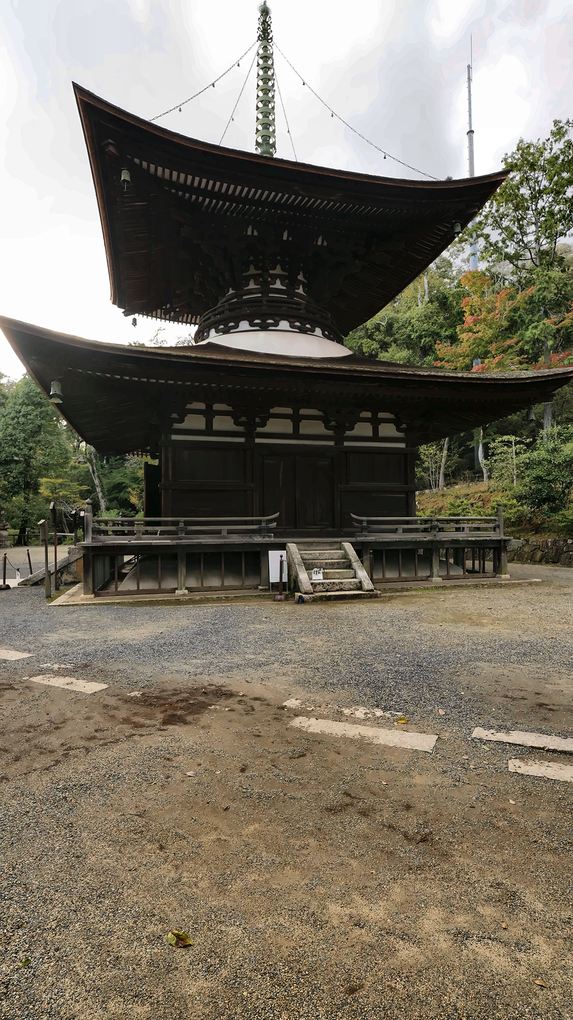
Higher up stands the tahoto, a two-storied pagoda of exceptional grace, said to have been donated by the shogun Minamoto no Yoritomo. Rising from the pale wollastonite with the trees behind it, it is one of the most photographed sights in Shiga — and in autumn, when the maples turn, looking up at the pagoda through the red leaves and the white rock is simply breathtaking.
A temple for every season — especially autumn
Ishiyama-dera is known as a “temple of flowers,” with something in bloom through much of the year — plum, cherry, irises, and more. But its most famous season is autumn.
Around a thousand maple trees fill the grounds, and from mid-to-late November they turn the hillside into a tapestry of crimson and gold. In recent years the temple has held evening illuminations during the peak, when the lit maples and the floodlit pagoda draw visitors well after dark.
And then there is the moon. Ishiyama-dera is counted among the Eight Views of Omi — the classic set of scenic views around Lake Biwa — as “Autumn Moon over Ishiyama.” It was moonlight over the lake that is said to have inspired Murasaki Shikibu, and on a clear autumn night, it’s easy to understand why.
A short, rewarding trip from Kyoto
What makes Ishiyama-dera especially worth the trip is how close it sits to Kyoto, while feeling a world apart. You can spend your morning among Kyoto’s temples and still stand beneath the tahoto by afternoon.
As the 13th temple on the Saigoku Thirty-Three Kannon Pilgrimage, it also draws pilgrims making their way around western Japan’s great Kannon circuit — so you’ll often share the grounds with people who have come to pray, not only to sightsee. Literature, faith, nature, and history layer upon one another here, which is exactly what makes Ishiyama-dera one of the finest places to visit in all of Otsu.
How to get to Ishiyama-dera
Ishiyama-dera sits at the southern end of Lake Biwa, where the lake meets the Seta River, and is easy to reach by train from Kyoto or Osaka.
- By train: Take the Keihan Ishiyama-Sakamoto Line to Ishiyamadera Station; the temple is about a 10-minute walk along the river. From Kyoto, the whole trip takes roughly 30 minutes via JR to Ishiyama Station and a transfer to the Keihan line.
- By car: There is a paid parking lot close to the temple gate, convenient for those driving the Lake Biwa area.
- A note on timing: For autumn color, aim for mid-to-late November; for the quiet of the “Autumn Moon,” a clear evening is unmatched.
Plan your visit
| Temple | Ishiyama-dera (石山寺) |
| Where | 1-1-1 Ishiyamadera, Otsu, Shiga |
| Founded | 749, by the priest Roben, at the behest of Emperor Shomu |
| School | Head temple of the Toji Shingon school; 13th stop on the Saigoku 33 Kannon Pilgrimage |
| Highlights | Wollastonite rock (Natural Monument); National Treasure main hall & tahoto pagoda; the “Genji Room”; autumn maples; “Autumn Moon over Ishiyama” |
| Best autumn color | Typically mid-to-late November |
| Hours | 8:00–16:30 (last entry 16:00) |
| Admission | ¥600 for adults (inner sanctuary and Bujoden museum extra) |
| Access | Approx. 10-min walk from “Ishiyamadera” Station on the Keihan Ishiyama-Sakamoto Line |
Hours, admission, and special events such as the autumn illumination can change by season — it’s worth confirming on the official Ishiyama-dera site before you go.
Frequently asked questions
What is Ishiyama-dera known for?
Ishiyama-dera, in Otsu, Shiga, is an ancient Buddhist temple best known as the place where Murasaki Shikibu is said to have begun writing The Tale of Genji. It’s also famous for the wollastonite rock it’s named for, its two National Treasure buildings, and its autumn maple leaves.
How old is Ishiyama-dera?
It was founded in 749, during the Nara period, making it more than 1,250 years old.
Why is it called “stone mountain temple”?
The name comes from the large outcrop of wollastonite rock within the grounds, a designated Natural Monument, on and around which the temple is built.
What’s the connection to The Tale of Genji?
Tradition holds that the court lady Murasaki Shikibu, on retreat at the temple, was inspired by the moon reflected on Lake Biwa and began writing The Tale of Genji there. The main hall preserves a “Genji Room” marking the spot.
When is the best time to visit for autumn leaves?
Usually mid-to-late November, when around a thousand maples turn red and gold. The temple often holds evening illuminations during the peak.
How do I get to Ishiyama-dera from Kyoto?
Take the train from Kyoto to Ishiyama, transfer to the Keihan Ishiyama-Sakamoto Line, and get off at Ishiyamadera Station — about a 10-minute walk from the temple. The trip takes roughly 30 minutes.
Click here for Biwa Lake cruise details and reservations.


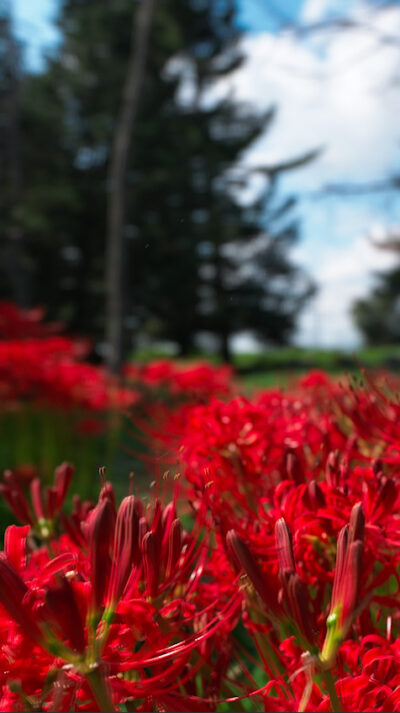
Genji-hama: Lake Biwa’s Quiet Field of Red Spider Lilies


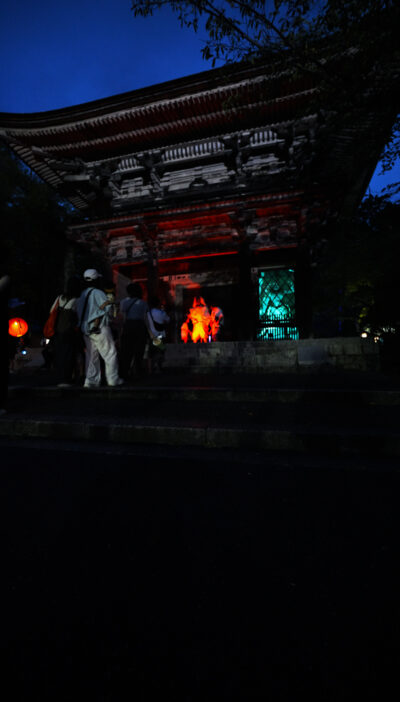
Saikyoji Summer Evening Illumination|Otsu, Shiga

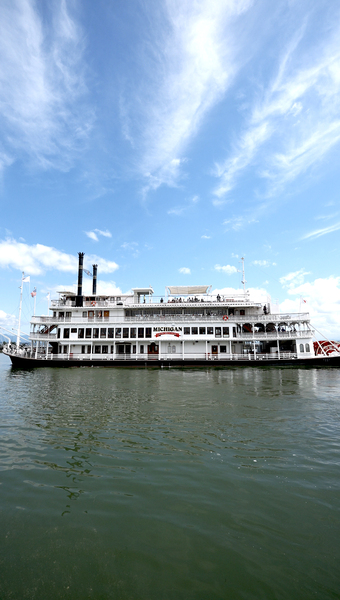
Michigan Cruise|Lake Biwa, Shiga
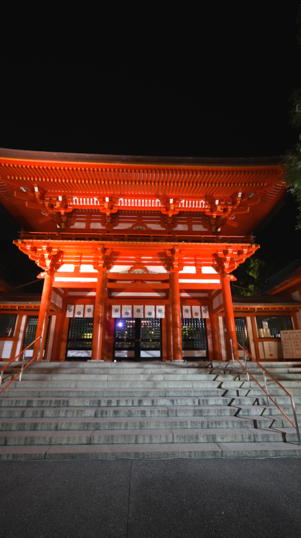
Omi Jingu Summer Illumination|Otsu, Shiga
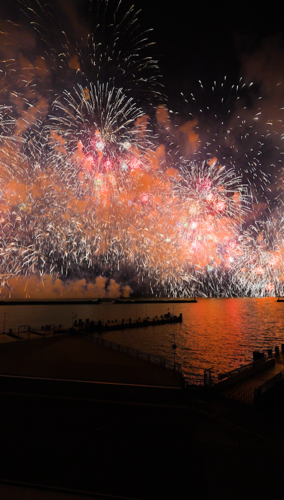
Biwako Fireworks Festival