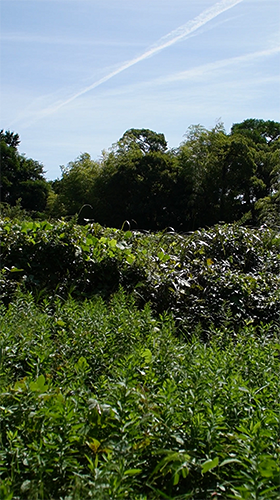
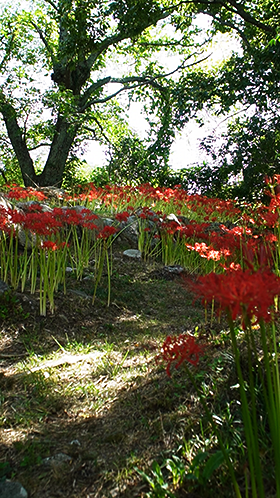
Oomizo Castle Ruins
Omizo Castle Ruins: Whispers of the Samurai on the Shores of Lake Biwa
In Kyoto, you squint at the golden splendor of Kinkaku-ji and look down upon the city from the high wooden stage of Kiyomizu-dera. After indulging in the brilliant “center stage” of Japanese history, do you find yourself longing for the “behind-the-scenes” stories—a place more silent, where the breath of the Warring States period samurai still lingers?
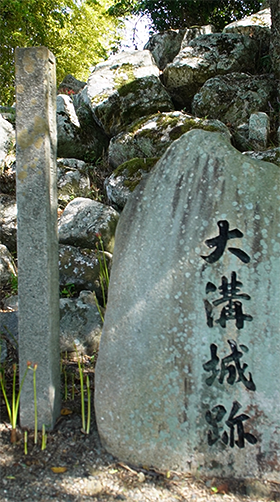
If so, head north of Kyoto to the western shore of Lake Biwa. There, tucked away in Takashima City, Shiga Prefecture, lie the Omizo Castle Ruins. This is the site of a “Water Castle,” built as a strategic stepping stone for Oda Nobunaga’s quest to unify Japan.
1. A Fortress on the Lake: The Will of a Conqueror
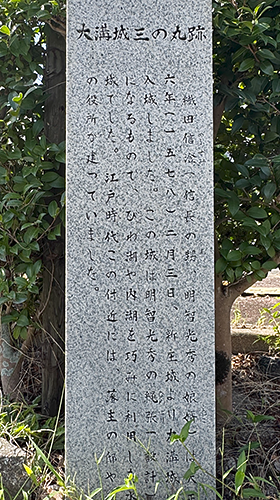
The history of Omizo Castle dates back to 1578. It was commissioned by the hegemon of the era, Oda Nobunaga, and built by his nephew, Oda Nobuzumi. Nobunaga valued this location as a vital transportation hub connecting Kyoto to the northern regions and as a base to control the naval routes of Lake Biwa.
The design of this castle is said to have involved Akechi Mitsuhide, a genius of castle architecture. In stark contrast to the elegant courtly culture of Kyoto, Omizo reflects a concentrated “rationality for victory” and the wisdom of “coexisting with water.” In its time, Omizo was a true “Water Castle,” directly connected to Lake Biwa so that the fortress itself appeared to float upon the lake. Today, you can still see traces of this in the beautiful Otome-ga-ike Pond, which was once part of the castle’s moat.
2. Walls of “Nozura-zumi”: Stones That Tell of an Era
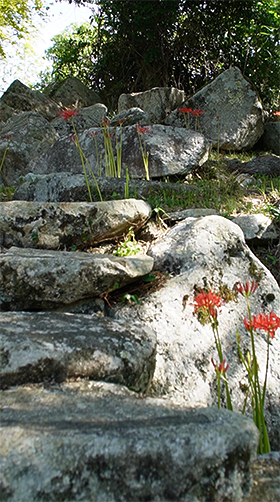
As you step onto the castle site today, the first thing to catch your eye is the powerful stone base of the former keep. These walls were built using the Nozura-zumi technique—stacking natural, unproccessed stones just as they are. Seeing these rugged, raw stones standing in perfect balance for over 450 years without collapsing is a breathtaking sight.
Unlike castles that have been overly polished for tourism, there are no excessive fences or flashy signs here. You can feel the moss growing in the crevices and the light filtering through the trees, allowing you to reach out and touch the stones with your own hands. In that moment, you are not touching “history” in a textbook, but the “reality” of the samurai who once staked their lives here.
3. A Labyrinth of History: The Canals and Streets of Omizo
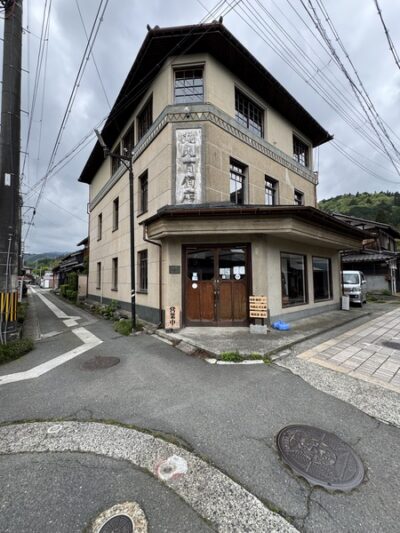
After exploring the ruins, take a stroll through the surrounding castle town. Here, a network of inner canals known as Ebisu, created between the Warring States and Edo periods, still breathes within the daily lives of the residents.
If Kyoto’s “Philosopher’s Path” is a trail for contemplation, the canals of Omizo are a “lifeline for survival.” Pure water flows in front of the homes where people still gather. These same waterways, where samurai once washed their horses and transported goods, remain unchanged today. This continuity is the true charm of Omizo. The entire town feels less like a tourist spot and more like a massive, living historical monument.
4. Travel Advice: A Moment of Samurai Repose
For those days when you love the bustle of Kyoto but crave a quiet immersion into the Japanese spirit, the Omizo Castle Ruins are the perfect destination.
-
Mindset: You will not find a reconstructed castle tower here. Instead, use your imagination. Standing atop the stone walls and envisioning the view of Lake Biwa as Oda Nobuzumi once saw it will give you a deeper understanding of history than any museum.
-
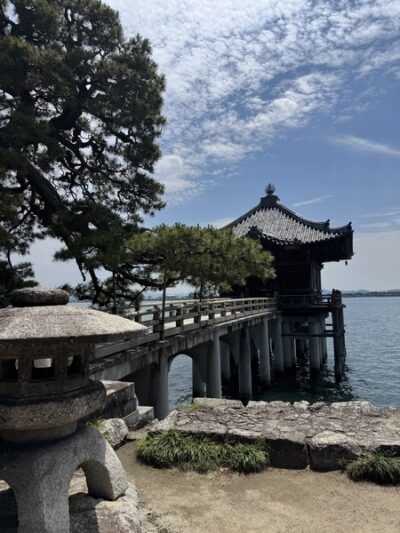
A Mindful Experience: Watch the setting sun from the wooden bridge at Otome-ga-ike Pond adjacent to the ruins. Within the contrast between the unyielding stone walls and the soft, flowing water, you will find the hidden essence of Japanese aesthetics.
Conclusion: Beyond the Guidebook, into the True Japan
A trip to Kyoto is a journey to know Japan’s “perfected beauty.” A trip to the Omizo Castle Ruins is a journey to know Japan’s “process of formation.”
When you grow weary of the glamor of famous sights, stretch your journey to the western side of Lake Biwa. Feeling the wind from the Hira Mountains atop the silent stone walls, you will discover your own “Samurai Story”—the most luxurious souvenir of your travels.
Access: Convenient location: About 40 minutes from Kyoto
The stone walls that have endured 450 years of time are waiting for you.
Click here for Biwa Lake cruise details and reservations.

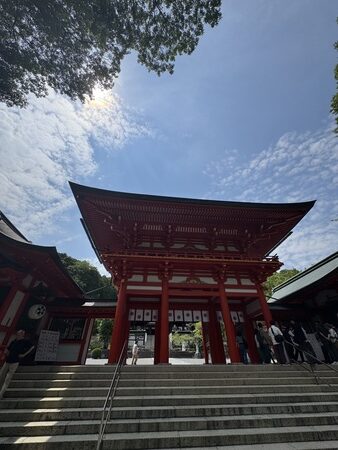
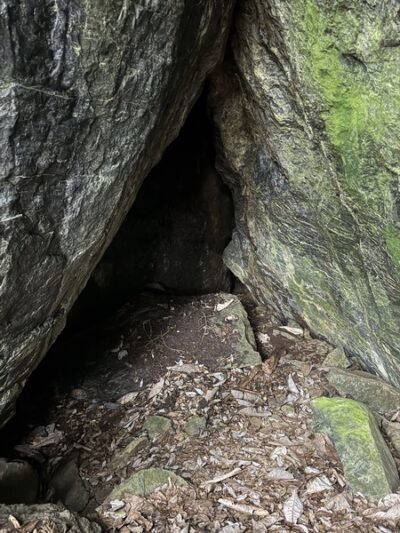
Nobunaga’s Hiding Rock