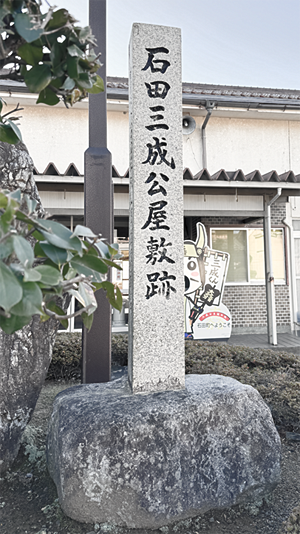
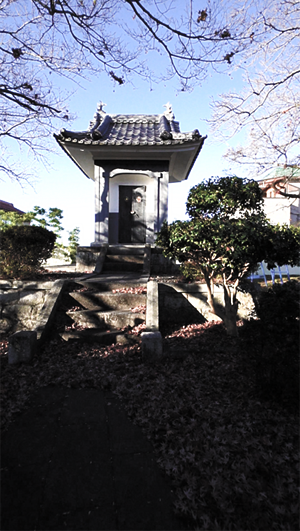
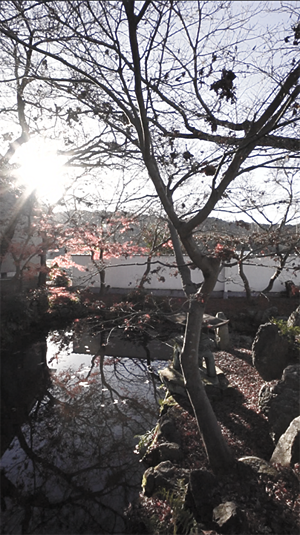
Site of Ishida Mitsunari’s Residence
The Roots of Loyalty: Mitsunari Ishida’s Birthplace—A Journey into the Heart of a “Faithful Samurai”
While walking through the glittering halls of Kinkaku-ji in Kyoto and touching fragments of the “Golden Age” built by Toyotomi Hideyoshi, have you ever felt the urge to discover the story behind the scenes? The story of the man who supported his lord with unparalleled sincerity and a clumsy, yet unwavering, devotion?
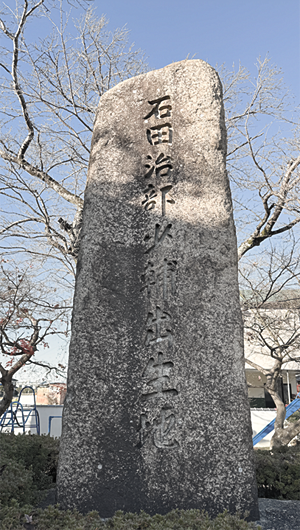
If so, journey northeast from Kyoto to Ishida-cho, nestled in the quiet countryside of Nagahama City, Shiga Prefecture. Here, the Site of Mitsunari Ishida’s Residence is quietly preserved—the birthplace of Mitsunari Ishida, one of the most underrated and purely loyal samurai in Japanese history.
This is not a flashy tourist attraction. It is a sanctuary of the spirit where you can touch the origins of a statesman who staked his life on the principle of Gi (Justice/Integrity).
1. Young Sakichi’s Dream: A Cradle of Strategy and Friendship
The history you see at Nijo Castle in Kyoto is a tale of winners. However, at this residence in Ishida-cho, you can glimpse the fresh, youthful aspirations of Sakichi (later Mitsunari), the boy who would become the backbone of the Toyotomi government.
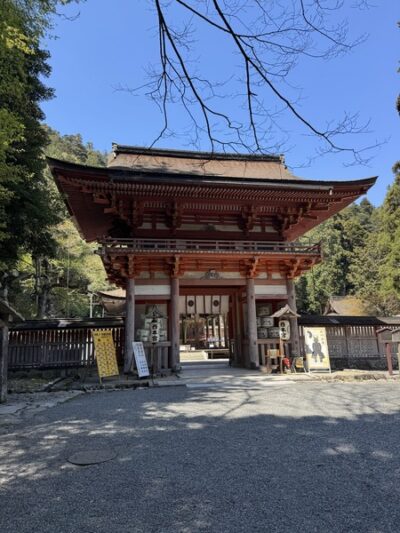
Legend has it that at a nearby temple (Kannon-ji), the young Mitsunari served “three cups of tea” (Sankon-no-cha) to Lord Hideyoshi, who had stopped by during a hawk hunt. Hideyoshi was so impressed by the boy’s thoughtful consideration—serving tea at different temperatures and volumes to suit the lord’s thirst—that he recruited him on the spot. Standing at the site where Mitsunari spent his childhood, surrounded by peaceful rural scenery, you can imagine how he began to envision a fair and prosperous nation for his lord. The roots of his brilliant strategy lie in the tranquil atmosphere of this Omi landscape.
2. A Silent Space Weaving the Tale of Integrity
Upon entering the site, you will be struck by its refreshing silence. While the original grand buildings are gone, the remains of earthworks (dorui) and the well used for Mitsunari’s first bath are meticulously preserved.
Mitsunari is best known for his role in the Battle of Sekigahara, where he fought against Tokugawa Ieyasu. He chose to fight for his loyalty to the Toyotomi clan even though he knew the odds were against him. In modern Japan, he is celebrated as a “man misunderstood because he was too sincere.”
At the Mitsunari Ishida Memorial Hall next to the residence, you can view his personal letters and historical documents. These reveal his “warm, human side”—a man who deeply cherished his family and friends—challenging the popular image of him as a cold, bureaucratic official. If Kyoto’s temples are “perfected art,” this place is a sanctuary of the soul, concentrating the way of life of a single man.
3. Reflecting on History’s “If”: An Intellectual Retreat
If traveling through Kyoto is a journey to enjoy “beauty,” then visiting the site of Mitsunari Ishida’s residence is a journey to “contemplate” history.
What if Mitsunari had won at Sekigahara? How would Japan look today? What does his philosophy—working solely for the “public good” rather than for personal gain—ask of us today?
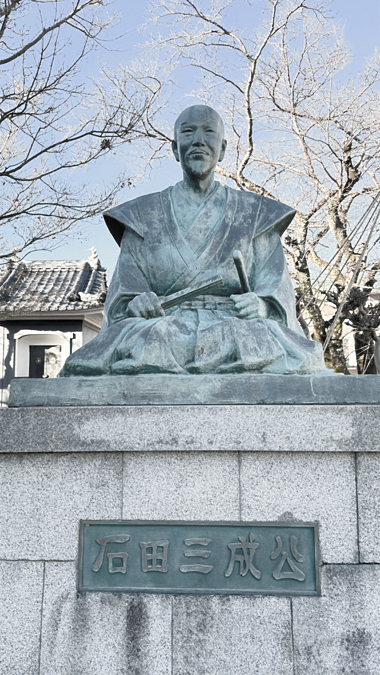
Walking along the moats and viewing the statue of Lord Mitsunari offers a profound intellectual retreat, disconnected from the clamor of modern life. What you find here is not “decorated history,” but a “living memory.” Even after 400 years, he is still affectionately referred to as “Mitsunari-san” by the locals and remains deeply respected.
4. Travel Advice: Touching the “Azure Aspirations” of Daily Life
For travelers who have enjoyed Kyoto’s traditional culture but now seek to touch the core of the Japanese spirit and its human side, Ishida-cho is the perfect destination.
-
Mitsunari Ishida Memorial Hall: This hall offers extensive exhibits on Mitsunari’s life and the people who supported him. Understanding his “clumsy sincerity” will add a new layer of depth to your journey.
-
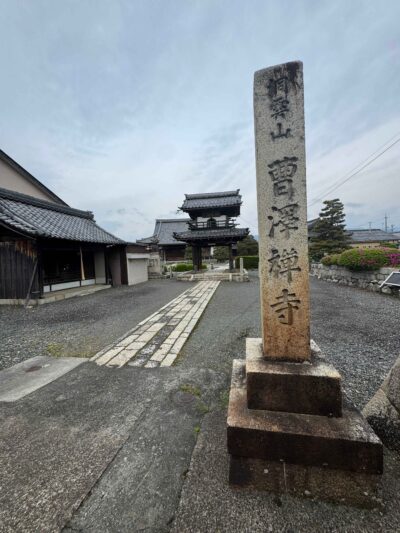
A Stroll in the Area: A short walk from the residence leads to Kannon-ji Temple, where his fateful encounter with Hideyoshi took place, and several monuments dedicated to his memory.
-
Walking through Nagahama: After your visit, head to the Nagahama city center. Feeling the energy of the castle town built by Hideyoshi will help you better understand the powerful bond between the lord and his devoted vassal.
Conclusion: Truth Hidden Behind the Scenes of History
A trip through Kyoto is a journey to know the “Flowers of Culture.” A trip to the site of Mitsunari Ishida’s residence is a journey to touch the “Soul of the Samurai.”
In the mist of Sekigahara, the ambitions of a brilliant strategist vanished. Yet, when you stand at his birthplace and feel the wind blowing from Lake Biwa, you will encounter the most profound and soul-stirring story of your Japanese travels.
Access: JR Kyoto Station → Nagahama Station → bus/taxi → Ishida
Mitsunari Ishida, the man who lived for integrity. Why not stand in the place where his dreams began?
Click here for Biwa Lake cruise details and reservations.

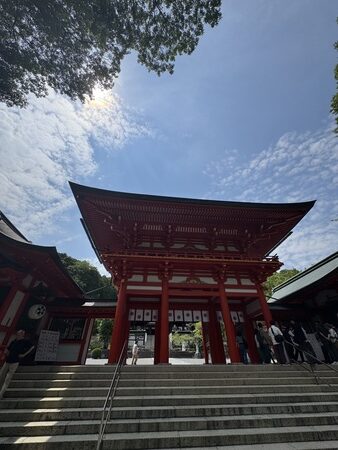
Nobunaga’s Hiding Rock