Shiga-in Monzeki
Touch the Dignity of the Highest Rank: Shigain Monzeki—The Palace of High Priests
You have strolled through the magnificent Imperial Palace in Kyoto, marveling at the refined beauty once cherished by the aristocracy. After such a wonderful experience, do you ever find yourself thirsting for more—searching for a place that is even quieter and more profound, possessing the elegance of a palace despite being a sacred Buddhist site?
If so, visit Shigain Monzeki, nestled at the foot of Mt. Hiei in Sakamoto, Otsu City, Shiga Prefecture. Holding the highest status as the headquarters of Mt. Hiei Enryaku-ji, this was the residence of successive Tendai Zasu (the highest-ranking priests of the Tendai sect). It is truly a place that could be called the “Palace of High Priests.”
Here, a dignified silence and overwhelming prestige—worlds apart from the bustle of Kyoto—still breathe today.
1. Supreme Privacy Implied by the Title “Monzeki”
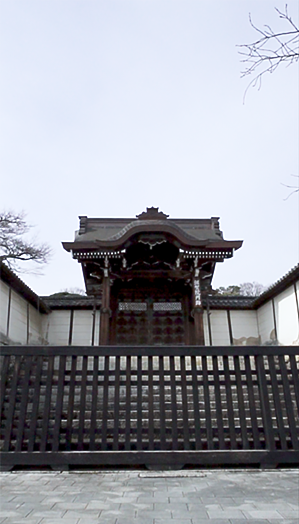
Upon arriving at Shigain, the first thing to catch your eye is the magnificent stone walls known as Ano-shu Zumi, the iconic symbol of the town of Sakamoto. The sight of the white-walled temple standing grandly atop these powerful stone ramparts, built by stacking natural stones, silently tells you that this is a truly special place.
The title Monzeki was a rank permitted only to specific, high-status temples where members of the imperial family or aristocracy served as head priests. Since its establishment in 1615 by the High Priest Tenkai—known as the “Black-Robed Councilor” and confidant to Tokugawa Ieyasu—this site served as the administrative heart of Mt. Hiei and a private space where the nobility offered their prayers. Step inside, and you will be enveloped by a serene, noble atmosphere that was once reserved for only a privileged few.
2. The Aesthetics of the Edo Period in the Guest Hall
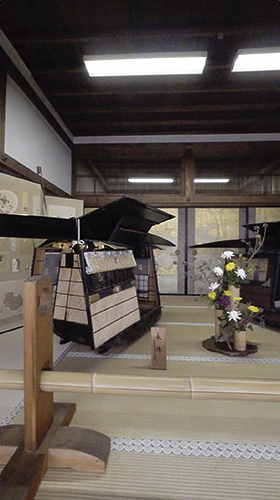
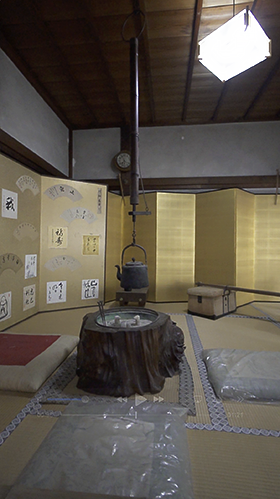
The essence of Shigain Monzeki lies in its luxurious interior spaces. The Shoin (study) and other structures, said to have been moved here from the Kyoto Imperial Palace, possess the very essence of royal dignity.
Of particular note are the numerous Shopeki-ga (wall and screen paintings) created by artists of the legendary Kano School during the early Edo period. The powerful pine trees and elegant birds and flowers painted against gold leaf backgrounds vividly convey the authority and aesthetic sense of that era, even after hundreds of years. As you gaze up at these masterpieces enveloped in the scent of tatami mats, you might almost hear the echoes of the high priests who once sat here in deep contemplation.
3. Kobori Enshu’s Masterpiece: The Height of Silence Woven by Water and Stone
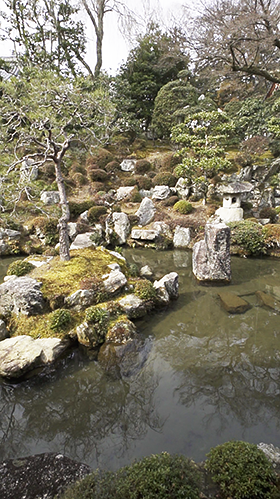
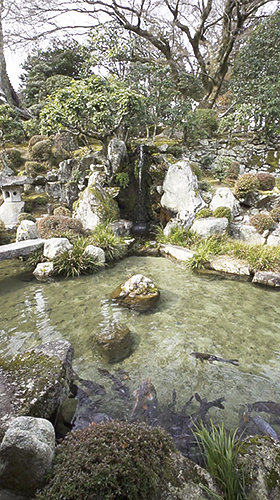
The climax of Shigain Monzeki is found in its garden, attributed to the legendary early-Edo period landscape architect Kobori Enshu.
This garden is designed in the Chisen Kansho-shiki (pond-viewing) style, masterfully incorporating the scenery of the distant Hira Mountains as a “borrowed landscape.” Every stone placed in the pond, every stone bridge set at a perfect angle, and every meticulously manicured tree creates a sense of absolute harmony.
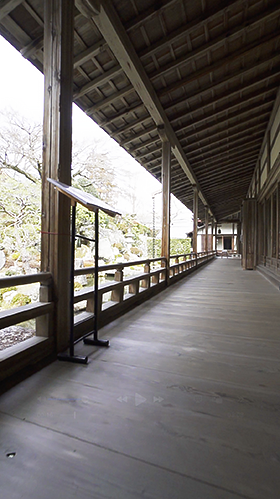
Sit quietly on the veranda and gaze out at the garden. You will hear only the sound of water falling into the pond and the occasional rhythmic knock of the shishi-odoshi (bamboo water spout). Unlike the famous gardens of Kyoto where you are often surrounded by crowds, here you are alone with the landscape. It is a luxurious, mindful time where only you and the garden exist. This view is no mere garden; it is a three-dimensional work of art expressing “Sukhavati”—the Pure Land on earth.
4. Travel Advice: Walking Through the History and Prestige of Sakamoto
For those mornings when you think, “I love Kyoto’s culture, but today I want to immerse myself in a weightier history that makes me stand a little taller,” Shigain Monzeki is your ideal destination.
-
Mindset: This is a prestigious residence of the highest-ranking priests. Please visit as a traveler who shares in the protection of its silence, keeping your voice low and respectful.
-
The Play of Light: The morning light is especially recommended. The greenery of the garden gains a profound depth, and the gold of the screen paintings glows softly—a sight of breathtaking beauty.
-
Discover the Inner Storehouse: Within the grounds, you will see robust structures like the Uchigura (inner storehouse) surrounded by heavy stone walls. Observing architecture that combines defensive function with aesthetic beauty is a highlight for history enthusiasts.
Conclusion: Close the Guidebook and Ascend to the Heights of Mt. Hiei
A trip through Kyoto is a journey to admire the “Flowers of Culture.” A trip to Shigain Monzeki is a journey to touch the “Prestige of Faith.”
When you grow a little weary of the clamor at famous sights, stretch your journey to the foot of Mt. Hiei. Pass through the Ano-shu stone walls and take your seat before Kobori Enshu’s garden. There, you will encounter the deepest and most noble silence of your journey through Japan.
Access: By train
-
Keihan Electric Railway Ishiyama Sakamoto Line: Get off at Sakamoto-hieizanguchi Station, and walk about five minutes.
-
JR Kosei Line: Get off at Hieizan Sakamoto Station, and walk about 20 minutes.
Why not immerse yourself in the quiet universe once cherished by the Tendai Zasu?
Click here for Biwa Lake cruise details and reservations.

Nobunaga’s Hiding Rock