Tsukubusuma Shrine
The Island of the Gods: A Voyage to Tsukubusuma Shrine on Sacred Chikubu Island
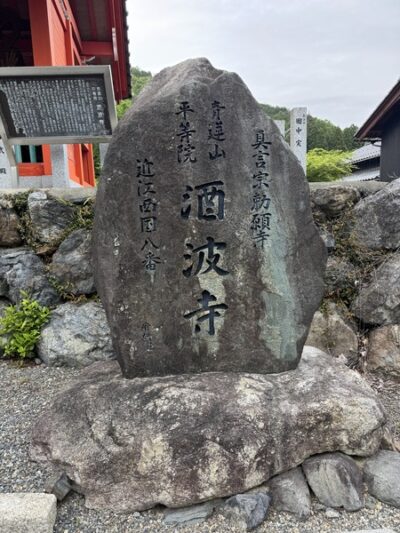
If you have stood before the orange gates of Fushimi Inari in Kyoto and felt the pulse of Japan’s ancient faith, there is a journey that will take you even deeper into the mystical. It requires leaving the mainland behind and crossing the deep, sapphire waters of Lake Biwa to a place known for over a millennium as Chikubu Island (Chikubushima).
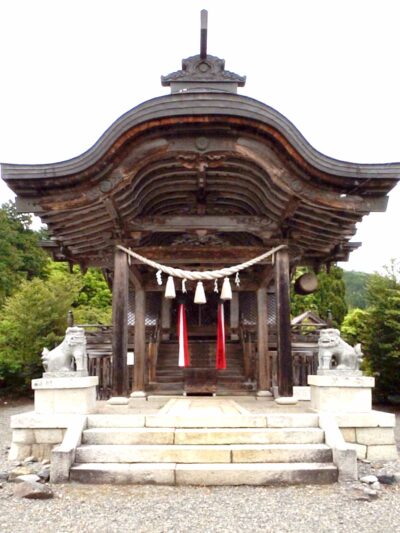
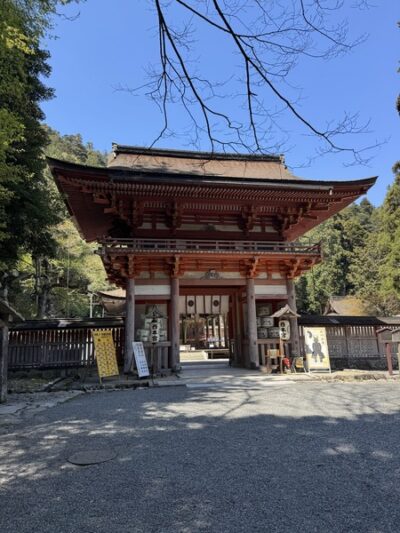
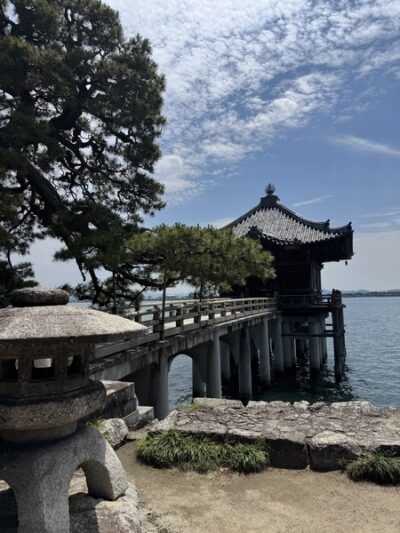
On this steep, emerald island sits Tsukubusuma Shrine, a National Treasure where the spirits of the water and the grace of the feminine divine converge in a display of breathtaking artistry.
A Floating Sanctuary of Peace
Chikubu Island has been revered as a “dwelling of the gods” since ancient times. It is one of Japan’s most powerful Power Spots, believed to be the place where the goddess of water and the goddess of music, Benzaiten, resides.
As your boat approaches the island, the sheer cliffs and dense forests rise sharply from the lake, creating an atmosphere of immediate reverence. Tsukubusuma Shrine (also known as Chikubushima Shrine) clings to these cliffs, a masterpiece of architecture that seems to grow directly out of the sacred rock. For centuries, shoguns, emperors, and pilgrims have braved the waves to seek blessings for safe voyages, prosperity, and the fulfillment of deep-seated wishes.
The Shogun’s Masterpiece in Gold and Lacquer
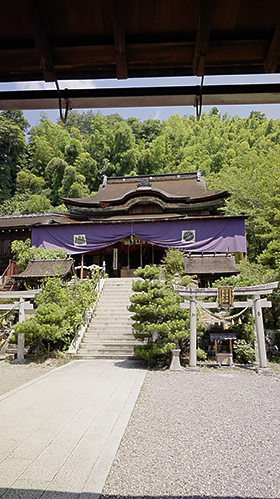
What makes Tsukubusuma Shrine a “National Treasure” is its extraordinary connection to the most powerful men in Japanese history. The Main Hall (Honden) is a stunning example of Momoyama-period architecture, characterized by its flamboyant and exquisite detail.
Legend has it that this building was originally a part of Fushimi Castle—the legendary “Peach Mountain” palace of the Great Unifier, Toyotomi Hideyoshi. When the castle was dismantled, his son donated this part of the structure to the shrine.
As you stand before the sanctuary, look closely at the woodwork. You will see intricate carvings of dragons, phoenixes, and flowers, all accented with gold leaf and deep black lacquer. The ceiling is a work of art in itself, featuring paintings of various seasonal plants. To see this level of aristocratic craftsmanship preserved on a remote island is a rare privilege, offering a glimpse into the opulent world of the samurai elite.
The Ritual of the Clay Disks (Kawarake-nage)
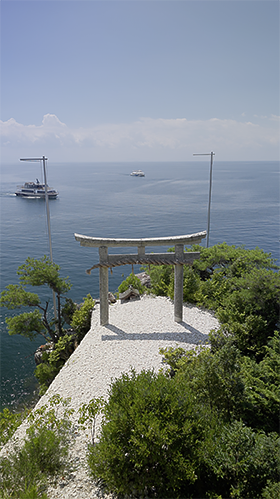
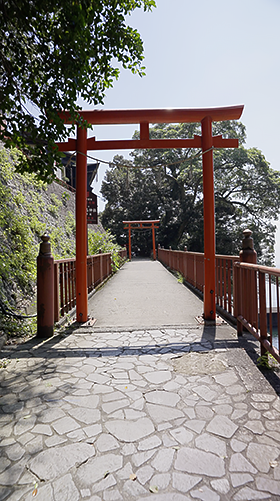
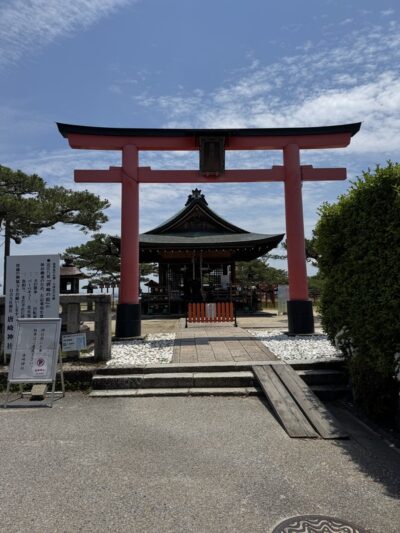
The highlight for many international travelers is the Kawarake-nage, a traditional ritual performed on a wooden balcony that projects out over the cliffside, facing the magnificent torii gate standing in the water below.
The ritual is simple yet profound:
-
You purchase two small, unglazed clay disks (Kawarake).
-
On one, you write your name; on the other, your wish.
-
You throw them with all your heart toward the torii gate standing at the edge of the lake.
It is said that if your disks pass through the gate, your wish will come true. Watching the white disks soar against the deep blue of Lake Biwa is a moment of pure joy and spiritual connection. Even if your disk misses, the act of releasing your wish into the vastness of the lake brings a sense of lightness and clarity.
Why Visit Tsukubusuma Shrine Now?
Kyoto’s shrines are beautiful, but they are often surrounded by the sounds of the city. Chikubu Island offers a complete immersion in the sacred. There are no cars, no convenience stores, and no resident population—only the priests, the wind, and the sound of the waves.
It is a journey that rewards the adventurous. The boat ride across Lake Biwa serves as a transition, washing away the stress of modern life and preparing your spirit for the ancient wonders of the island. To visit Tsukubusuma Shrine is to witness the peak of Japanese artistic heritage in its most natural, awe-inspiring setting.
Travel Tips for the Spiritual Voyager
-
The Dragon Corridor: Don’t miss the Funa-yagura (Ship Corridor), a covered walkway that connects the shrine to the neighboring Hogon-ji Temple. It was constructed using the timber from Hideyoshi’s personal ship, the Nihon-maru.
-
Respect the Island: Chikubu Island is considered sacred ground. Please follow the walking paths and be mindful of the silence.
-
Photography: While photography is allowed in most outdoor areas, please respect the “No Photo” signs inside the sacred sanctuary halls to preserve the spiritual atmosphere.
-
Combine with a Cruise: Boat services run from Nagahama, Hikone, and Imazu ports. Taking the boat from Nagahama allows you to explore the historic castle town before or after your pilgrimage.
1. Nagahama Port Route (East Side of Lake Biwa)
Best for: Travelers who want to explore a historic castle town along with the shrine.
-
JR Kyoto Station → JR Nagahama Station
-
Train: JR Biwako Line Special Rapid Service (bound for Maibara/Tsuruga)
-
Duration: Approx. 70 minutes
-
Note: At Maibara Station, the train may uncouple its rear cars or require a quick transfer. Please listen carefully to the onboard announcements.
-
-
JR Nagahama Station → Nagahama Port
-
Access: Approx. 10-minute walk. Exit the station via the West Exit (Biwako-guchi) and walk straight toward the lake.
-
-
Nagahama Port → Chikubu Island (Ferry)
-
Operator: Biwako Kisen Cruise
-
Duration: Approx. 30 minutes
-
2. Imazu Port Route (West Side of Lake Biwa)
Best for: Travelers who want to save travel time or visit the nature and lakeside shrines (like Shirahige Shrine) of the West Coast.
-
JR Kyoto Station → JR Omi-Imazu Station
-
Train: JR Kosei Line Special Rapid Service (bound for Tsuruga/Omi-Imazu)
-
Duration: Approx. 50 minutes (about 20 minutes faster than the Nagahama route)
-
-
JR Omi-Imazu Station → Imazu Port
-
Access: Approx. 5-minute walk. Simply walk straight from the station toward the lake; the port is very close.
-
-
Imazu Port → Chikubu Island (Ferry)
-
Operator: Biwako Kisen Cruise
-
Duration: Approx. 25 minutes
-
Click here for Biwa Lake cruise details and reservations.

Nobunaga’s Hiding Rock