Keisokuji-Temple
The Crimson Carpet of Time: A Journey to Keisoku-ji, the Abandoned Autumn Temple
If you have already walked the wooden verandas of Kyoto’s famous temples, you know the beauty of a curated Japanese autumn. But for those who seek something more raw—a scene where nature and history have reclaimed the land in a silent, breathtaking embrace—there is a place hidden in the northern mountains of Nagahama, Shiga Prefecture.
This is the story of Keisoku-ji Temple, a sanctuary that is no longer a place of living monks, but a living masterpiece of color.
The Temple That Returned to the Earth
Founded over 1,200 years ago in the year 735, Keisoku-ji was once a thriving center of Buddhist practice, home to dozens of halls and a community of monks. However, as the centuries passed and the world moved toward the cities, the temple was eventually abandoned.
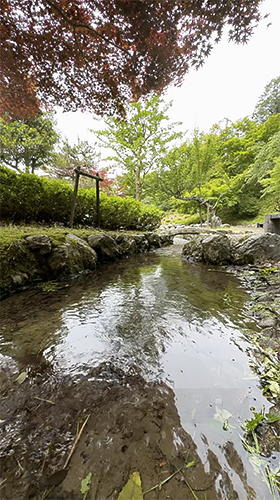
Today, no one lives here. There are no ringing bells or chanting voices. Instead, the local villagers of the Kinomoto district have become the silent guardians of this “ghost temple.” They preserve the grounds, allowing the forest to weave itself into the ancient stone foundations. This transition from a place of religion to a place of pure nature has created an atmosphere that is uniquely poignant—a beauty born from stillness and the passage of time.
Walking Upon a Carpet of Fire
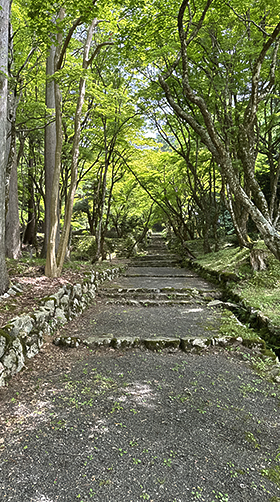
The true reason travelers from across Japan whisper about Keisoku-ji is its spectacular approach. A long, stone staircase leads up to the former main hall, flanked by approximately 200 vibrant Japanese maple trees.
Unlike the gardens in Kyoto where the fallen leaves are meticulously swept away every morning, at Keisoku-ji, the leaves are left exactly where they fall. In late November, the stone path vanishes beneath a thick, plush carpet of crimson and orange.
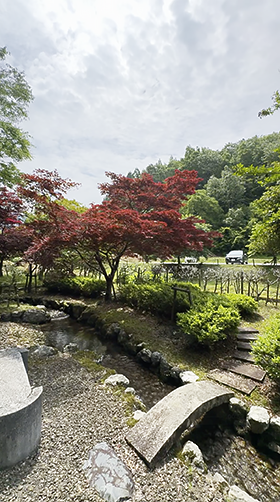
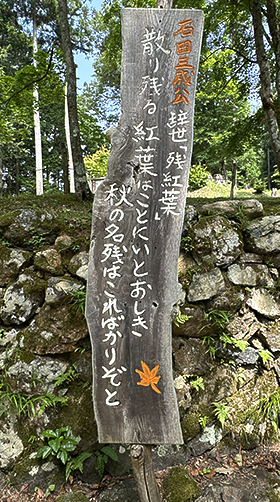
As you walk, the world around you becomes entirely red. The canopy above is a ceiling of stained glass, and the ground below is a soft, fiery rug. This “Crimson Carpet” (Momiji no Jutan) is a visual experience so intense that it feels like walking through a dream. The contrast between the brilliant red leaves and the moss-covered, weathered stone walls creates a texture that is a photographer’s paradise.
The Echo of Ancient Statues
While the main halls of the temple are gone, the spirit of Keisoku-ji remains. A small storehouse nearby, the Koguan, houses the temple’s remaining treasures, including a stunning 11-faced Kannon statue (the Goddess of Mercy) from the Heian period.
Standing before this ancient wooden figure, you realize that the temple’s “abandonment” is actually its greatest gift. There are no grand gates or modern souvenir stands to distract you. It is just you, the ancient trees, and the silent statues. This is the Wabi-Sabi—the Japanese aesthetic that finds perfection in the imperfect and the fleeting. It is a place to contemplate the cycles of life, death, and rebirth that the autumn leaves represent.
Why Visit Keisoku-ji Now?
For a traveler based in Kyoto, Keisoku-ji offers the ultimate “escape.” While the temples of the city are illuminated by artificial lights and filled with thousands of visitors, Keisoku-ji relies only on the sun and the wind.
It is a place of reverence and quietude. To visit here is to support a local community that works tirelessly to protect a piece of history that would otherwise be lost to the mountain. It is a journey for those who prefer the sound of crunching leaves to the sound of a city, and for those who want to see autumn in its most honest, unadorned form.
Travel Tips for the Refined Traveler
-
The Peak Window: The “Crimson Carpet” usually reaches its peak from mid to late November. Even if the leaves have started to fall, that is often the best time to see the ground fully covered.
-
Photography Etiquette: Because this site is managed by local volunteers and is a sacred place of rest, please stay on the designated paths. The beauty of the carpet relies on the leaves remaining undisturbed.
-
Combine with Kinomoto: After your visit, explore the nearby town of Kinomoto, a historic post-town famous for its traditional soy sauce breweries and sake cellars. It is the perfect place to warm up after a mountain walk.
-
Morning Light: Arrive early if possible. The soft morning light filtering through the maples creates a translucent glow that is difficult to capture later in the day.
Accessible by bus or on foot from JR Kinomoto Station (During the autumn foliage season, extra shuttle buses are available.)
Click here for Biwa Lake cruise details and reservations.

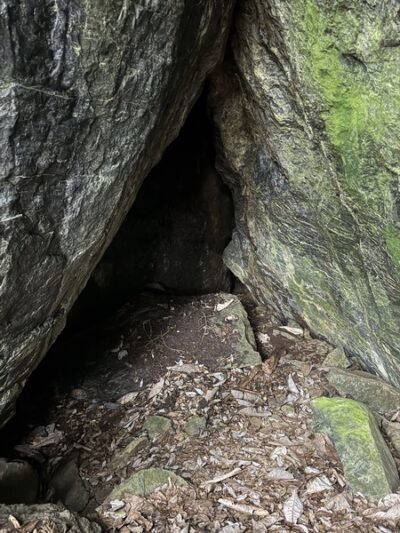
Nobunaga’s Hiding Rock