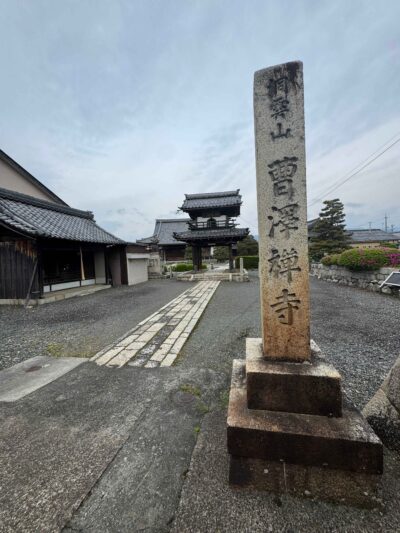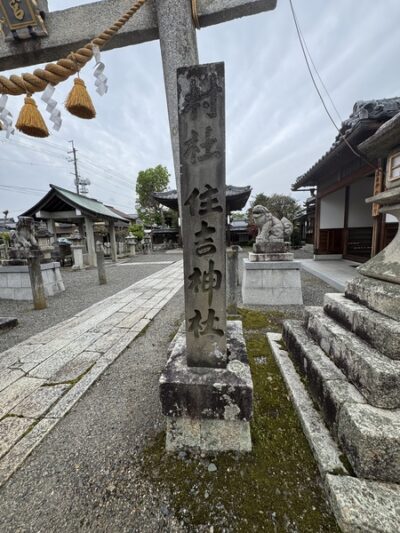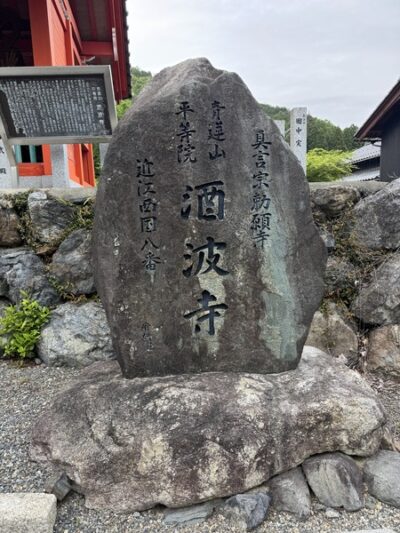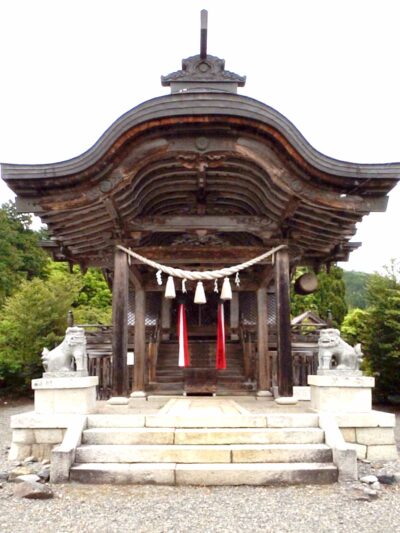
Nakasendo Road Samegaijuku
The Village of the Crystal Stream: Stepping into the Living History of Samegai
If you have walked through the philosopher’s path in Kyoto and felt the charm of its canals, there is a place further east that will take your breath away with its purity. Nestled at the foot of the Ibuki mountains in Maibara, Shiga, lies Samegai-juku, a historic post-town where time is measured by the gentle flow of water.
This is not just a place to see history; it is a place to hear it, taste it, and feel its cool touch on a summer day.
The Way of the Pure Water
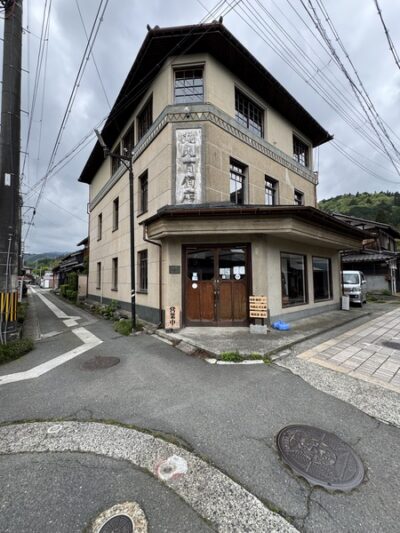
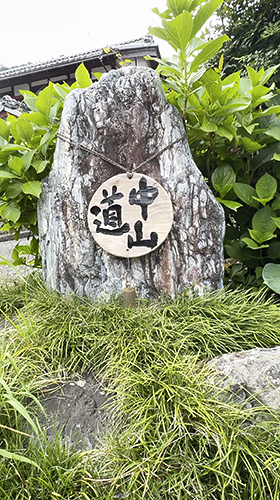
Samegai-juku was once the 61st station of the Nakasendo, the great inland highway that connected the Samurai capital of Edo (Tokyo) with the Imperial court in Kyoto. While other post-towns have modernized, Samegai has preserved its most precious treasure: the Jizo River.
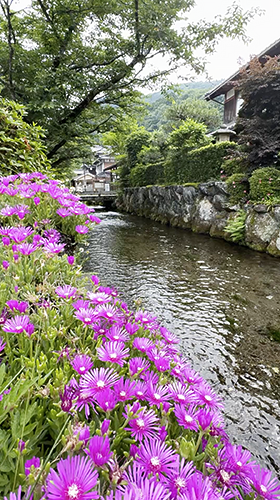
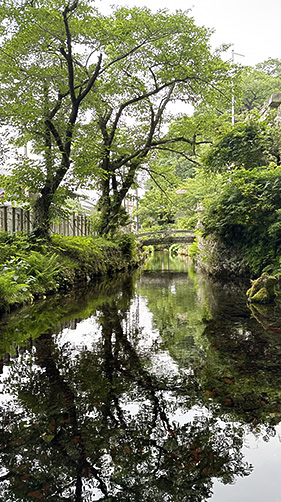
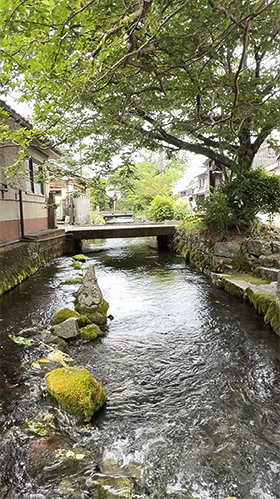
This remarkable stream of spring water flows directly alongside the traditional wooden houses and cobblestone paths of the town. The water is so clear it looks like liquid crystal, maintaining a constant temperature of about 14°C (57°F) all year round. In the Edo period, weary travelers would stop here to wash their feet, quench their thirst, and rest under the shade of the willow trees. Today, the town still lives in harmony with this water, using it to chill watermelons in the summer and as a focal point for daily life.
The “Underwater Cherry Blossoms”
The true magic of Samegai happens from late June to August, when the river performs a miracle found in only a few places in Japan. Small, white flowers called Baikamo (Water Primrose) bloom entirely underwater.
Resembling tiny plum blossoms, these delicate flowers sway gracefully in the current, looking like “underwater cherry blossoms.” To see thousands of these white petals dancing beneath the crystal surface, accompanied by the vibrant green of the river weeds, is a visual experience that feels like a scene from a Studio Ghibli film. It is a cooling, ethereal sight that makes the humid Japanese summer vanish in an instant.
The Spring of the Heroic Prince
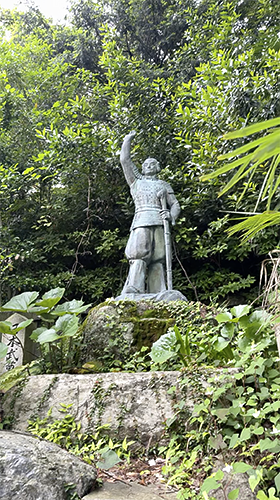
The name “Samegai” literally means “The Well of Awakening,” and its origins are tied to one of Japan’s greatest legends: Prince Yamato Takeru.
It is said that after a fierce battle with a mountain deity on nearby Mt. Ibuki, the prince was struck by a fever and lost his way. He stumbled upon this cold spring, and after drinking its water, he was miraculously “awakened” and healed. You can still visit the Isame-no-waki, the very spring mentioned in these ancient chronicles. Standing beside the moss-covered rock where the water gushes forth, you feel a connection to a Japan that existed long before the shoguns and the skyscrapers.
Why Visit Samegai Now?
For a traveler staying in Kyoto, Samegai-juku offers a rare “Authentic Japan” experience. Unlike the heavily commercialized districts of Gion or Higashiyama, Samegai remains a quiet, residential town.
Walking here is a sensory journey. You hear the constant, musical babble of the river. You see the traditional “lattice” windows of the old inns. You can taste the purity of the region in the local trout dishes or the sweets made with spring water. It is a place of “Yohaku”—a Japanese term for “meaningful empty space.” It gives your soul room to breathe.
If you are looking for a day trip that combines natural wonder, ancient mythology, and the nostalgic charm of a bygone era, Samegai is your perfect “hidden gem.”
Travel Tips for the Water Wanderer
-
The Best Season: Visit between July and August to see the Baikamo flowers in full bloom. If you visit in autumn, the reflection of the colored maples on the crystal water is equally stunning.
-
Taste the Water: Look for the public wells where you can safely taste the spring water. It is famously soft and refreshing.
-
Stay for Tea: Several old townhouses have been converted into cafes. Sitting on a tatami mat with a view of the Jizo River while sipping green tea is the ultimate relaxation.
-
Explore the Post-Inn: Don’t miss the Waki-honjin, a former high-class inn for traveling dignitaries. It serves as a small museum where you can see the architecture and artifacts of the Nakasendo era.
Access: Just a short walk from JR Samegai Station
Click here for Biwa Lake cruise details and reservations.

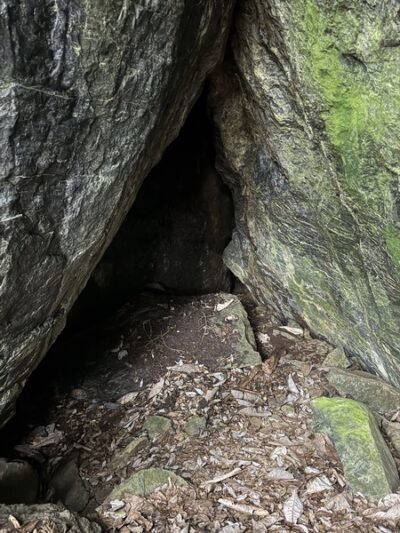
Nobunaga’s Hiding Rock