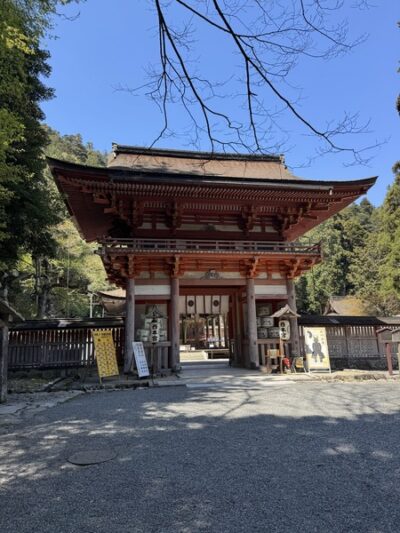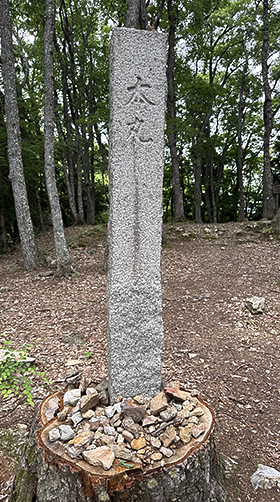
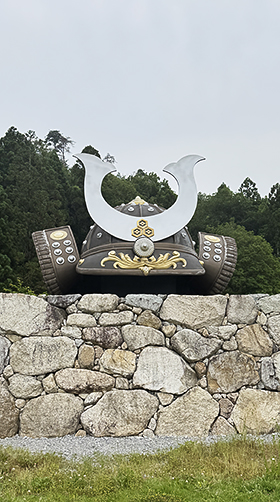
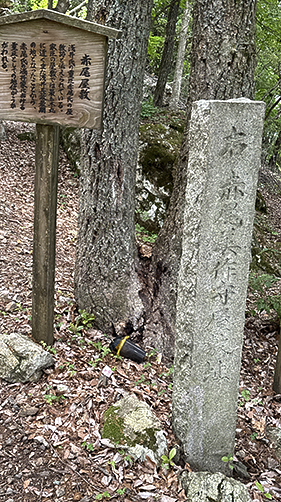
Odani Castle Ruins
Echoes of the Azure Dragon: The Tragedy and Triumph of Odani Castle
If you have walked through the corridors of Kyoto’s Nijo Castle and marveled at the power of the Shoguns, you have seen the final chapter of Japan’s samurai era. But to understand the raw, emotional beginning of that era—the story of a doomed romance and the birth of a dynasty—you must travel north to the rugged peaks of Nagahama.
Perched upon a mountain overlooking the northern shores of Lake Biwa lie the ruins of Odani Castle (Odani-jo). This was once one of the five greatest mountain fortresses in Japan, a place where history was written in blood and cherry blossoms.
A Castle Built on the Clouds
Odani Castle was the seat of the Azai Clan, the lords who once ruled the northern Omi region. Built in the early 16th century, the castle utilized the natural ridges of Mt. Odani, making it an impregnable “Mountain Fortress” (Yamajiro).
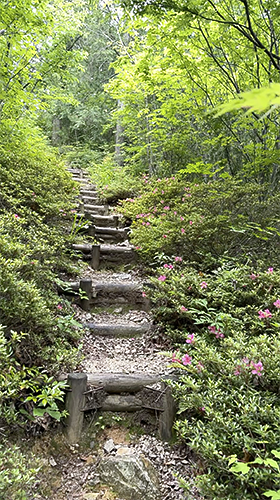
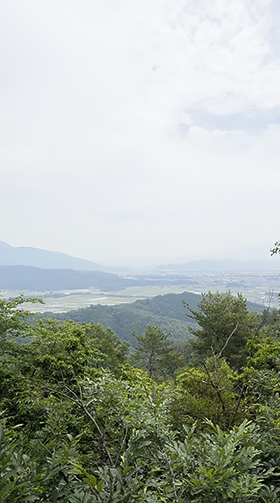
As you hike up the ancient stone paths today, you aren’t just walking through a forest; you are ascending through layers of defense. The castle was designed so that each enclosure was higher than the last, culminating in the Honmaru (Main Ward), which offers a breathtaking, bird’s-eye view of Lake Biwa and the distant mountains. In its prime, it was said the castle appeared to be floating among the clouds, a symbol of the Azai family’s pride and soaring ambition.
The Tragedy of Oichi and Nagamasa
The heart of the Odani story is not found in its walls, but in a tragic alliance. The young, brilliant lord Azai Nagamasamarried Oichi, the sister of the legendary “Demon King” Oda Nobunaga. Oichi was renowned as the most beautiful woman in Japan, and for a time, Odani Castle was a place of rare happiness and cultural refinement amidst the fires of war.
However, the alliance shattered when Nagamasa chose to honor an old bond with the Asakura clan over his ties to Nobunaga. In 1573, Nobunaga laid siege to the mountain. As the castle fell, Nagamasa committed ritual suicide, but he ensured that Oichi and their three daughters were safely returned to his enemy.
Those three daughters—the Azai Sisters—would go on to marry the most powerful men in Japan. One became the wife of the Great Unifier Toyotomi Hideyoshi, and another the mother of the third Tokugawa Shogunate. The ruins of Odani are, in many ways, the cradle of modern Japan. Every stone here whispers the names of the women who survived a tragedy to shape the future of a nation.
Nature Reclaiming the Throne
Today, the wooden towers and golden halls are gone, but the spirit of Odani is more powerful than ever. The site is a “National Historic Site,” preserved in its original state as an archaeological park.
The beauty of Odani lies in its wildness. Unlike restored castles with elevators and souvenir shops, Odani is a place of imagination. Massive stone foundations, hidden wells, and earthen ramparts are overgrown with emerald moss and ancient trees.
In the autumn, the mountain is set ablaze with crimson maples, and in the spring, wild cherry blossoms bloom among the ruins—a hauntingly beautiful reminder of the fleeting nature of life, a concept the Japanese call Mono no aware. Standing in the silence of the Main Ward, with only the wind rustling the leaves, you feel the weight of centuries. It is a place of profound peace that was once the center of a storm.
Why Visit Odani Castle Now?
For a traveler based in Kyoto, Odani offers an authentic samurai experience that city landmarks cannot replicate. It is a journey for the soul and the senses. It requires a bit of a hike, but the reward is a connection to the “real” Japan—the one that exists beyond the neon lights and the manicured gardens.
Visiting Odani is an act of discovery. It is for those who want to stand where lords stood, to see the landscape through the eyes of a strategist, and to pay respects to a story of loyalty that still defines the Japanese heart. If you seek a destination that is as intellectually rewarding as it is visually stunning, the mountain is calling.
Travel Tips for the Mountain Explorer
-
The Guide Center: Start at the Odani Castle Sengoku History Museum at the base of the mountain. It provides excellent context and maps to help you visualize the structures that once stood on the slopes.
-
The “Honmaru” View: Do not stop halfway! The climb to the Main Ward is essential. From here, you can see the strategic layout of the entire region, including the site of the Battle of Anegawa.
-
Wear Proper Gear: This is a mountain hike. Wear sturdy walking shoes and bring water. The paths are well-marked but can be steep and slippery after rain.
-
Combine with Nagahama: After your descent, head into Nagahama city to visit the castle town developed by Hideyoshi, where the legacy of the Azai clan still lingers in the local culture.
Access: Get off at JR Kawake Station and either rent a bicycle or walk to the castle.
Click here for Biwa Lake cruise details and reservations.

Nobunaga’s Hiding Rock